
Why Nonprofits Need Data Privacy Policies
Nonprofits must prioritize data privacy to protect sensitive information, maintain donor trust, and comply with evolving legal regulations.


Nonprofits handle sensitive data like donor details, beneficiary records, and financial information. Without clear privacy policies, they risk losing trust, facing legal issues, and damaging their reputation. Here's why privacy policies matter and how nonprofits can create them:
- Trust Matters: Donors expect their data to be secure. A breach can harm relationships and impact funding.
- Legal Compliance: Laws like GDPR and U.S. state regulations require nonprofits to protect personal data.
- Key Steps: Audit data systems, outline data usage, train staff, and use secure tools like donor management platforms.
A strong privacy policy protects your organization and builds confidence with supporters. It’s no longer optional - it’s essential for long-term success.
Why Is Data Privacy Compliance Important For Nonprofits? - The Nonprofit Digest
Why Data Privacy Matters for Nonprofits
Nonprofits often walk a fine line between being transparent and safeguarding sensitive information. Unlike businesses that primarily deal with customer data, nonprofits manage details that can carry a deeper personal weight. To maintain donor confidence and protect those they serve, it's essential to understand the types of data collected and the risks tied to mishandling it.
What Data Nonprofits Collect
Nonprofits handle a wide range of sensitive information. This includes donor data like names, addresses, emails, phone numbers, and payment details, all of which demand strong security measures. For organizations involved in programs like child sponsorships, the data collected can be even more personal - photos, family circumstances, health records, and educational progress.
Additionally, volunteer and staff records often contain background checks, Social Security numbers, emergency contacts, and sometimes medical information for insurance purposes. Events add another layer, as nonprofits gather attendee details like contact information and dietary preferences. The challenge grows when individuals fill multiple roles - donor, volunteer, or beneficiary - further increasing the responsibility to safeguard their privacy.
Risks of Poor Data Privacy Practices
The consequences of neglecting data privacy can be devastating. One of the most critical risks is the loss of trust. A 2025 survey revealed that 62% of nonprofit leaders identified donor retention as their top priority. Without trust, donors may withdraw their support permanently, jeopardizing the organization’s ability to fulfill its mission.
Noncompliance with privacy laws can lead to hefty fines and legal costs, draining resources that could otherwise fund programs. A data breach can also disrupt operations, requiring limited staff to notify affected parties, investigate the issue, and implement new security measures. These efforts can strain an already stretched team.
The damage doesn’t stop there. News of a breach spreads fast in today’s digital world, potentially tarnishing an organization’s reputation. This can discourage not only current donors but also future supporters, volunteers, and partners. The ripple effects touch every corner of the nonprofit, from staff morale and board accountability to ongoing collaborations.
Prioritizing strong data privacy practices isn’t just about following the law - it’s about ensuring the long-term health and sustainability of your organization’s mission. As privacy laws evolve, nonprofits must stay informed to navigate these growing challenges effectively.
Data Privacy Laws That Affect Nonprofits
For nonprofit leaders, navigating the maze of data privacy laws can feel daunting. Yet, understanding which regulations apply to your organization is essential - not just to avoid penalties, but also to maintain the trust of your donors. With rules cropping up at state, federal, and international levels, the legal landscape has grown more intricate than ever. Below, we break down the key privacy laws nonprofits need to know.
Major Privacy Laws Nonprofits Should Know
One major regulation is the General Data Protection Regulation (GDPR). This law applies to any organization collecting personal data from individuals in the European Union. GDPR requires organizations to obtain consent before collecting data, allows individuals to access or delete their personal information, and enforces strict timelines for reporting data breaches.
In the United States, privacy laws are more fragmented. A mix of state and federal regulations governs how personal information is handled. These laws vary widely, addressing issues like sensitive data protection and data-sharing practices. Importantly, nonprofits should note that their tax-exempt status doesn’t automatically exempt them from these requirements. Additionally, federal laws focusing on specific sectors - such as healthcare or education - may apply if your organization deals with sensitive information linked to those areas.
How Privacy Laws Apply to Nonprofits
The extent to which privacy laws affect nonprofits depends on factors like where they operate, the type of data they collect, and the scope of their activities. Nonprofit status doesn’t grant immunity from compliance. For instance, if your organization accepts online donations, you could be processing personal data from donors across multiple regions, each governed by its own set of legal standards. This makes understanding and adhering to varying requirements critical.
While some privacy laws offer limited exemptions or adjusted rules for nonprofits, these exceptions are often narrow and inconsistently enforced. Staying compliant not only helps avoid penalties but also reinforces the trust and confidence of your donors - a cornerstone for any nonprofit's success.
How to Create a Data Privacy Policy
Developing a data privacy policy requires careful thought and attention to detail. This policy not only protects your organization legally but also helps build trust with donors, volunteers, and other stakeholders. Striking a balance between transparency and practical data protection measures is key to aligning the policy with your nonprofit's operations.
What to Include in Your Privacy Policy
Your privacy policy should clearly outline the types of data you collect and the reasons for collecting it. This might include basic information like donor names and contact details, as well as data gathered through your website or program activities. Be specific about each data type you handle.
It’s also essential to explain how you use and share this information. For example, clarify if donor details are used for sending thank-you notes, processing donations, or creating reports. If you share data with third parties - such as payment processors or email marketing tools - state the purpose of these partnerships.
Your policy should also address how long you retain data and when it’s deleted. Let donors know the lifecycle of their information and how you comply with legal requirements regarding data retention and disposal.
Security is another critical component, especially since nonprofits often handle sensitive financial and personal information. Detail your security measures, such as encryption and secure payment processing, and explain how you protect data during storage or cloud migration.
Lastly, include information about donor rights. Explain how supporters can access their personal data, request corrections, or opt out of communications. Provide clear contact details and set realistic timeframes for responding to these requests.
Once these elements are in place, the next step is to integrate the policy into your daily operations.
Steps to Write and Put Your Policy in Place
With the key components outlined, here’s how to create and implement your data privacy policy effectively.
Start by conducting a comprehensive audit of your data systems. Identify all platforms or tools where personal data is collected, stored, or processed. Map out the flow of data to uncover any weak points or vulnerabilities.
When drafting the policy, use plain language to ensure it’s easy to understand. Avoid legal or technical jargon, and organize the document with clear headings and concise sections. Have board members or volunteers review the draft to confirm it’s accessible to a general audience.
Before rolling out the policy, train your staff on their responsibilities when handling data. This includes everyone from volunteers to development staff managing donor relationships. Proper training ensures consistent application of the policy across the organization.
To launch the policy, share it widely. Email it to donors, post it on your website, and provide summaries through social media and newsletters.
Regularly review and update the policy to keep it relevant. Privacy laws and data practices change over time, so schedule annual reviews and make updates whenever new systems or processes are introduced.
Finally, establish accountability within your organization. Assign a staff member or committee to oversee compliance and handle data-related questions. Keep records of any data breaches or privacy issues to demonstrate your commitment to improvement and legal adherence.
Using Donor Management Platforms for Privacy Compliance
Modern donor management platforms are stepping up to tackle the increasing complexity of privacy regulations and the challenges nonprofits face in protecting donor data. Managing privacy manually can quickly become overwhelming as donor databases expand and legal requirements grow stricter. These platforms simplify the process by automating key privacy protocols and offering continuous safeguards, reducing the burden on nonprofit teams.
Privacy Features in Donor Management Platforms
Effective donor management platforms come equipped with essential privacy tools that protect sensitive information. For example, encryption ensures that donor data remains unreadable, whether it's being transmitted or stored. Additionally, role-based access controls limit who can view or edit specific information, reducing unnecessary exposure.
Another critical feature is audit trails, which log all data access activity. These logs are invaluable during compliance reviews or investigations, making it easier to pinpoint any unusual or unauthorized actions.
Platforms also include data retention controls, which help manage how long information is stored. By alerting users to expiring records and enabling secure deletion, these controls ensure that outdated data doesn’t become a liability. Backup and recovery systems further enhance data protection by safeguarding information during system failures or cyberattacks. Importantly, these backups maintain the same level of privacy as the original files, ensuring comprehensive security.
How HelpYouSponsor Makes Privacy Compliance Easier
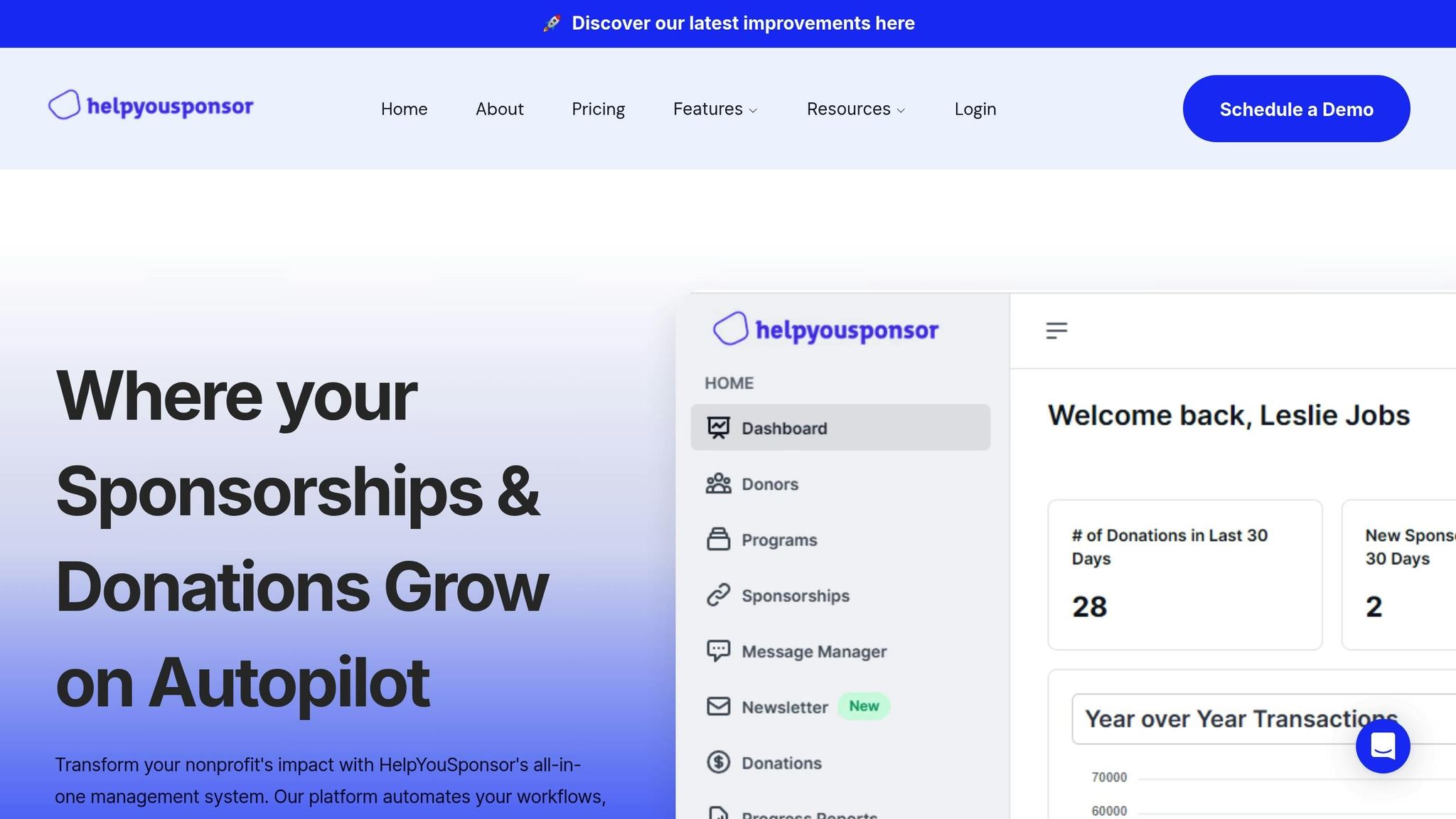
HelpYouSponsor integrates these robust security features to simplify privacy compliance for nonprofits. By focusing on donor privacy, transparency, and legal requirements, the platform provides tools that make managing compliance less daunting.
One of its standout features is centralized data management, which consolidates donor information from spreadsheets, email systems, and payment processors into a secure hub. This reduces the risks associated with scattered data and makes it easier to handle donor requests, such as access or deletion inquiries.
The platform also automates routine privacy tasks. For instance, it can generate data retention schedules, flag records for review, and maintain detailed audit logs of all data access. These automated processes save time and reduce human error.
Built-in reporting tools further streamline compliance by generating insights into data usage, access patterns, and retention schedules. These reports are particularly useful during board meetings, audits, or when addressing donor concerns.
User permissions are another key feature. HelpYouSponsor allows organizations to easily manage who can access specific types of donor data. As staff or volunteers join or leave, permissions can be updated quickly to ensure security remains intact.
Finally, the platform’s integration capabilities eliminate the need to export donor data to external systems. By keeping all information within a single, secure environment, HelpYouSponsor minimizes compliance risks and ensures sensitive data stays protected.
Conclusion: Building Trust Through Data Privacy
Protecting donor privacy is more than just a legal requirement - it's a cornerstone for building lasting relationships. When nonprofits safeguard donor information and are upfront about their data practices, they lay the groundwork for trust, which strengthens every aspect of their mission. This trust is especially crucial as organizations navigate complex regulations and work to maintain critical donor support.
The connection between data privacy and donor retention is clear. Respecting supporters and their personal information through strong privacy measures directly impacts their willingness to stay engaged and contribute.
Developing a thorough data privacy policy takes careful planning. It involves understanding the types of information collected, applying proper security protocols, and staying compliant with laws like GDPR, CCPA, and other state-specific regulations. For many nonprofits, this legal complexity can feel overwhelming. However, once a solid policy is established, leveraging technology can help ensure these standards are consistently upheld.
Platforms like HelpYouSponsor are game-changers, offering automated tools that simplify compliance and maintain high security standards - tasks that can be challenging to manage independently.
Prioritizing data privacy not only protects your organization from legal risks but also strengthens donor loyalty. Supporters who trust you with their personal information are more likely to donate again, volunteer, and advocate for your cause. Transparent and secure data practices set your nonprofit apart in a competitive fundraising environment, ensuring that trust remains at the heart of your mission.
FAQs
What steps can nonprofits take to ensure their data privacy policies comply with regulations like GDPR and state laws?
To make sure your nonprofit’s data privacy policies align with regulations like GDPR or state-specific laws, it’s essential to first identify which rules apply to your organization. This depends on where your nonprofit is based and the regions where you operate. Here’s how you can get started:
- Audit your data practices: Take a close look at how you collect, store, and use donor and sponsor information. Make sure every step complies with the relevant privacy regulations.
- Create a clear privacy policy: Write a straightforward, easy-to-read document that explains how your organization manages data. Share this policy openly with donors and stakeholders to maintain transparency.
- Educate your team: Provide training for staff and volunteers on best practices for data privacy. This reduces the chance of breaches or accidental non-compliance.
- Use secure tools: Opt for platforms like HelpYouSponsor to safely manage donor data. These tools can simplify compliance with privacy standards.
By following these steps, you not only meet legal requirements but also show donors that their personal information is in safe hands. This kind of transparency can strengthen trust and deepen your relationship with supporters.
How can nonprofits ensure transparency while protecting sensitive donor and beneficiary information?
Nonprofits can strike a balance between transparency and privacy by establishing clear data privacy policies. These policies should detail how sensitive information is collected, stored, and used, ensuring compliance with legal regulations like the General Data Protection Regulation (GDPR) or relevant U.S. privacy laws. It's equally important to communicate these policies clearly to both donors and beneficiaries.
Leveraging secure donor management platforms, such as HelpYouSponsor, can make managing sensitive data more efficient. These platforms not only safeguard information but also support transparency with features like detailed reporting and streamlined communication tools. Additionally, regular staff training on data privacy best practices is crucial. This ensures that everyone involved understands their responsibilities in protecting personal information.
How do donor management platforms help nonprofits protect data privacy and meet legal requirements?
Donor management platforms are essential for nonprofits to protect sensitive donor information and stay compliant with privacy laws. These tools offer secure ways to store data, control access, and ensure responsible handling of information.
With features like encrypted storage, automated compliance processes, and activity tracking, these platforms help minimize the risk of data breaches. They also support adherence to regulations like GDPR and CCPA. By prioritizing secure and transparent data practices, nonprofits can focus on their mission while strengthening trust with their donors.