
How Wealth Insights Are Changing the Way Nonprofits Engage Donors
Use wealth screening and real-time donor data to find high-capacity supporters, personalize outreach, and improve fundraising efficiency via CRM integration.

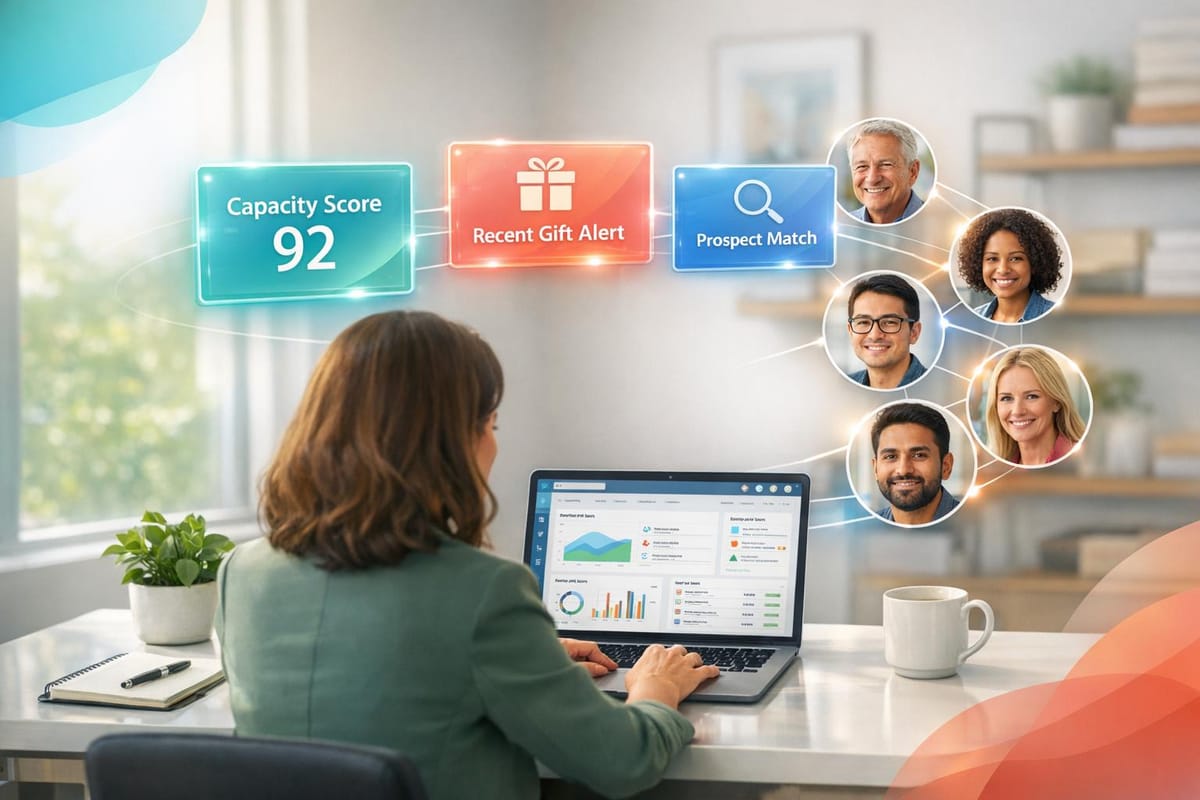
Nonprofits are transforming fundraising by using wealth insights to target donors more effectively.
Wealth insights analyze data like real estate, stock holdings, and donation history to identify high-capacity donors and improve donor acquisition, predict donation potential, and tailor fundraising strategies. This approach helps nonprofits focus on the 10% of donors who contribute 90% of their revenue, saving time and maximizing impact.
Key Takeaways:
- Wealth Insights: Tools assess donor capacity, giving history, and mission alignment.
- Data-Driven Fundraising: Nonprofits use real-time data to prioritize high-value donors.
- Personalized Outreach: Tailored proposals based on donor wealth and interests improve engagement.
- Efficiency Boost: Automated tools streamline donor research and outreach efforts.
By integrating wealth screening tools with donor management systems like HelpYouSponsor, nonprofits can make smarter decisions, uncover hidden opportunities, and strengthen donor relationships.
Wealth Insights for Fundraising
Selecting Wealth Screening Tools
Choosing the right wealth screening platform is a crucial decision that hinges on cost, functionality, and integration. The tool you pick directly affects your ability to identify high-capacity donors and how efficiently your team can act on that information. For instance, DonorSearch boasts a proprietary algorithm with an accuracy rate exceeding 90%. However, accuracy alone isn't enough. You need a platform that works seamlessly with your organization's workflow and integrates smoothly with existing systems. With this foundation in mind, let’s explore which features should take priority.
What to Look for in Wealth Screening Tools
Start by examining the platform's data sources. The most reliable tools draw from verified public records, such as SEC filings for stock ownership, FEC records for political contributions, and real estate holdings from local government databases. Additionally, platforms offering relationship intelligence - tools that uncover connections to turn cold outreach into warm leads - can be game-changers.
AI-driven analytics have also become essential. Many platforms now use machine learning to provide "Most Likely to Respond" scores and predictive models that highlight donors who are ready to increase their giving. For example, in 2024, North Carolina State University partnered with DonorSearch to analyze its donor base. This effort identified high-capacity prospects in underrepresented groups, resulting in a doubling of contributions from current students' parents and an extra $1 million raised from alumni parents.
Integration capabilities are just as important as data quality. Your chosen tool should connect directly to your donor management system, eliminating manual entry and providing real-time updates. These updates ensure your team always works with current information, such as new real estate transactions or insider filings, rather than outdated data.
Data security is another critical factor. Verify that the platform complies with privacy laws like GDPR and CCPA and adheres to high security standards, such as PCI Level 1 compliance.
Checking Data Sources for Accuracy
Even the most advanced screening tool is only as good as its data. Before committing, test the platform using 60 records: 20 known donors, 20 partially known, and 20 new. This test will reveal whether the tool’s results align with your existing donor knowledge.
Pay close attention to the platform's "Confidence of Match" (COM) settings. Higher COM levels reduce the risk of false positives - incorrectly matching a donor record to the wrong person - but may also yield fewer results. For your most promising prospects, always manually verify key details like middle initials, spouse names, and addresses to ensure accuracy.
Data recency is equally important. Since financial circumstances can change rapidly, platforms should provide frequent updates rather than relying on data that's over two years old. Ask vendors how often they refresh their data and whether they offer automated alerts for significant financial events.
The best platforms combine wealth data with philanthropic indicators. Knowing a person has $5 million in assets is helpful, but knowing they’ve donated to similar causes adds a layer of insight. This mix of capacity, propensity, and affinity creates a comprehensive donor profile and ensures smooth integration with HelpYouSponsor.
Connecting Wealth Insights with HelpYouSponsor
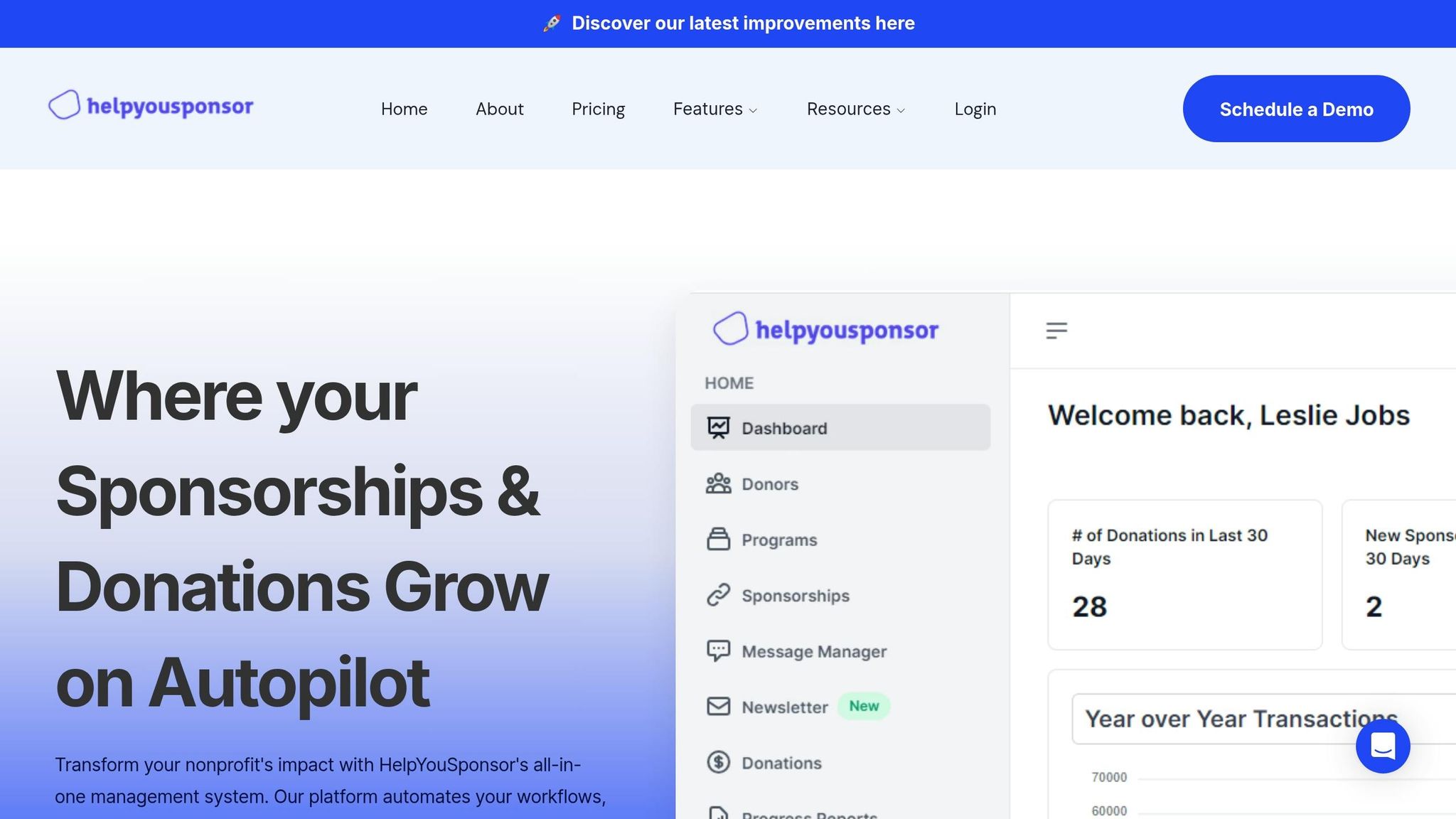
Integrating wealth screening data with HelpYouSponsor provides a complete view of each donor's financial capacity, sponsorship history, and engagement patterns. This integration eliminates the need to toggle between platforms or manually update donor profiles after a screening.
Before integrating, clean your data by merging duplicates and updating records. Accurate data is essential for precise matching, and "dirty" data can lead to poor results.
Once integrated, you can overlay external wealth scores onto your internal giving history to identify loyal donors with high wealth indicators who may currently be under-giving. These "hidden gems" are prime candidates for major gift conversations. Use HelpYouSponsor’s automated notifications to alert your team when a donor experiences a significant financial event, such as purchasing property or a stock transaction. This approach allows for timely, targeted sponsorship proposals tailored to each donor’s financial situation.
The integration also enhances donor segmentation for more effective sponsorship campaigns. Instead of sending identical proposals to everyone, you can customize ask amounts and messaging based on each donor's verified capacity. This personalized strategy improves response rates and ensures the right sponsors are matched with the right projects, whether it’s nonprofit sponsorship programs like child sponsorships, building campaigns, or medical surgeries.
How to Use Wealth Insights in Your Fundraising
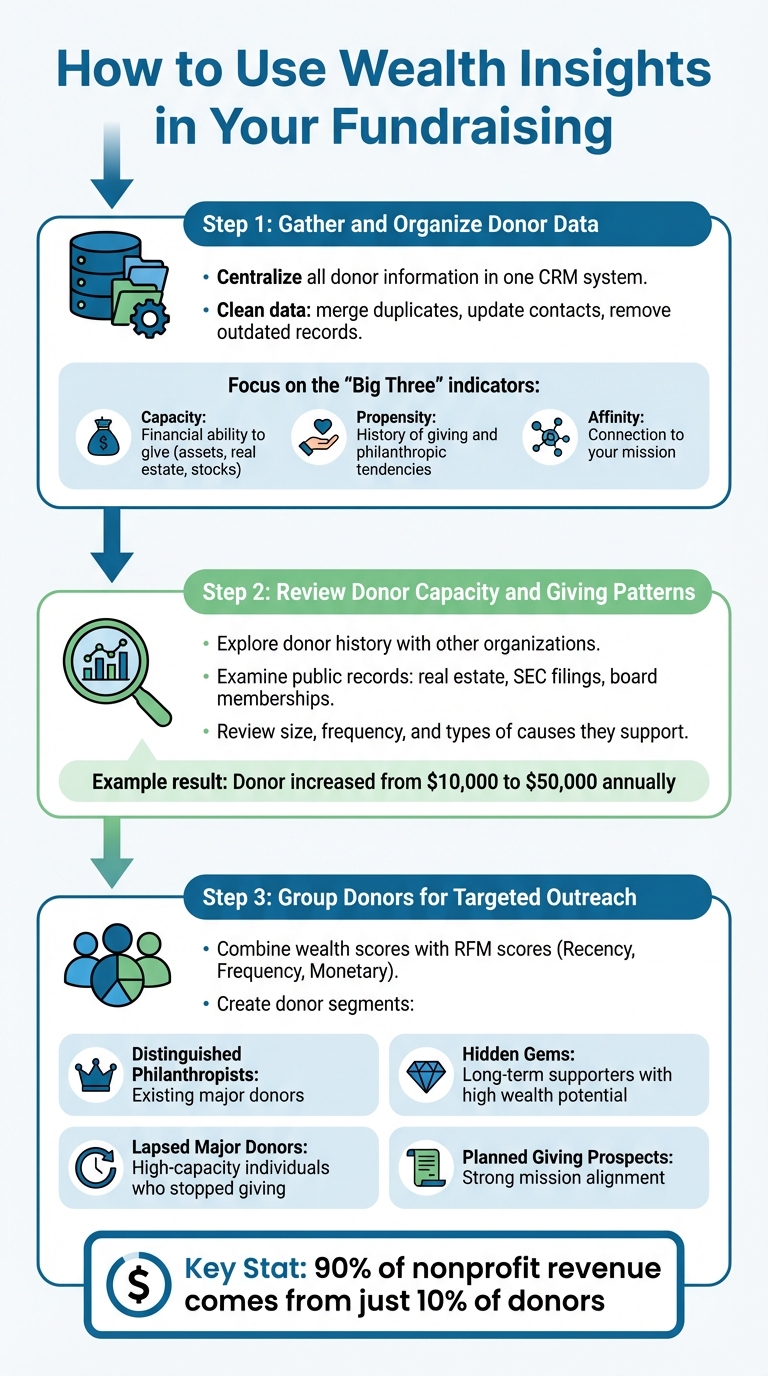
3-Step Process for Using Wealth Insights in Nonprofit Fundraising
Once you've chosen and set up your wealth screening tools, the next step is figuring out how to use that data effectively. With a solid, integrated data foundation in place, here’s how you can turn wealth insights into strategies that boost donor engagement and improve your fundraising efforts.
Step 1: Gather and Organize Donor Data
Start by centralizing all donor information in a single CRM or donor management system. This creates a reliable "single source of truth" where you can track donation history, event participation, volunteer hours, and other interactions all in one place. Make sure your data is clean - merge duplicates, update contact details, and remove outdated records. Running a trial screening of a small set of records can help validate your wealth screening tool.
Many wealth screening platforms provide Excel or CSV templates to simplify the process of uploading data. Use these templates to ensure your data is mapped correctly. Establish consistent data entry standards early on to avoid duplicates and maintain uniform formatting. This step lays the groundwork for meaningful donor analysis.
When screening, focus on the "Big Three" indicators:
- Capacity: A donor’s financial ability to give, based on assets, real estate, and stock holdings.
- Propensity: Their history of giving and philanthropic tendencies.
- Affinity: How connected they are to your mission.
While internal data can reveal affinity signals, external wealth screening tools are key for assessing capacity and propensity.
Step 2: Review Donor Capacity and Giving Patterns
Once your data is organized, dive into the wealth insights to understand each donor's financial standing and giving behavior. Go beyond your internal records by exploring a donor’s history with other organizations. Look for patterns in the size, frequency, and types of causes they support. This broader view can uncover hidden opportunities, like donors who give modest amounts to you but demonstrate significant giving potential elsewhere.
Public records, such as real estate ownership, SEC filings, business affiliations, and board memberships, can help estimate a donor’s net worth and liquidity. Political donation records on FEC.gov can also provide clues about their capacity and ideological interests.
Here’s an example: In June 2025, Troy Schnack, Lead Major Gifts Officer at Action Against Hunger, used Kindsight and iWave screening to identify high-potential donors in their database. His team discovered a donor giving $10,000 annually but capable of much more. By creating a personalized engagement plan focused on sustainable farming initiatives, they encouraged the donor to increase their contribution to $50,000.
While automated scores from screening tools are helpful, it’s worth manually reviewing high-value prospects to confirm details. Adjusting the "Confidence of Match" settings in your screening tool can also help - higher confidence settings reduce false positives but may limit the number of matches.
Step 3: Group Donors for Targeted Outreach
Now that you’ve reviewed donor capacity and giving patterns, it’s time to group donors into specific segments. This approach goes beyond identifying wealth alone; it helps you understand who has both the capacity to give and a connection to your mission. Combine external wealth scores with internal engagement data, such as RFM scores (Recency, Frequency, and Monetary value of past gifts), to rank donor potential. This layered approach highlights high-capacity donors who are also actively engaged.
Here are some common donor segments:
- Distinguished Philanthropists: Existing major donors who could give even larger gifts.
- Hidden Gems: Long-term supporters with modest recurring gifts but high external wealth potential.
- Lapsed Major Donors: High-capacity individuals who once gave significant amounts but have stopped.
- Planned Giving Prospects: Donors with strong mission alignment, ideal for bequests or charitable trusts.
To refine your segments, assign points for internal engagement activities like event attendance, volunteering, or email interactions, and combine these with external wealth scores to create a composite ranking. Set clear capacity benchmarks based on your organization’s budget to define what qualifies as a major gift. Additionally, use relationship intelligence to identify donors connected to board members or trustees. Warm introductions are often far more effective than cold outreach.
Tailoring Donor Outreach with Wealth Data
Once you've segmented your donors, the next step is refining your outreach using wealth data. This approach allows you to create more meaningful, personalized connections. In fact, 44% of donors say they would give more if communications felt personalized. By moving away from generic appeals and aligning your message with a donor's financial capacity and interests, you can foster stronger relationships that lead to better results.
Writing Personalized Sponsorship Proposals
Wealth insights help you fine-tune your requests by identifying precise ask amounts and crafting targeted proposals. For instance, capacity indicators like real estate holdings, stock investments, or business affiliations can guide your approach. A donor with substantial real estate assets might feel comfortable with a $10,000 request, while someone with more modest resources might respond better to a $1,000 ask. Striking the right balance ensures you don’t under-ask and miss potential contributions or over-ask and risk alienating the donor.
Affinity data also plays a key role in matching donors with the right programs. For example, if a donor has a history of supporting education initiatives, you could highlight your scholarship programs or school-building efforts. If they’re tied to a corporation, consider incorporating matching gift opportunities into your sponsorship proposal - this can amplify their contribution without increasing their personal expense. Additionally, donors with "fun assets" like vacation homes or boats might prefer to donate items for auctions or raffles rather than giving cash.
Once you've crafted these personalized proposals, you can take your outreach a step further by integrating automated, data-driven messaging to deepen engagement.
Improving Communication with Data-Based Messaging
Wealth data combined with automation tools can help you deliver messages that resonate on a personal level. Platforms like HelpYouSponsor allow you to use merge fields and shortcodes to include specific donor details in your communications - such as their most recent gift amount, the child they sponsor, or their city. These small touches make automated emails feel personal and engaging rather than impersonal or robotic.
Behavioral triggers can also enhance your communication strategy. For instance, if a donor visits your volunteer page, you can automatically send them details about upcoming opportunities. Similarly, if someone completes their first sponsorship, you can initiate a welcome series that outlines the next steps in their journey with your organization.
The American Cancer Society showcased the power of this approach in 2022. By using machine learning to optimize digital ad campaigns, they targeted potential donors with tailored messaging. Under the guidance of Director of Media Strategy Ben Devore, this strategy led to a 17% increase in donation revenue compared to previous benchmarks.
Personalization doesn’t stop at names. Dynamic content allows you to show different message blocks to different segments within the same email. For example, first-time donors might receive a welcome message introducing your mission, while long-term supporters could see an update on the impact of their contributions. Personal touches like these matter: personalized email subject lines can boost open rates by 26%, and tailored call-to-action buttons can increase effectiveness by 202%.
However, it’s important to balance automation with genuine connection. As Jeff Schreifels, Principal Owner of Veritus Group, wisely points out:
"You cannot automate your way to trust and you can't scale connection through software alone. You build it one donor at a time - through listening, thanking, inviting and showing up".
Tracking Results and Improving Your Approach
Evaluate the impact of wealth insights by monitoring specific metrics and fine-tuning strategies based on actual results.
Metrics to Track Your Success
Start by analyzing RFM scores - Recency, Frequency, and Monetary value - to identify donors who give frequently and most recently. Layer in wealth insights to uncover those with untapped potential. Another crucial metric is gift size growth, which shows whether personalized outreach is effectively moving donors from mid-level to major gift categories. For instance, targeted efforts led to annual contributions increasing from $10,000 to $50,000, with identified donors boosting their collective giving by 35%.
Focus on donor retention and repeat-gift rates, particularly for major contributors. Donors giving over $5,000 have a repeat-gift rate of approximately 37.75%. Additionally, track segment conversion rates to see how many "Hidden Gems" (high-capacity donors giving smaller amounts) or "Distinguished Philanthropists" (current major donors with more capacity) increase their contributions after targeted engagement. Don’t forget matching gift revenue - use employment data from wealth screenings to identify corporate matching opportunities, which can significantly amplify donation totals. Lastly, evaluate fundraising efficiency by comparing the resources spent on outreach to the total funds raised.
These metrics provide a strong foundation for using HelpYouSponsor reports to refine your donor engagement strategies.
Using HelpYouSponsor Reports to Refine Your Strategy
With consistent tracking, every insight can drive better decision-making. HelpYouSponsor acts as a centralized CRM, consolidating donor information and enabling detailed report generation. Use these reports to monitor sponsor retention rates and flag at-risk donors by examining their giving patterns and engagement levels. The platform also allows you to benchmark your performance against industry standards, where retention rates typically range between 45-65%.
"The ability to have the integration... to see who are these people that are giving, either one time or multiple times, and have that in the CRM is just - it's gold. It makes us so much more efficient and effective." - Troy Schnack, Lead Officer, Major Gifts, Action Against Hunger
Ensure data accuracy by routinely removing duplicates and updating donor records. Review historical giving trends and donor capacity to adjust ask amounts and set alerts for donors showing signs of disengagement, enabling timely follow-ups. By testing new strategies through small pilot programs - targeting about 5% of your donor base - and reviewing results with HelpYouSponsor reports, you can confidently scale successful approaches across your organization.
Conclusion
Wealth insights replace guesswork with actionable, data-driven strategies for fundraising. By understanding factors like donor capacity, philanthropic history, and relationship networks, you can direct your limited resources toward prospects most likely to make significant contributions. The numbers back this up: roughly 90% of nonprofit revenue comes from just 10% of donors. This highlights how crucial it is to identify and engage high-capacity supporters.
The move from occasional screenings to continuous intelligence offers an even greater advantage. Now, you can monitor wealth triggers - such as business sales or real estate transactions - in real time, enabling outreach at the most opportune moments. Combining external wealth data with your internal giving records can reveal "Hidden Gems" - loyal mid-level donors with the potential to become major contributors. These often-overlooked individuals can have the financial means to significantly impact your fundraising results.
To act on these insights effectively, strong data management is key. HelpYouSponsor provides a centralized platform to turn these insights into action. It consolidates donor information, tracks giving patterns, and generates reports to help you monitor retention rates and identify supporters at risk of disengaging. By integrating wealth screening data with HelpYouSponsor's CRM tools, you gain a comprehensive view of each donor: their financial capacity, giving history, engagement level, and connection to your mission. This integration ensures your data stays current and supports timely, personalized donor journeys.
FAQs
Is wealth screening legal and ethical for nonprofits?
Wealth screening is legal for nonprofits when it relies on publicly available information, such as property records or financial disclosures, and adheres to privacy laws. Ethically, it’s considered acceptable if handled transparently and with respect for donor privacy. When nonprofits follow these legal and ethical guidelines, they can use wealth screening to tailor their outreach, foster trust, and nurture stronger donor relationships - all while ensuring compliance and safeguarding donor confidence.
How do we avoid wrong matches and bad data in wealth insights?
Nonprofits can steer clear of errors and unreliable data by implementing thorough data validation practices. This includes cross-checking information with trusted sources and keeping donor records up to date. Using advanced wealth screening tools that offer detailed profiles and relationship insights can help weed out inaccuracies. By combining various data points - such as donor motivations and past giving patterns - organizations can achieve a higher level of precision. Regular audits and partnering with trusted third-party providers further ensure that the insights gathered are both dependable and actionable.
What’s the simplest way to use wealth insights inside HelpYouSponsor?
The easiest way to leverage wealth insights in HelpYouSponsor is through its donor data management and screening tools. These tools help you pinpoint donors with greater giving potential and customize your outreach efforts. By centralizing donor details - like past contributions and areas of interest - you gain a clearer picture of their capacity to give. Built-in analytics allow you to segment donors effectively, craft personalized communication, and set achievable fundraising goals. This strategy improves engagement, increases donation opportunities, and builds stronger connections with your supporters.