
Ultimate Guide to Donor Relationship Management
Donor relationships, not transactions, are a nonprofit's most valuable asset—segment, steward, and measure to secure lasting support.


Building strong donor relationships is essential for nonprofits to secure long-term support and increase donor retention. This guide covers practical strategies to identify, engage, and retain donors effectively. Here's a quick overview of what you'll learn:
- Donor Lifecycle: The three key stages - Identification, Cultivation, and Stewardship - help turn occasional supporters into loyal donors.
- Segmentation: Group donors based on giving behavior, interests, and engagement to personalize communication and improve retention.
- Retention Metrics: Track donor retention rates, lifetime value, and pledge fulfillment to measure success and identify areas for improvement.
- Communication Tips: Use personal touches like thank-you calls, tailored updates, and impact reports to keep donors engaged.
- Tools Like HelpYouSponsor: Simplify donor management, streamline communication, and enhance donor-child connections with features like automated workflows and personalized updates.
What Is Donor Relationship Management (DRM) For Nonprofits? - The Nonprofit Digest
The Donor Relationship Lifecycle
Having a clear donor lifecycle framework helps nonprofits build lasting relationships and ensure consistent support. As Valentina Guerrini from Altrata explains:
"Donor management isn't a journey with an end, but an ongoing cycle of discovery, cultivation, and stewardship."
The donor lifecycle includes several stages, but the key ones are Identification, Cultivation, and Stewardship. Each stage plays an essential role in turning occasional supporters into loyal advocates. Skipping or mishandling any stage can disrupt your entire fundraising efforts.
Identification: Finding the Right Donors
The process starts by identifying potential donors who share your mission and values. Begin with people already in your network - lapsed donors, engaged social media followers, or those who have steadily increased their contributions over time.
Here’s an eye-opening statistic: 81% of affluent households contribute to charitable causes, with an average annual donation of $33,219 - over ten times more than the average donor. However, wealth alone doesn’t guarantee a strong connection. Building a personal relationship often matters even more.
To identify high-potential donors, use tools like wealth screening and social media monitoring. The Pareto Principle applies here: 80% of donations typically come from just 20% of donors. Once you’ve built a targeted list of prospects, you can focus on nurturing these connections.
Cultivation: Building Relationships
Cultivation is all about relationship-building. Think of it as the "courtship" phase, where trust and engagement grow over time. Securing major gifts often requires patience and consistent effort. For instance, while a $500 gift might take a month and one meeting to secure, a $100,000+ gift could take 2–3 years and multiple meetings.
Use storytelling, site visits, and direct engagement to deepen these relationships. Share powerful impact stories, invite prospects to visit your organization, and introduce them to the people their contributions will help. Assign dedicated team members to provide personalized attention to your most promising prospects.
Stewardship: Maintaining Strong Connections
Once donors are engaged, stewardship ensures they stay connected and committed. This phase is about showing appreciation and demonstrating the impact of their contributions. Retaining donors is far more cost-effective than constantly seeking new ones.
Tailor your stewardship efforts based on donor levels. For example:
- Low-tier donors: Send personalized emails to express thanks.
- Mid-tier donors: Follow up with handwritten notes or phone calls.
- Top-tier donors: Engage them through direct outreach from senior leadership.
Prompt acknowledgments are crucial, but stewardship goes beyond thank-you notes. Keep donors informed with regular updates like newsletters, annual reports, and success stories. Show them the tangible results of their support. Encourage deeper involvement through opportunities like volunteering, joining committees, or serving on your board.
Donor Segmentation Strategies
When it comes to engaging donors effectively, segmentation takes your stewardship efforts to the next level by aligning your messages with donor behavior and preferences.
Treating all donors the same can lead to disengagement and dwindling support. Instead, donor segmentation involves grouping supporters based on how they give, engage, and interact. As Julie Kennon from CharityEngine explains:
"Donor segmentation for nonprofits is simply the practice of grouping supporters based on how they give, engage, and interact, so your messages actually resonate."
Segmentation isn't just about improving communication - it’s about safeguarding your revenue. For programs like child sponsorships, where recurring monthly donations are critical, segmentation ensures updates are tailored to each sponsor’s specific commitment. This approach matters: 72% of consumers only respond to marketing messages that align with their interests.
Segmentation Criteria and Benefits
A great starting point is RFM analysis, which evaluates donors based on recency, frequency, and monetary value. For example, a donor who gave $500 last week and donates monthly (scored 5-5-5) requires a different strategy than someone who contributed $25 three years ago (scored 1-1-1).
Beyond RFM, consider segmenting by lifecycle stage and program interests. A first-time donor may need an onboarding series filled with impact stories to encourage a second gift. On the other hand, a long-term supporter deserves milestone recognition and exclusive updates. For donors passionate about education, share updates on school progress and literacy achievements instead of broad organizational news. This targeted approach pays off - organizations that excel at personalization see 40% more revenue growth than those that don't.
Application Example: Child Sponsorship Programs
The effectiveness of segmentation is clear in real-world examples. In 2025, the University of Georgia demonstrated its power by using predictive analytics to target leadership donors for renewals and current donors for upgrades. The result? A 910% year-over-year increase in Presidents Club donors acquired via direct mail. Similarly, Habitat for Humanity Fort Collins identified "emerging prospects" and invited them to tour a major housing project. One donor, moved by the experience, gave $10,000 - 10 times their previous contributions.
For child sponsorship programs, setting up your sponsorship software allows you to segment by sponsorship type, donor tenure, and engagement level. Automated alerts can flag potential issues like expiring credit cards, allowing you to reach out before donations lapse. Tailor updates to match sponsor preferences: detailed quarterly reports for those who want in-depth progress or lighter updates for those who prefer less frequent communication. This thoughtful approach not only boosts revenue but also strengthens donor loyalty over time.
Building Long-Term Donor Loyalty
After segmenting your donors and personalizing your outreach, the next step is to move from mere transactions to building authentic partnerships. This shift helps donors feel appreciated, informed, and closely connected to your mission. As Bloomerang aptly states:
"The greatest gift you can give a donor is the gift of feeling known by you."
In 2024, the overall donor retention rate dropped to 42.9%, marking the fifth consecutive year of decline. However, recurring donors who receive consistent attention and care see a retention rate of 77%. On average, these donors stay engaged for over eight years and have a lifetime value of approximately $7,604.17. Focusing on strategies like personalized communication, transparent reporting, and active donor involvement can help you transform one-time donors into lifelong supporters.
Personalized Communication and Recognition
Timely, personal outreach can make all the difference. For instance, first-time donors who receive a thank-you call within 48 hours are 400% more likely to donate again. This small gesture sets the stage for a long-term relationship. For child sponsorship programs, take your segmentation efforts further by sending tailored updates. Share specific milestones - like school achievements, health updates, or even personal drawings from the sponsored child - to deepen the emotional connection.
Go beyond standard reports by adding personal touches like short video messages or handwritten notes. These small actions can make donors feel truly valued. Send impact reports within 30–60 days of a donation to clearly show how their contributions are making a difference. If you plan to publicly recognize donors, always secure their consent first. Small gestures, such as welcome kits or handwritten thank-you notes, reinforce the idea that donors are more than just numbers - they’re integral to your mission.
Transparency and Impact Reporting
One of the biggest reasons donors stop giving is a lack of communication, which leaves them feeling unappreciated or out of the loop. Transparency is key to building trust. Show donors exactly how their contributions are being used and the results they’re helping achieve. For international child sponsorship programs, this could mean providing detailed expense breakdowns along with updates on the sponsored child’s education, health, and personal development.
Regular reporting - at least twice a year - keeps donors engaged and informed. Share both the successes and the challenges your organization faces to maintain their interest and trust. As Kindsight puts it:
"Effective stewardship turns transactional donor relations into transformational partnerships. It helps donors see themselves as partners in your impact, not just funders."
This level of openness reassures donors that their support is making a real difference and strengthens their commitment to your cause.
Involving Donors in Your Mission
Donors can contribute more than just financial support. Inviting them to engage in other ways strengthens their bond with your mission. Host events like webinars, virtual meet-and-greets with sponsored children, or behind-the-scenes tours to create a sense of community among your supporters.
Encourage two-way communication through letters or video exchanges so donors can see the direct impact of their contributions. Create opportunities for peer engagement by allowing donors to share their stories during events or in online forums. Offer platforms where they can ask questions and get real-time answers. Non-solicitation touchpoints - such as celebrating milestones, exclusive webinars with your leadership team, or volunteer opportunities - can make donors feel like active participants in your mission. These experiences go a long way in reinforcing trust and securing their loyalty over the long term.
Using HelpYouSponsor for Donor Management
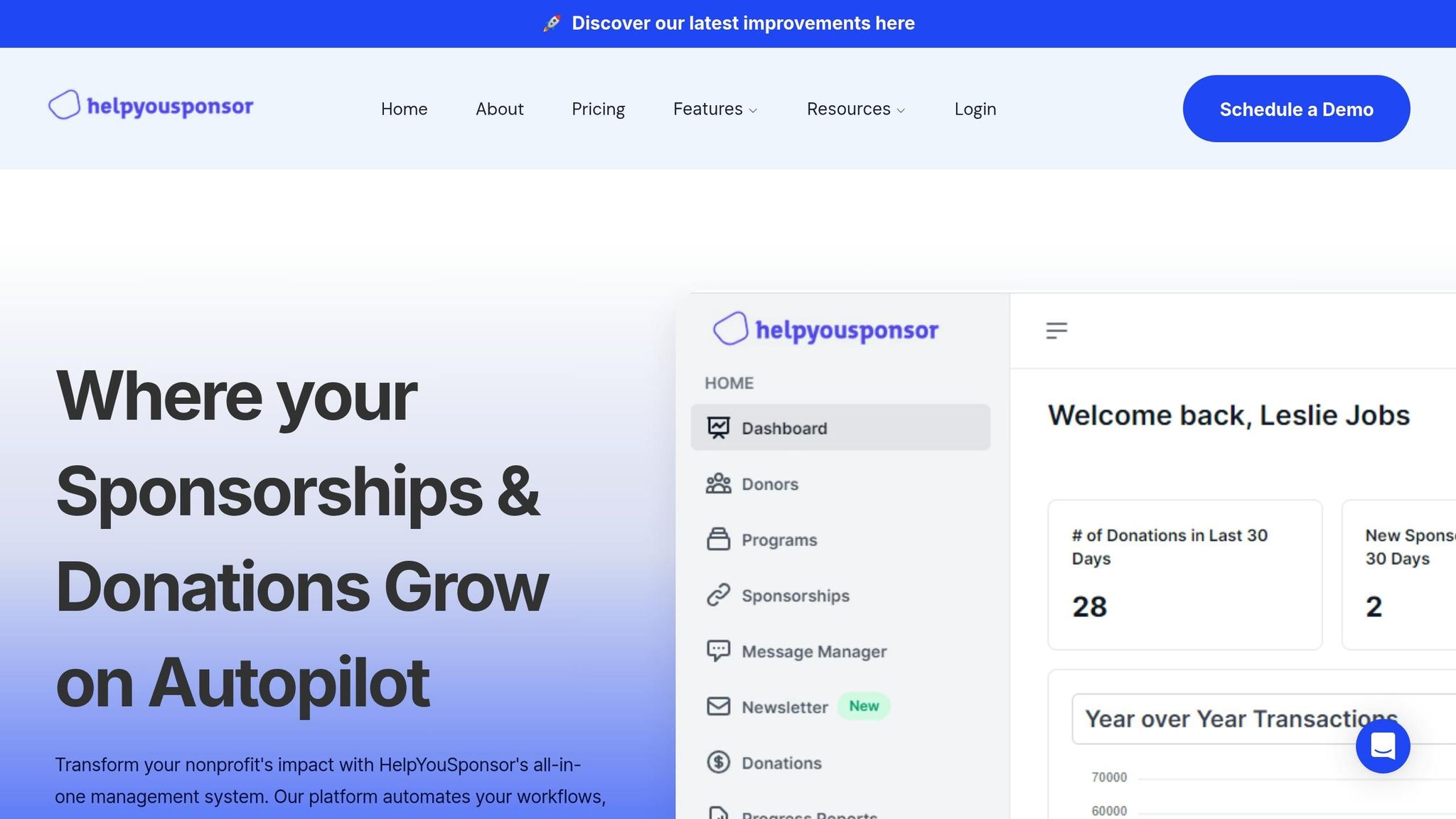
Building long-term donor loyalty takes more than good intentions - it requires the right tools to manage relationships effectively. HelpYouSponsor simplifies this process by offering nonprofits a platform to track donors, communicate personally, and strengthen connections.
Key Features of HelpYouSponsor
At the heart of HelpYouSponsor is the Donors Table and detailed Donor Profile Pages, which provide a full history for each supporter. From financial contributions and donor motivations to past interactions and key milestones, everything is stored in one place for easy access. The Household Table adds another layer by tracking family-based giving, making it easier to identify potential new donors within the same family.
For child sponsorship programs, the Sponsorships Table ensures every donor-child connection is managed seamlessly. The platform also includes Donor Duplicate Detection, which keeps your records clean and prevents embarrassing communication errors that could alienate supporters. Additionally, automated workflows handle donation tracking and communication tasks, freeing up your time to focus on building relationships instead of battling spreadsheets.
By centralizing donor information and simplifying communication, HelpYouSponsor helps nonprofits maintain a personal and transparent approach - key elements for fostering long-term donor engagement.
Benefits for Child Sponsorship Programs
HelpYouSponsor makes it easier to provide the personal touches that keep donors engaged. Through the platform, you can share photos, videos, and drawings from sponsored children, helping donors see the real-world impact of their contributions. Features like letter exchanges and video messages create meaningful interactions, deepening the bond between donors and the children they support.
The platform’s impact reporting tools ensure donors know exactly how their money is being used. You can break down donation allocations and share updates on milestones your organization has achieved. Regular updates - whether quarterly or bi-annual - can showcase a child’s progress in areas like education, health, and personal development. By reviewing each donor’s profile before reaching out, you can tailor your messages to reflect their unique history with your organization, making every interaction feel thoughtful and personal rather than generic.
Measuring and Improving Donor Retention
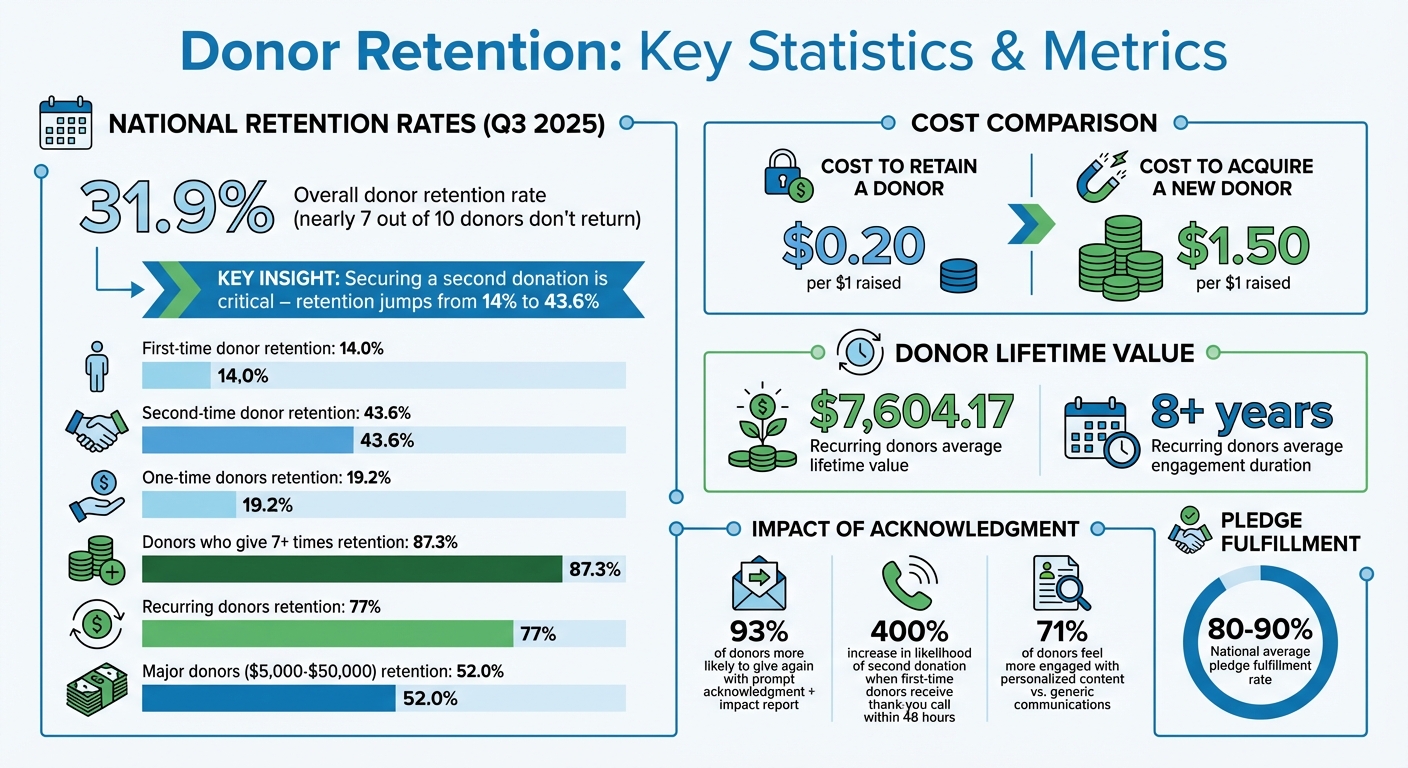
Donor Retention Statistics and Key Metrics for Nonprofits
To make meaningful changes, you need to measure what matters. Tracking donor retention is key to understanding what works in your stewardship efforts and where improvements are needed. As of Q3 2025, the national donor retention rate is just 31.9%. That means nearly seven out of ten donors don’t return the following year. These numbers highlight the importance of analyzing your donor relationships to make smarter decisions about where to focus your time and resources.
Keeping donors around isn’t just important - it’s cost-effective. Retaining a donor costs about $0.20 for every $1 raised, while acquiring a new donor could cost as much as $1.50 per $1. Securing a second donation is even more critical. First-time donor retention averages only 14.0%, but when donors give a second time, retention jumps to 43.6%. As Colton Withers, Director of Operations at DonorRelations.com, aptly states:
"If we can't hold on to our donors past their first year of giving, how can we ever expect them to make their first major gift?"
Key Metrics for Donor Retention
Start with the donor retention rate - the percentage of donors who gave last year and gave again this year. To calculate it, divide the number of repeat donors this year by the total number of donors from the previous year, then multiply by 100. This metric not only shows if your efforts are working but also helps you identify trends across donor segments. For example, one-time donors have a 19.2% retention rate, while donors who give seven or more times reach an impressive 87.3%.
Another important metric is donor lifetime value (DLV), which estimates the total revenue a donor will contribute during their time supporting your organization. To calculate DLV, multiply the average years a donor stays with you by their average annual donation and giving frequency. This figure can guide how much you’re willing to spend on acquiring new donors.
Additionally, keep an eye on your pledge fulfillment rate, which measures whether donors follow through on their commitments. National averages typically range between 80% and 90%. Monitoring donation retention - whether repeat donors sustain or increase their contributions - is also critical. A decline in gift amounts can often signal that a donor is at risk of leaving entirely.
For major donors contributing $5,000 to $50,000 annually, who have a retention rate of 52.0%, qualitative touchpoints like personal calls, handwritten notes, and event invitations can be just as important as financial metrics. These personal connections can make a significant difference in maintaining their support.
Once you’ve defined these metrics, it’s time to focus on improving the donor experience.
Improving the Donor Journey
Understanding your retention metrics is only the first step. The next is applying targeted strategies to enhance donor engagement and build lasting donor relationships.
Start with prompt, personalized acknowledgments. Sending a thank-you note or acknowledgment within 24 to 48 hours can significantly boost retention rates. In fact, 93% of donors are more likely to give again if they receive a prompt, personal acknowledgment and a meaningful impact report. This simple step can be the difference between a one-time gift and a second donation.
Use LYBUNT reports (tracking donors who gave “Last Year But Unfortunately Not This” year) to identify supporters at risk of lapsing. With recaptured lapsed donors dropping by 8.6% year-over-year in 2025, prevention is more important than ever. Woodrow Rosenbaum, Chief Data Officer at GivingTuesday, emphasizes:
"The long-term health of the sector depends on broadening participation. Re-engaging lapsed donors and cultivating new supporters into lasting relationships will be essential to sustaining momentum"
Another effective approach is creating feedback loops. Post-event surveys and donor satisfaction questionnaires can provide valuable insights. About 71% of donors feel more engaged when they receive personalized content instead of generic communications. Use donor data to segment your messaging based on giving history, age, or interests.
For first-time donors, automate a welcome email series to guide them through their initial experience. With an average retention rate of only 20% for first-time donors, a structured onboarding process can make all the difference. These small but intentional steps can transform a one-time donor into a lifelong partner.
Wrapping It All Up
This guide has walked you through the steps of transforming donor management into meaningful, long-term partnerships that drive your mission forward. From grasping the donor lifecycle to using segmentation, personalizing communication, and showcasing transparency in impact reporting, these strategies provide a clear path to turning occasional donors into lifelong supporters.
Acknowledging donors promptly and keeping them informed with regular, tailored updates are some of the most effective ways to nurture these relationships.
Platforms like HelpYouSponsor make this process even easier. By centralizing donor management, automating communication, and enabling multimedia exchanges between donors and recipients, tools like these help you maintain the level of consistency and personalization necessary for lasting donor loyalty. With features for managing donors, tracking sponsorships, and improving communication, HelpYouSponsor complements the strategies laid out in this guide.
Take the first step today - set up automated welcome emails, plan out regular impact updates, or launch a donor recognition program. By keeping donors engaged and showing them the tangible difference their contributions make, you can build the foundation for enduring support.
FAQs
What should I do in each stage of the donor lifecycle?
In the donor lifecycle, there are three key actions to prioritize:
- Acquisition: Bring in new donors by showcasing your organization and encouraging their first interaction or contribution. This is where you make that all-important first impression.
- Cultivation: Establish trust by maintaining personalized communication and meaningful engagement. The goal here is to keep donors interested and connected, paving the way for continued support.
- Stewardship: Deepen relationships by expressing gratitude, sharing updates on how their contributions make a difference, and recognizing their efforts. This helps build loyalty and encourages donors to stay with you for the long haul.
How can I segment donors with limited data?
Even with just a little information, you can still create meaningful donor segments. Start by grouping donors based on how often they give (one-time versus recurring), how much they donate (small, medium, or large contributions), and their level of engagement (such as attending events or opening emails). If you have access to it, you can also factor in details like location or donor type. These straightforward categories make it easier to tailor your communication and connect with donors on a more personal level, even when your data is limited.
Which retention metrics should I track first?
When assessing donor engagement and loyalty, certain metrics stand out as essential. For starters, the donor retention rate - which measures the percentage of donors who give again - is a key indicator of how well you're maintaining relationships. Similarly, repeat donation frequency tracks how often donors contribute, offering insight into their ongoing commitment.
Beyond these, keeping an eye on donor lifetime value (LTV) is crucial. This metric reflects the total financial contribution a donor makes over their relationship with your organization. To round out the picture, consider engagement metrics like participation in events or response rates to campaigns. These data points can highlight areas that need attention and help you build stronger, lasting connections with your donors.