
How to Train Staff for Child Sponsorship Programs
Step-by-step guidance to assess needs, build role-specific training, use HelpYouSponsor, and measure outcomes for effective child sponsorship programs.

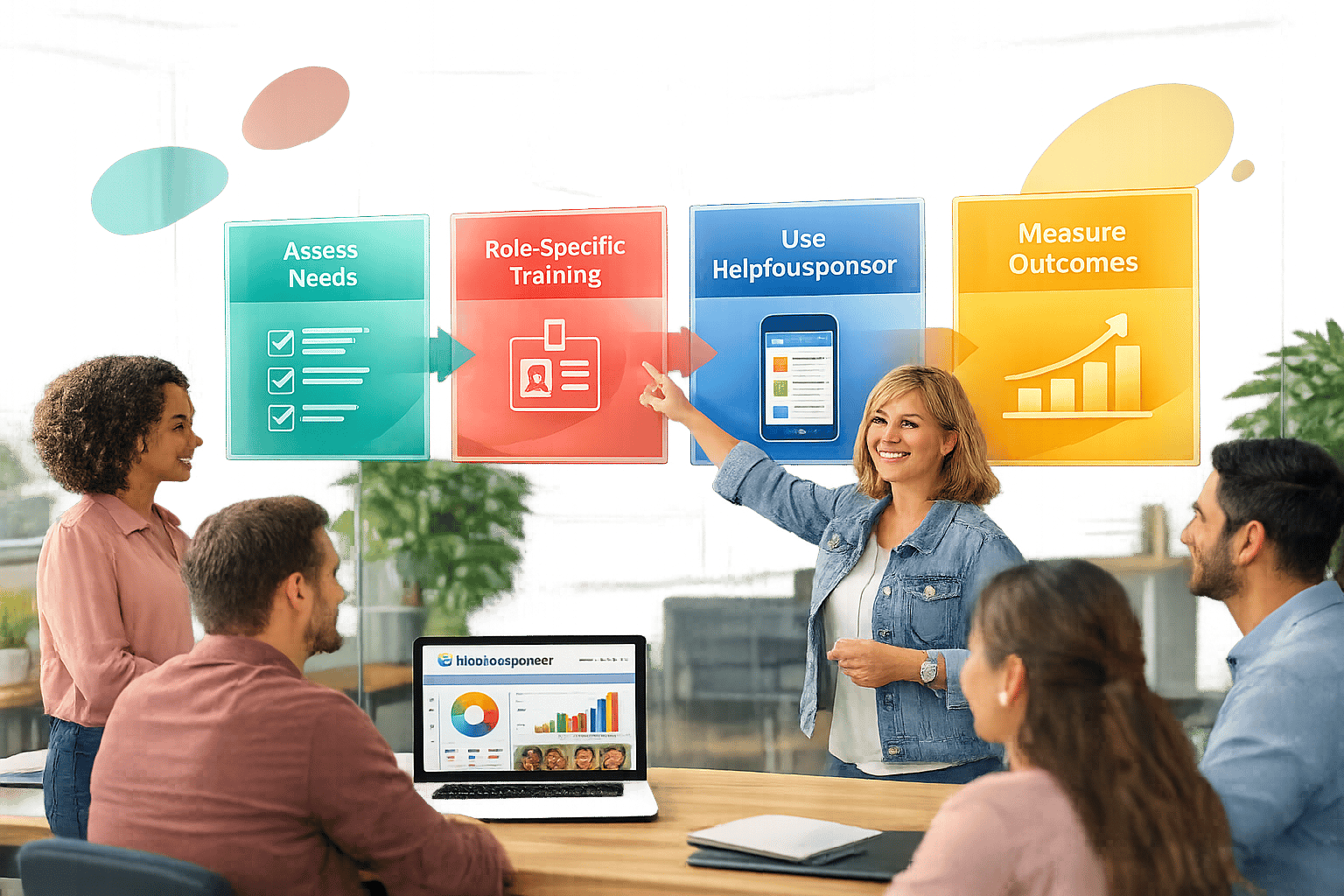
Staff training is the backbone of successful child sponsorship programs. It ensures your team can manage donor relationships, track child progress, and handle data accurately - key factors in breaking the cycle of poverty. For example, sponsored children are 27%–40% more likely to graduate high school and 14%–17% more likely to secure salaried jobs. But without proper training, errors like incomplete donor records (as seen in 15% of cases at World Vision in 2022) can lead to communication breakdowns and inefficiencies.
Here’s how to build an effective training program:
- Assess Skills: Identify gaps using performance observations, tests, and feedback surveys.
- Set Clear Goals: Use SMART goals like improving donor communication response times or ensuring accurate data entry.
- Create Role-Specific Modules: Tailor training to roles like donor relations, field staff, and financial officers.
- Use Interactive Methods: Include hands-on practice, role-playing, and scenario-based exercises.
- Leverage Tools: Train staff on systems like HelpYouSponsor to streamline tasks and reduce errors.
Follow up with regular check-ins, refresher sessions, and updates to keep skills sharp. Strong training translates to better outcomes for children, stronger donor trust, and smoother operations.
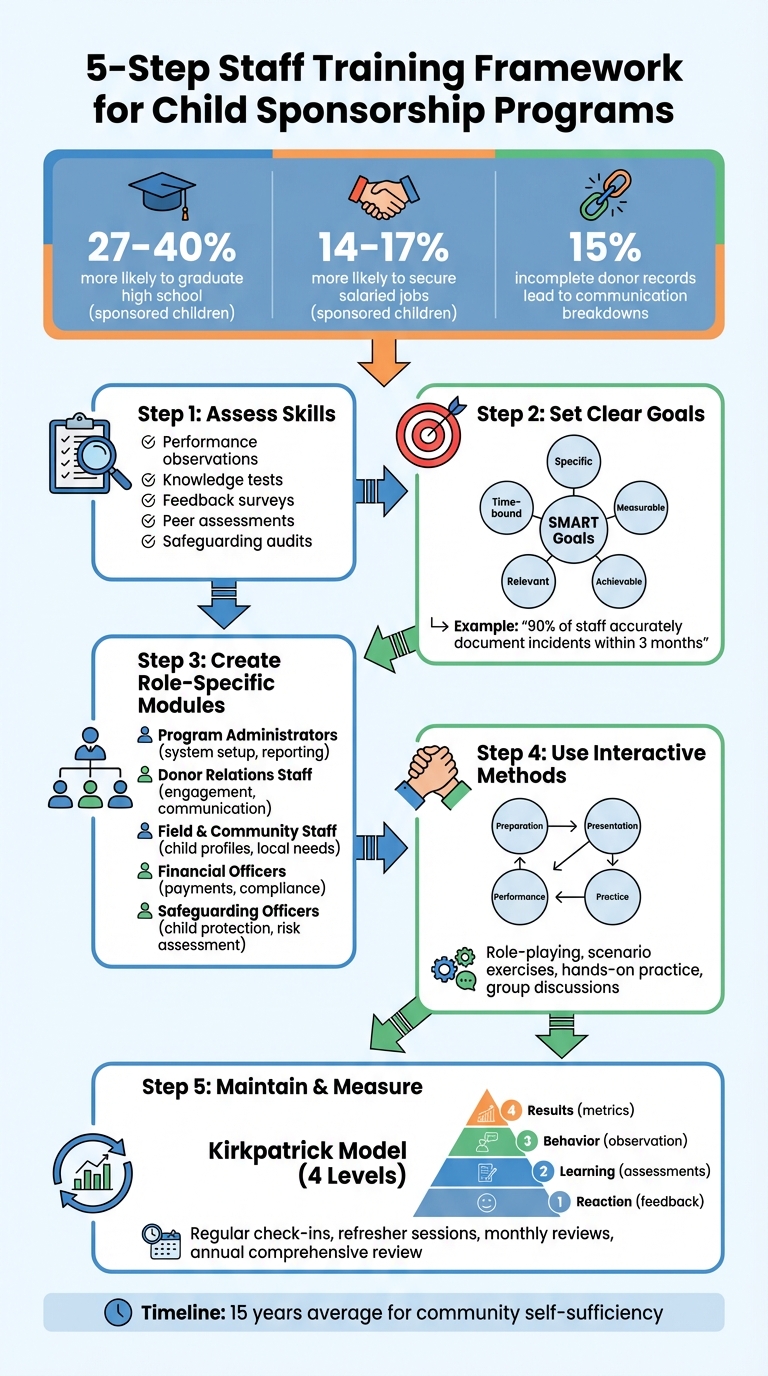
5-Step Staff Training Framework for Child Sponsorship Programs
Mastering Nonprofit Team Development: Insights from a Winning Professor!
Identifying Staff Training Needs
Before crafting a training program, it’s crucial to assess your team’s current skills and measure them against the requirements of each role.
Reviewing Key Roles and Responsibilities
Child sponsorship programs rely on a variety of roles, each with unique responsibilities. For example:
- Program administrators oversee system setup, generate reports, and plan strategically.
- Donor relations staff focus on engaging donors, managing communications, and building relationships.
- Field and community staff work directly with children, updating profiles and assessing local needs.
- Financial officers handle payments and ensure compliance with financial regulations.
- Safeguarding officers prioritize child protection and conduct risk assessments.
Each role demands specific skills. For instance, donor relations teams need excellent communication abilities and familiarity with child sponsorship software. Field staff must excel in cultural awareness and data collection. Financial officers should be well-versed in accounting software and regulatory standards. By mapping out these competencies, you establish a clear benchmark for what success looks like in each role.
Once this baseline is in place, you can evaluate where your team’s skills fall short of these expectations.
Finding Skill Gaps
A Training Needs Assessment (TNA) is a practical way to identify gaps between the skills your team has and the skills they need. This can be done through methods like performance observations, tests, and surveys.
- Performance observations reveal how well staff apply their knowledge during real-world tasks, such as handling donor communications, updating child profiles, or addressing community concerns.
- Knowledge tests uncover whether team members understand critical concepts like sponsorship protocols or child protection standards.
- Feedback surveys - especially anonymous ones - encourage honest input, which can be particularly useful for identifying areas where staff may feel less confident.
- Peer assessments offer another layer of insight, as colleagues often notice strengths and weaknesses that might otherwise go unaddressed.
It’s also important to gather input from the children and communities you serve. They can highlight gaps in your team’s competencies that internal assessments might overlook. Regular safeguarding audits are another valuable tool, as they not only ensure compliance with global standards but also expose vulnerabilities caused by knowledge gaps. Together, these strategies provide a well-rounded view of your team’s training needs.
Building a Training Program
Once you’ve identified the skill gaps, the next step is creating a training program tailored to address those needs. The goal is to design a program that equips staff with the tools they need to handle real-world challenges effectively. This approach lays the groundwork for setting meaningful goals and developing focused training modules.
Setting Training Goals
Start by defining SMART goals - Specific, Measurable, Achievable, Relevant, and Time-bound - to track the success of your training efforts. For instance, instead of a broad objective like "improve staff performance", aim for something concrete: "Within three months, 90% of staff will be able to accurately document playground incidents".
These goals should align closely with the outcomes your sponsorship program seeks to achieve. For example, if your aim is to ensure 90% of sponsored children receive annual medical check-ups, a training goal could focus on teaching field staff how to schedule and monitor these appointments effectively. Similarly, if boosting donor retention is a priority, your goals might emphasize improving communication skills or reducing response times to donor inquiries.
Think about both immediate skills and long-term growth. Since helping communities achieve self-sufficiency often takes around 15 years, your training should prepare staff for sustained efforts rather than short-term fixes. This means focusing on competencies like community leadership and transitioning responsibilities gradually - skills that go beyond day-to-day tasks.
Developing Core Training Modules
Your training content should reflect the diverse roles and responsibilities within your organization. Structure the modules to move from foundational concepts to more specific, role-based applications. This step-by-step approach, inspired by Elaboration Theory, helps staff build their knowledge without becoming overwhelmed.
Start with universal topics like program fundamentals, child protection, and cultural sensitivity. Then, tailor additional modules to specific roles:
- Donor Relations Staff: Training on engagement strategies and effective communication.
- Field Staff: Modules on data collection techniques and assessing community needs.
- Financial Officers: Content focused on compliance standards and accounting practices specific to sponsorship programs.
Collaborate with subject-matter experts to ensure accuracy. For example, involve your safeguarding officer in creating child protection training or ask your most experienced donor relations manager to contribute to communication modules. This collaboration ensures that your training is grounded in practical experience, not just theory.
Adding Interactive Learning Methods
Interactive methods make training more engaging and improve retention. Dave Meier, author of The Accelerated Learning Handbook, highlights this:
Unless all four components [Preparation, Presentation, Practice, Performance] are present in one form or another, no real learning occurs.
Role-playing exercises are particularly effective in child sponsorship work. For example, staff can practice handling tough conversations, such as explaining program changes to donors or addressing safeguarding concerns with community members. Scenario-based exercises help sharpen problem-solving skills, while group discussions allow team members to share insights, especially when experience levels vary across the team.
Hands-on practice is also crucial. If your organization uses software to solve child sponsorship challenges like HelpYouSponsor, dedicate time for staff to explore the platform. Let them practice entering sample records or generating reports in a training environment where errors won’t have real consequences.
A great example of this approach comes from the Somerset Safeguarding Children Partnership. In January 2025, they implemented the Phew Learning Management System, which transformed how they tracked training compliance and fostered collaboration across teams. Steve Macabee, a representative of the partnership, noted the system’s ability to significantly improve both compliance tracking and team collaboration. While your organization might use different tools, the key takeaway is clear: interactive and trackable training leads to measurable improvements in staff performance.
Implementing Training
Once you've designed a tailored training program, the next step is putting it into action. Rolling out training effectively means juggling staff schedules, providing hands-on practice with the tools they'll use daily, and keeping an eye on how they apply their new skills in practical settings.
Scheduling and Running Training Sessions
When planning training sessions, it's important to align them with staff availability and nonprofit fundraising strategies that support program goals. If your team spans multiple time zones or includes field staff, offering a mix of in-person and virtual sessions can be helpful. Keep sessions short and focused - 60 to 90 minutes is ideal. Long, all-day events often lead to information overload, which can be counterproductive.
Once the schedule is set, prioritize hands-on, practical training to ensure employees are comfortable using the system.
Training Staff on HelpYouSponsor
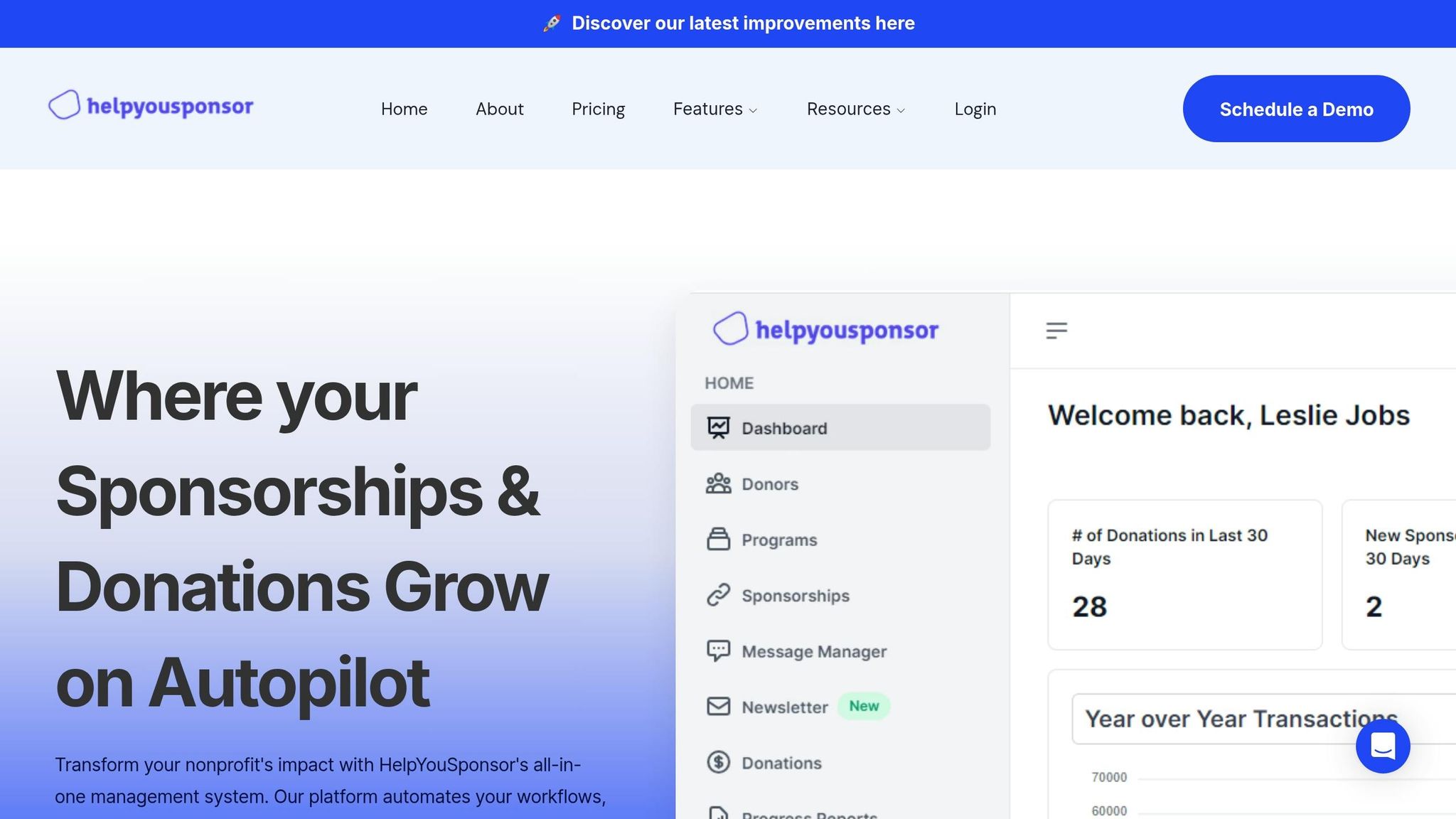
For organizations using HelpYouSponsor to manage sponsorship data, dedicate specific sessions to exploring its core features. This platform automates the majority of sponsorship tasks, enabling staff to spend more time supporting children directly and less on administrative tasks.
Start by walking through the platform's five-step setup process: creating a recipient program, attaching program settings, building recipient and donor forms, configuring auto-email sets, and adding recipients. It’s also important for staff to understand the three main program types - Contribution (threshold-based), Number of Sponsors (count-based), and Campaign (cause-based) - as each requires a different management approach.
Encourage staff to look for the green checkmark in the Manage Programs section, which confirms that a program is fully set up and ready to go. Point out the green icons that provide instant, context-specific guidance when needed. Additionally, allow staff to use the donor login link to experience the platform from a sponsor’s perspective , which is a key part of maintaining donor stewardship on a budget.
Once staff are comfortable with the system, the focus shifts to observing how they apply these skills in real-world situations.
Observing On-the-Job Application
Training doesn’t stop in the classroom - it continues on the job. Monitor how staff apply their new skills by conducting regular check-ins. Pay attention to how they navigate the Recipients and Campaigns menus in HelpYouSponsor to manage program attachments and data.
During the first 30 to 60 days, schedule weekly check-ins. These short conversations can reveal where staff feel confident and where they might need extra help. For example, if someone struggles with configuring auto-email sets, provide one-on-one coaching to address the issue.
Use this observation period to identify patterns. If multiple team members are facing similar challenges with a feature or process, it could point to a gap in the training material that needs to be addressed in future sessions. By refining training based on real-world feedback, you can ensure your team is fully equipped to succeed.
Measuring and Maintaining Training Results
Training doesn’t stop once the sessions are over - it’s about creating lasting change. Without regular evaluation and follow-up, even the most effective training can lose its impact over time.
Evaluating Training Outcomes
Once training is rolled out, it’s time to see how it’s making a difference. The Kirkpatrick Model offers a four-level framework for assessing training success. Here’s how it works:
- Level 1 (Reaction): Start by gathering immediate feedback. Ask participants if the content was relevant and useful.
- Level 2 (Learning): Use quizzes, assessments, or hands-on demonstrations to confirm they’ve mastered new skills.
- Level 3 (Behavior): Observe how employees are applying what they’ve learned. For instance, are they navigating HelpYouSponsor’s tools effectively or improving their donor communication techniques?
- Level 4 (Results): Look at the bigger picture. Are donor retention rates improving? Are administrative tasks being handled more efficiently?
Collect both qualitative insights (through surveys, interviews, or reviews) and hard numbers (by comparing performance metrics before and after training). Platforms like HelpYouSponsor can simplify this process by automating feedback collection and tracking how training impacts key metrics. According to Continu, this ongoing evaluation approach helps refine and strengthen your training program over time.
Once you’ve evaluated the results, the next step is ensuring that these skills stick.
Offering Ongoing Support
To make training stick, continuous support is key. This could mean setting up mentorship programs or organizing regular refresher sessions. These could be as simple as informal “lunch-and-learn” meetings or more structured mini-trainings tailored to specific topics.
If you notice recurring issues - like staff struggling with a particular HelpYouSponsor feature - consider scheduling focused mini-sessions to address those challenges. Many Learning Management Systems can even automate refresher training, ensuring employees stay sharp over the long term.
Updating Training for Future Needs
Training isn’t static - it should evolve as your organization grows. Use the insights from evaluations and ongoing support to keep your materials current. Review metrics monthly and perform a comprehensive annual review to ensure your training aligns with your mission and goals. Feedback forms are especially useful for identifying outdated content or areas needing improvement.
When you update training materials, let your team know what’s changed and why. Sharing the evaluation results and explaining how their feedback shaped the updates shows that their input matters. This transparency fosters engagement and buy-in. As your sponsorship program evolves - whether through child-led selection models or community-focused initiatives - make sure your training reflects these new directions.
Conclusion
Strong staff training is the backbone of successful sponsorship programs. The numbers speak for themselves: sponsored children are 27%–40% more likely to graduate high school and 14%–17% more likely to land salaried jobs as adults.
To achieve these outcomes, your training approach should target both essential skills and practical tools. Begin by pinpointing the specific skills your team needs, then create training modules to fill those gaps. Make sure to include training on key HelpYouSponsor features that streamline routine tasks, alongside lessons on donor communication and child development strategies.
Initial training is just the beginning. To maintain momentum and effectiveness, ongoing support is crucial. Regular check-ins, refresher courses, and continuous learning opportunities ensure your team stays sharp and adapts as your program evolves. Organizations that invest in comprehensive training often see faster data updates and fewer mistakes.
"Child sponsorship changes lives. With HelpYouSponsor, we can focus on our mission instead of paperwork. It's helped us reach more children and engage our donors in meaningful ways."
- Diana Scimone, Born2Fly
FAQs
What should a training needs assessment include?
A training needs assessment plays a crucial role in identifying the skills, knowledge gaps, and improvement areas for staff involved in managing child sponsorship programs. It should focus on several key aspects: evaluating current staff competencies, understanding organizational requirements, and pinpointing gaps in areas like child protection, donor management, communication, and program delivery. By aligning training efforts with these priorities, organizations can ensure their teams are equipped to achieve goals effectively while prioritizing child safety.
How do I set SMART training goals for sponsorship staff?
When setting training goals, using the SMART framework ensures your objectives are clear and actionable. Here's how to apply it:
- Specific: Clearly define what you want to achieve. For instance, aim to improve staff knowledge on safeguarding policies.
- Measurable: Identify how you'll track progress, like monitoring training completion rates or post-training assessments.
- Achievable: Set goals that are realistic given your available resources, such as budget and time.
- Relevant: Ensure the goals align with your overall mission, like strengthening donor relationships through better communication skills.
- Time-bound: Establish a clear deadline, such as, "Complete safeguarding training by the end of Q2 2026."
By sticking to this framework, you can create goals that are both practical and impactful.
How can I prove training improved donor retention and data accuracy?
To understand the impact of your training efforts, it's essential to track key metrics both before and after the sessions. Focus on areas like retention rates, donor engagement, and data quality to get a clear picture of improvements.
Start by establishing baseline metrics. For example, look at current retention percentages or the frequency of data errors. After training, compare these numbers to the updated results. Are retention rates climbing? Are there fewer mistakes in your donor records? These comparisons will help quantify the training's effectiveness.
Leverage donor management tools to dig deeper into trends and connect the dots between training and performance improvements. These tools can offer insights into patterns that might otherwise go unnoticed. When presenting your findings, use clear data visualizations or side-by-side comparisons to make the impact easy to understand. This approach not only validates the training but also highlights areas for further growth.