
Study: Impact of Cultural Context on Program Success
Sponsorship programs succeed only when designed to fit local culture; ignoring norms can harm community cohesion despite good intentions.

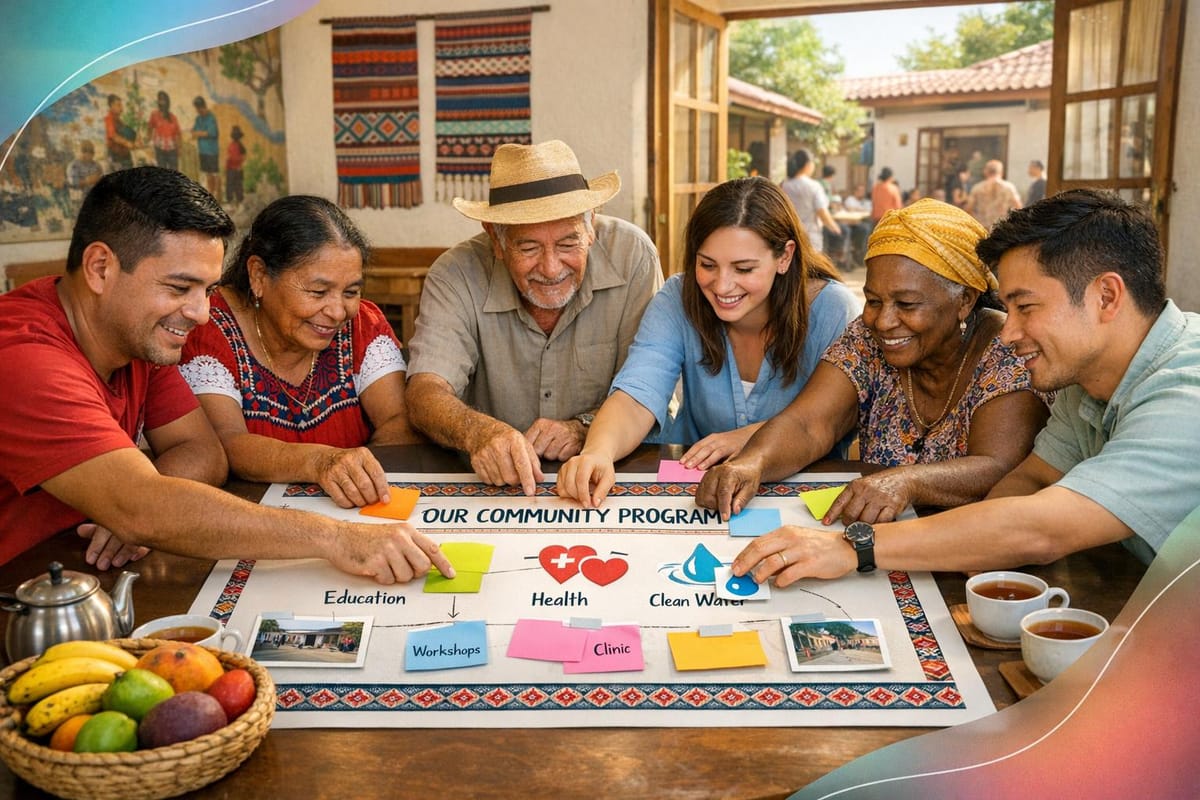
Child sponsorship programs can improve children's well-being, education, and future employment. However, success depends heavily on understanding and respecting local customs. A study of World Vision programs in countries like Georgia, Ethiopia, and Peru (2006–2018) revealed:
- Sponsor-to-child communication (letters, photos, gifts) boosts children's well-being but can cause jealousy among non-sponsored families.
- Local traditions and social dynamics influence program outcomes significantly.
- Tailored communication methods, such as using native languages, strengthen sponsor-child relationships.
- Programs designed without considering local norms risk failure, as seen in examples like a fish processing factory in Kenya.
Key Recommendations for Nonprofits:
- Work closely with local leaders to understand community needs.
- Avoid one-size-fits-all approaches; design effective nonprofit sponsorship programs based on local values.
- Combine surveys with interviews to identify hidden challenges. This approach is essential for holistic impact assessment within the community.
- Use technology to manage programs while respecting local norms.
Conclusion: Sponsorship programs thrive when they align with local practices, address community-wide impacts, and use culturally sensitive approaches.
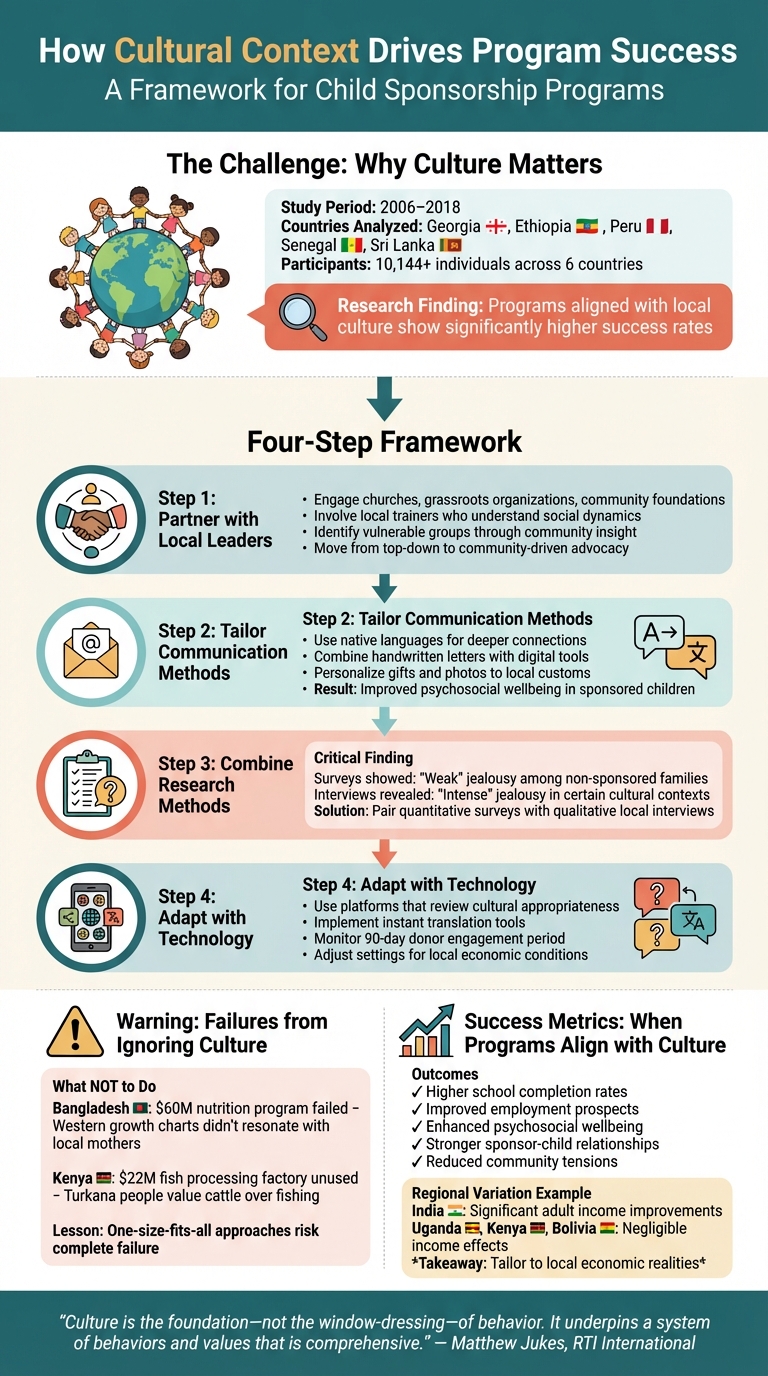
4-Step Framework for Culturally Responsive Child Sponsorship Programs
Research Findings on How Culture Affects Program Results
Program Adaptation and Results
Studies suggest that tailoring programs to align with local cultural values can significantly improve their effectiveness. For example, research published in the Journal of Political Economy analyzed data from 10,144 individuals across Uganda, Guatemala, the Philippines, India, Kenya, and Bolivia. The findings revealed that child sponsorship programs were associated with higher school completion rates and improved employment prospects. According to the researchers:
"These impacts may be due in part to programming that raises the aspirations and self-expectations of impoverished children."
- Paul Glewwe, Laine Rutledge, and Bruce Wydick
The study emphasized that programs designed with cultural considerations in mind showed the most promising results.
Regional case studies further demonstrate how cultural contexts influence program outcomes.
Case Studies from Different Regions
Adding depth to these findings, a recent case study explored regional differences in program effectiveness. Published in May 2023 in Development in Practice, a World Vision study examined sponsorship programs in Georgia, Ethiopia, Peru, Senegal, and Sri Lanka. Over a 12-year period, researchers Simon Feeny, Matthew Clarke, Gill Westhorp, Michael Jennings, and Cara Donohue analyzed extensive survey data. They found that personal interactions between sponsors and children - such as exchanging letters, photos, and gifts - boosted children's psychosocial wellbeing.
However, the impact of these programs wasn’t uniform. In some regions, community dynamics played a significant role. While survey data suggested that feelings of jealousy among non-sponsored families were generally mild, qualitative interviews revealed that in specific cultural settings, these emotions could be much stronger. This highlights the importance of understanding local contexts when implementing sponsorship programs.
sbb-itb-a630d3d
How Different Communication Styles Affect Programs
Relationship-Focused vs. Direct Communication Cultures
Communication styles play a major role in shaping how sponsorship programs connect with communities and build meaningful relationships. For example, relationship-focused communication - like handwritten letters, photos, and thoughtful gifts - often creates deeper bonds than digital messages. Between 2010 and 2020, sponsor Lokajit Tikayatray supported six children through World Vision India and SOS Children's Villages of India. By choosing to send handwritten letters in the children’s native languages instead of relying on digital communication, Tikayatray built relationships that lasted over a decade. As he explained:
"Handwritten letters are priceless."
This approach transforms sponsorship into something far more personal, moving beyond just financial support. In fact, a 2023 study of World Vision programs in countries like Georgia, Ethiopia, Peru, Senegal, and Sri Lanka found that personal touches, such as letters and gifts, significantly improved the psychosocial wellbeing of sponsored children.
Respecting Local Customs in Program Design
Tailoring communication strategies to fit local cultures is essential for program success. Using native languages, for instance, not only feels more authentic but also helps build stronger connections in relationship-focused cultures. Traditional methods of communication often have a deeper emotional impact than the convenience of digital tools, offering cost-effective donor stewardship strategies for organizations with limited resources.
Cultural awareness goes beyond language. A five-country study revealed a gap between survey data and real-life experiences: while survey results showed "weak" evidence of jealousy among non-sponsored families, interviews uncovered that these feelings were much more "intense" in certain cultural contexts. This mismatch underscores the importance of combining quantitative data with local insights to address hidden social dynamics that standardized reporting might overlook.
Since communication strategies can vary widely depending on the country, a one-size-fits-all approach simply doesn’t work. Programs need to carefully monitor how the community as a whole reacts to sponsorship efforts. This helps ensure that interactions with sponsored children don’t unintentionally create tension or resentment among neighbors who aren’t part of the program. By blending culturally sensitive practices with the best child sponsorship software, nonprofits can better manage and improve their programs.
How to Adapt Programs to Local Communities
Working with Local Leaders in Planning
Collaborating with local institutions - such as churches, grassroots organizations, and community foundations - is essential for understanding the unique social dynamics of a community. Engaging directly with local leaders allows programs to align their goals with the community's actual needs. This approach moves away from top-down individual sponsorships and focuses instead on community-driven advocacy.
Local trainers and staff play a critical role by bringing their deep understanding of the community’s culture and social structure. They can identify vulnerable groups and deliver support in ways that resonate with the community. These individuals grasp details that external organizations might overlook, like family roles or local power dynamics. By involving community leaders and residents from the outset, programs are better positioned to address real needs rather than outsider assumptions.
This groundwork is vital for creating materials and methods that truly fit the local context.
Tailoring Program Materials and Methods
The effectiveness of a program depends on how well it aligns with the community, not on copying standardized models. A striking example of this mismatch is a $60 million nutrition program in Bangladesh that failed over five years because local mothers didn’t connect with Western growth charts or processed foods.
Starting with a "blank slate" often works better than trying to adapt pre-existing models. For example, in rural Tanzania, RTI International’s team, led by Matthew Jukes, discovered that "obedience" was a core value in the community - an element absent in 33 global Social and Emotional Learning (SEL) frameworks. Jukes explained:
"Culture is the foundation - not the window-dressing - of behavior. It underpins a system of behaviors and values that is comprehensive".
Program materials should be created in local dialects and designed to accommodate different literacy levels. Instead of relying on imported, unsustainable solutions like processed foods, programs should incorporate locally available resources. This approach ensures that interventions are practical and maintainable over time. For instance, the failure of a $22 million fish processing factory in Turkana, Kenya, highlights the risks of ignoring local values. The facility, funded by Norway, remains unused because the Turkana people see cattle ownership as a symbol of status and view fishing as a lesser livelihood.
By tailoring programs to local realities, organizations can avoid unnecessary disruptions and build trust within the community.
Addressing Conflicts from Outside Influences
When external ideas clash with local traditions, open and respectful dialogue becomes crucial. In Tanzania, for example, teachers emphasized "curiosity" in education, while parents prioritized "obedience" and "respect." Researchers suggested fostering conversations to bridge these differing perspectives and find ways to incorporate curiosity within the community’s cultural framework.
Matthew Jukes underscored the importance of cultural analysis during these discussions, emphasizing that such dialogues are key to meaningful adaptation. Understanding how traits like emotional control help sustain community bonds allows nonprofits to introduce new methods without destabilizing existing structures.
This thoughtful approach helps programs integrate new ideas while respecting and preserving local traditions.
Using Technology to Support Local Program Needs
Managing Local Programs with HelpYouSponsor
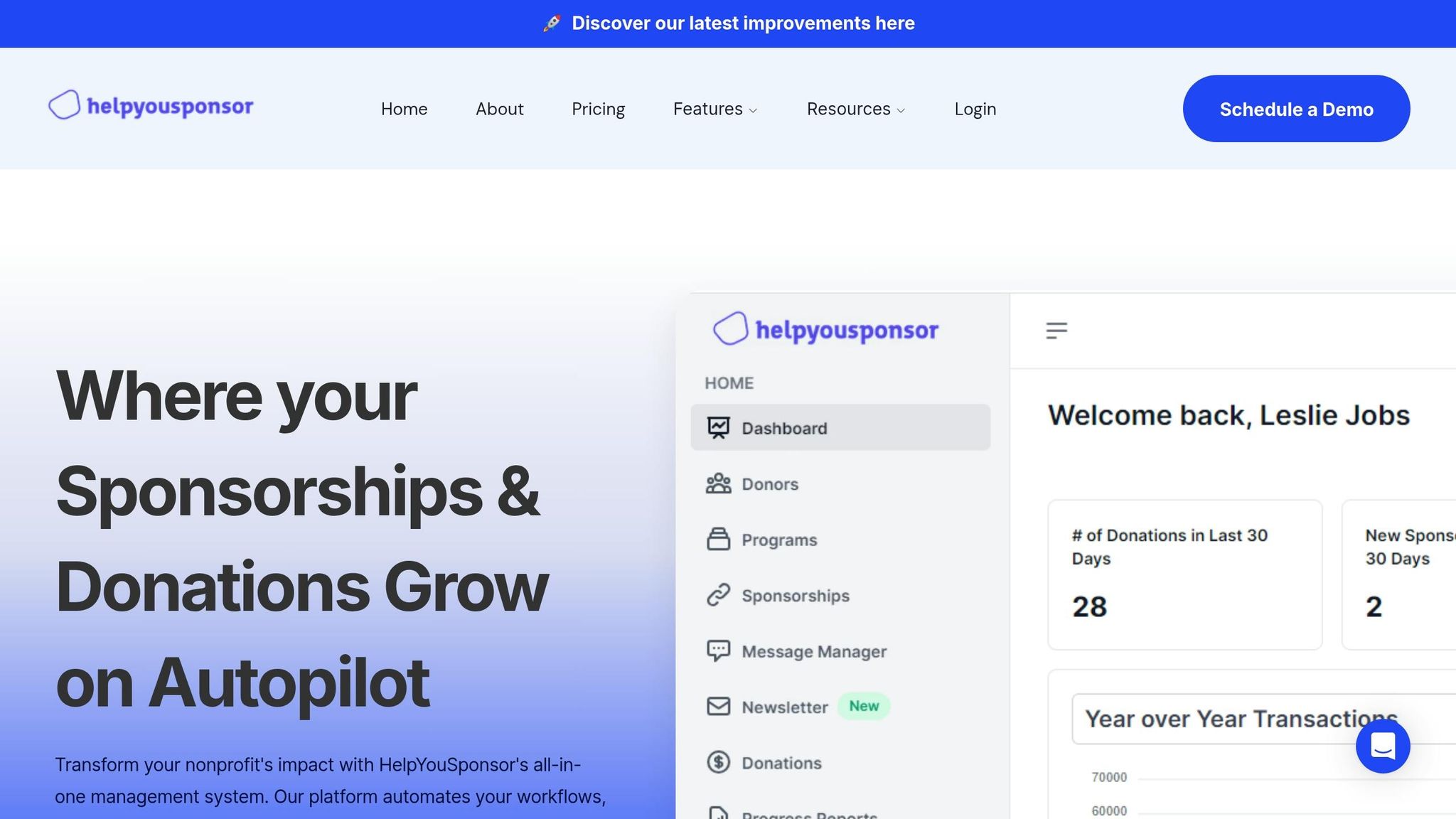
Technology platforms like HelpYouSponsor are making it easier for nonprofits to balance sensitivity to local customs with efficient operations. For example, HelpYouSponsor's platform reviews communications to ensure they align with cultural norms, anonymizes sensitive information by using unique IDs and blurred images, and allows nonprofits to adjust settings to reflect local economic conditions. These tools create a foundation for more thoughtful and culturally aware interactions with donors.
Improving Donor Communication with Local Knowledge
Beyond management tools, effective donor communication benefits greatly from culturally adaptive technologies. Building on earlier discussions about tailored communication, HelpYouSponsor employs instant translation tools to bridge language gaps. It also provides pre-designed, culturally appropriate message templates for occasions like birthdays and holidays.
A real-world example of such culturally informed solutions comes from Children International's work in Colombia in July 2022. The organization introduced a new database system that integrated with modern banking platforms. This innovation ensured families received economic assistance directly, even during challenging times like the pandemic. Alvaro Zapata, Network Systems Coordinator, described the initiative:
"We created an entirely new database … and it allows us to manage contact information for the sponsored family as well as the ability to deliver the economic assistance package directly to them through modern banking platforms".
Additionally, automated engagement features enhance these technological efforts by helping nonprofits maintain donor relationships over time. For instance, HelpYouSponsor's tools identify a critical 90-day period following an initial donation. During this time, nonprofits can group donors based on their preferences and send personalized updates, fostering deeper connections with the communities they are supporting.
Cultural Adaptation Interview Series - Dr. Kelsie Okamura
Conclusion: Main Points for Nonprofits
Research highlights how deeply cultural context influences the success or failure of sponsorship programs. For example, a World Vision study conducted in countries like Georgia, Ethiopia, Peru, Senegal, and Sri Lanka revealed that sponsor communications impact children's psychosocial wellbeing differently depending on the country. This underscores why uniform strategies often fall short, making it clear that nonprofits need to rethink program design and evaluation to better align with local realities.
Community dynamics are just as critical as individual outcomes. While survey data from the same study suggested that jealousy among non-sponsored children was a minor concern, qualitative findings painted a different picture, showing significant community tensions that surveys alone missed. This highlights the importance of pairing surveys with local interviews to grasp the full scope of a program's community impact.
Income outcomes also reveal the need for region-specific approaches. For instance, India demonstrated significant improvements in adult income, while countries like Uganda, Kenya, and Bolivia saw negligible effects. These differences show that nonprofits must tailor their strategies to fit local economic conditions and job markets rather than assuming universal outcomes.
Technology can play a pivotal role in addressing cultural differences, but it must be used thoughtfully. By combining local insights with modern tools, nonprofits can fine-tune their strategies. Platforms like HelpYouSponsor are great examples, enabling organizations to monitor community dynamics and adjust their communication strategies to fit local norms. However, technology should serve as a complement to - not a replacement for - the local knowledge that drives meaningful impact.
FAQs
How can nonprofits identify cultural risks before starting a sponsorship program?
Nonprofits can better understand local risks by diving into the community's social norms, values, and sensitivities. This means paying attention to how sponsorships are perceived, understanding communication preferences, and being mindful of any taboos that could create tension - like jealousy among families who aren't sponsored.
To navigate these challenges, nonprofits can:
- Review examples of successful programs in similar settings.
- Collect feedback directly from the community to gauge their concerns and expectations.
- Collaborate with local stakeholders who understand the nuances of the area.
- Test the waters with small pilot activities to identify potential cultural hurdles.
These steps can help ensure that programs are designed in a way that respects and aligns with the community's unique needs.
How can programs prevent jealousy between sponsored and non-sponsored families?
Programs can help reduce jealousy by encouraging open communication and creating a sense of belonging for everyone. Start by clearly explaining the sponsorship benefits, making it clear that support is tailored to individual needs rather than comparisons. To bring the community together, invite non-sponsored families to participate in activities such as development projects or educational initiatives. This not only minimizes feelings of inequality but also promotes shared growth and stronger community bonds, which are key to the program's success.
What should nonprofits track besides surveys to measure real community impact?
Nonprofits should monitor metrics like beneficiary satisfaction, progress toward program goals, community and family involvement, health and well-being advancements, and educational improvements. By combining these indicators with surveys, organizations can gain a clearer picture of how their programs are affecting the community.