
How Planned Giving Boosts Child Sponsorship Fundraising
Planned giving's role in child sponsorship: long-term funding, higher ROI, donor retention, and practical setup steps.


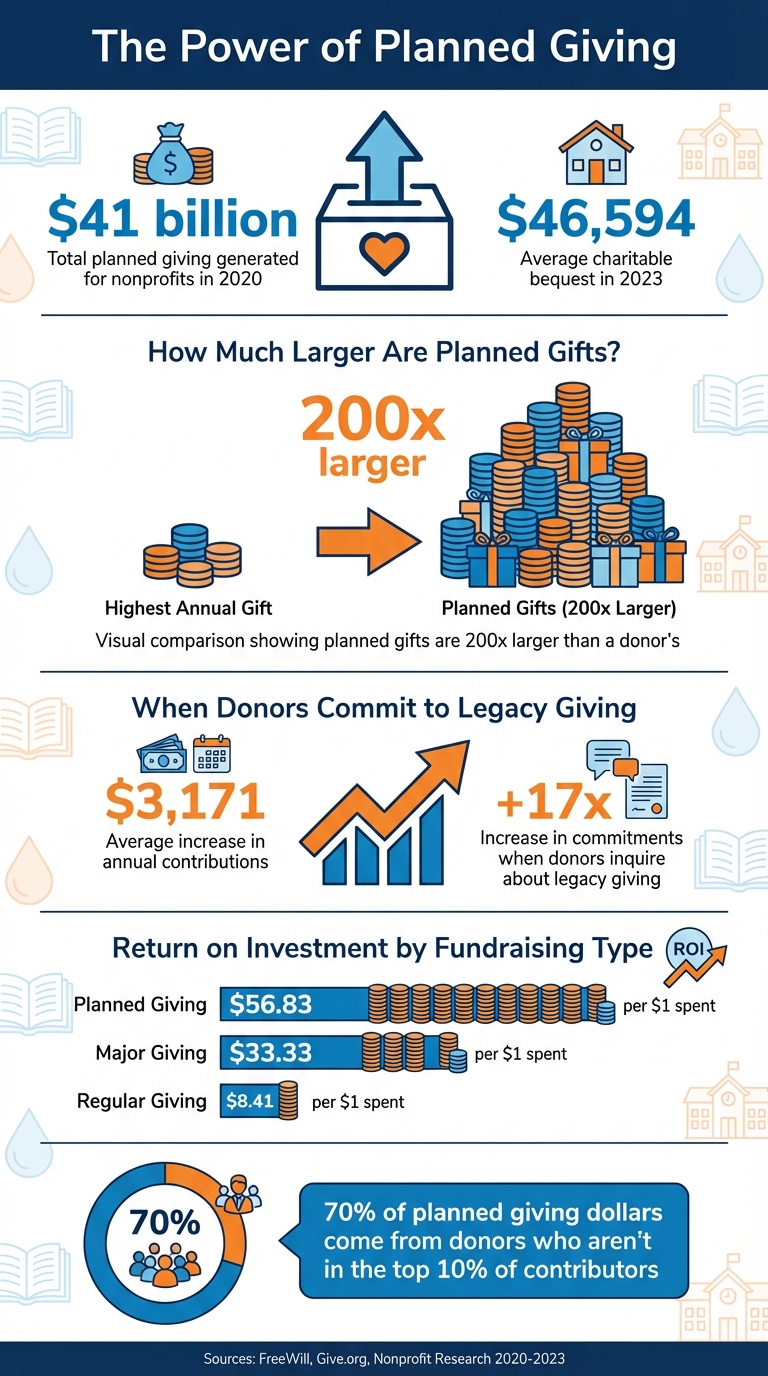
Planned giving, also known as legacy giving, helps child sponsorship programs secure long-term funding by encouraging donors to include nonprofits in their estate plans. These gifts are often much larger than regular donations - on average, nearly 200 times a donor's highest annual gift - and provide financial stability for large-scale, community-focused initiatives like building schools, wells, and libraries, reflecting current child sponsorship trends.
Key points:
- Planned giving generated $41 billion for nonprofits in 2020.
- Average charitable bequest: $46,594 (2023).
- Donors who make legacy commitments often increase annual contributions by $3,171.
Planned giving options include bequests, charitable gift annuities, and naming nonprofits as beneficiaries of retirement accounts. These strategies not only ensure future funding but also deepen donor relationships by aligning their values with the mission of breaking the cycle of poverty for children. With minimal costs and a high return on investment - $56.83 for every $1 spent - planned giving is a cost-effective way to sustain child sponsorship programs over time.
Planned Giving Impact Statistics for Child Sponsorship Programs
What Is Planned Giving and How Does It Support Fundraising?
Planned Giving Basics
Planned giving involves setting up donations during a donor's lifetime for distribution in the future through tools like wills, trusts, or similar arrangements. It offers supporters a way to leave a lasting legacy while making a meaningful difference.
Some common forms of planned giving include:
- Bequests: Leaving a specific amount or a percentage of an estate to an organization in a will.
- Charitable Gift Annuities: Donors give a significant gift in exchange for fixed income payments for life.
- Beneficiary Designations: Naming a nonprofit as the beneficiary of life insurance policies, IRAs, or 401(k) plans.
Other options include charitable remainder trusts, donations of stocks, or even real estate.
To put it into perspective, the average charitable bequest in 2023 was $46,594, and total bequests amounted to approximately $45.6 billion in 2022. Interestingly, 15% of individuals who created estate plans in 2023 included a bequest, with those aged 65–84 contributing 38% of all bequest dollars.
This model plays a crucial role in ensuring financial stability for initiatives like child sponsorship programs.
How Planned Giving Supports Child Sponsorship Programs
Child sponsorship programs depend on consistent, long-term funding to help break the cycle of poverty. Planned giving provides the financial foundation needed to sustain these programs over time.
Instead of directly giving cash to individual children, child sponsorship organizations use donations to fund broader community projects. These initiatives might include building wells for clean water, libraries, or computer labs. Planned gifts are essential for securing the large-scale funding required for such infrastructure-heavy, long-term projects. For instance, organizations like Children International allocate 80% of their total operating expenses to child and youth programs, underscoring the importance of sustained planned giving.
"Child sponsorship involves soliciting funds to assist needy children... donors are expected to make more than a one-time gift and to contribute a certain amount on a monthly or periodic basis." – Give.org
Benefits of Planned Giving for Child Sponsorship Programs
Improved Financial Stability and Larger Donations
Planned giving creates a steady financial foundation for child sponsorship programs, often resulting in much larger contributions than regular donations. For example, the average bequest to a charity is $46,594, offering significant resources for long-term initiatives. In 2020 alone, planned giving generated over $41 billion in donations. This influx of funds allows organizations to go beyond meeting immediate needs, supporting infrastructure projects and ensuring future operations.
Interestingly, when donors commit to planned giving, they often increase their annual contributions by an average of $3,171.
"Planned gifts actually increase nearly 5% every year - even during recessions when other sources of revenue decline." – FreeWill
This financial stability enables nonprofits to operate more efficiently and focus on expanding their impact.
Lower Costs and Higher Returns
When it comes to fundraising, planned giving stands out for its exceptional return on investment. For every $1 spent, organizations typically see a return of $56.83 - a figure that far exceeds the returns from major giving ($33.33) or regular giving ($8.41).
One reason for these impressive returns is the low acquisition cost. Planned giving relies on existing donor relationships rather than expensive campaigns to attract new donors. Simple strategies, like adding a checkbox to online donation forms or including a link in email signatures, can promote legacy giving without additional costs.
Even more encouraging, about 70% of planned giving dollars come from donors who aren’t among the top 10% of contributors. This shows that planned giving programs can succeed without relying solely on wealthy donors, ensuring that child sponsorship programs can grow and sustain their efforts.
Deeper Donor Connections
Planned giving goes beyond financial benefits - it fosters stronger, more personal relationships with donors. When donors include child sponsorship programs in their estate plans, they’re making a deeply personal commitment to the cause, turning their support into a lasting legacy.
"Donors willing to leave a planned gift have a stronger attachment to the organization. By creating a legacy gifts program, nonprofits have a chance to strengthen relationships with these donors." – Donorbox
Recognizing these donors through initiatives like a legacy society strengthens community bonds and ensures long-term support. These donors often become advocates, involving their families and spreading awareness about the program. This type of engagement creates a partnership that extends far beyond financial contributions, encompassing estate planning tools, tax-saving advice, and educational resources that align with the mission of supporting children over the long term.
How to Set Up a Planned Giving Program for Child Sponsorship
Step 1: Get Leadership Support and Define Your Goals
The first step is to secure support from your board and leadership team. Present planned giving as a cost-effective strategy with high potential returns - data backs up its long-term benefits. This foundational support is essential for sustaining child sponsorship programs over time.
Form an advisory committee that includes at least one board member, a financial advisor, and an attorney. These experts lend credibility and provide technical guidance while educating leadership about tax benefits and estate planning options. Develop a case statement that clearly explains your organization's mission, financial standing, and how planned giving will directly impact child sponsorship programs. Emphasize the importance of long-term support, especially during the critical first two decades of a child’s life, to help break cycles of poverty.
"Planned giving should be an essential part of your fundraising strategy. Even if you do not see a return on your investment right away, you are investing in the future and attracting major gifts to your organization." – Kristine Ensor, Nonprofit Professional
Set up clear gift acceptance policies early on. Define which types of gifts - such as real estate, securities, or life insurance - your organization can accept. This ensures alignment with your mission while avoiding potential financial complications.
Step 2: Find and Categorize Potential Planned Giving Donors
Once leadership support is in place, shift your attention to identifying potential donors for planned giving. Start by analyzing your existing donor database. Focus on those who have shown consistent, long-term support, even if their individual contributions are moderate. Research indicates that 80% of individual donor revenue typically comes from the top 20% of donors.
Use wealth screening tools to identify donors with the financial capacity to make significant future gifts. Combine internal data, like giving history and addresses, with external indicators such as real estate ownership or stock holdings. Look for donors who meet three criteria: capacity (financial ability), affinity (emotional connection to child sponsorship), and propensity (a habit of charitable giving). Assign a team member to build and nurture these relationships.
Focus on donors who already have a connection to your mission. Instead of cold outreach, tap into your board's personal networks for warm introductions. Building these personalized relationships strengthens the financial base needed for long-term child sponsorship programs.
Step 3: Share Planned Giving Options with Donors
Start with bequests, as they are the simplest entry point and require no immediate financial outlay. Use straightforward language like "leave a percentage of your estate" or "a gift in your will" to make the process accessible. Provide sample bequest wording on your website that donors can share with their legal advisors.
For donors aged 70½ and older, highlight IRA rollovers and retirement plan distributions. These options can help reduce tax burdens for heirs while meeting required minimum distributions. Other planned giving options include appreciated securities (which avoid capital gains taxes) and life insurance policies (allowing donors to make significant gifts through small premium payments).
Position planned giving as a way for donors to leave a lasting legacy, rather than solely focusing on end-of-life planning. Share real-life stories of donors who have made legacy commitments to illustrate the tangible impact on child sponsorship programs. Integrate planned giving opportunities into all donor touchpoints, such as adding checkboxes to donation forms, linking to planned giving resources in email signatures, and creating dedicated landing pages on your website.
Step 4: Create Marketing Campaigns and Monitor Results
Once you’ve shared planned giving options, launch targeted marketing campaigns to drive donor commitment. Consider running an annual campaign during tax season when estate planning is top of mind. Keep your messaging simple and consistent across all communication channels. For example, include planned giving messages and links in email signatures and gift acknowledgments to keep the idea visible.
Establish a legacy society to honor donors who have made planned giving commitments. This fosters a sense of community and reduces the likelihood of donors changing their plans. Host educational events, such as webinars or in-person meetings, featuring financial experts from your advisory committee. These sessions can explain how planned gifts benefit both the donor’s family and your child sponsorship programs.
Use your CRM to track donor engagement and measure campaign success. Set clear goals, such as the number of legacy commitments secured or the volume of informational materials requested. Platforms like HelpYouSponsor can help you monitor these metrics and manage relationships effectively, ensuring the continued growth of your planned giving program alongside your child sponsorship efforts.
Tracking Results and Growing Your Planned Giving Program
Important Metrics to Monitor
Once your planned giving program is up and running, keeping an eye on specific metrics is crucial to measure progress and fine-tune your strategies. Start by tracking lagging indicators like the average gift size and total planned gifts secured - these show how well you've performed so far. Pair these with leading indicators such as donor retention rates and the number of meaningful connections made, which can help predict future success.
One key metric to track is your donor retention rate - the percentage of donors who gave in both the current and previous year. To calculate this, divide the number of repeat donors by the total donor count from the previous year. While average nonprofit retention rates can be as low as 18.1%, planned giving programs often start at around 30%. By focusing on relationship-building, you can aim for retention rates between 50% and 70%.
Another essential metric is Donor Lifetime Value (DLV). This is calculated by multiplying the average donor lifespan by the donation amount and frequency. For instance, a monthly donor giving $50 over three years has a DLV of about $1,800, while a one-time donor might only contribute $200.
Pay close attention to meaningful connections - personalized touchpoints with planned giving prospects. These interactions are vital, especially since about 90% of a nonprofit's fundraising revenue often comes from just 10% of its donor base. Additionally, monitor donor upgrade frequency and your lapsed donor rate to identify and address engagement issues early.
| Metric | Before Planned Giving Program | Post-Implementation Targets |
|---|---|---|
| Number of Planned Gifts | 0–2 (Unsolicited) | 5+ (Strategic) |
| Donor Retention Rate | ~30% | 50%–70% |
| Average Gift Size | $50–$200 (One-time) | $1,000+ (Lifetime Value) |
| Meaningful Connections | Occasional/Generic | Frequent/Personalized |
| Donor Lifetime Value | Low (Short-term focus) | High (Long-term legacy focus) |
Using technology can make tracking these metrics much easier. Tools like HelpYouSponsor can play a key role in growing your program effectively.
How HelpYouSponsor Supports Program Growth
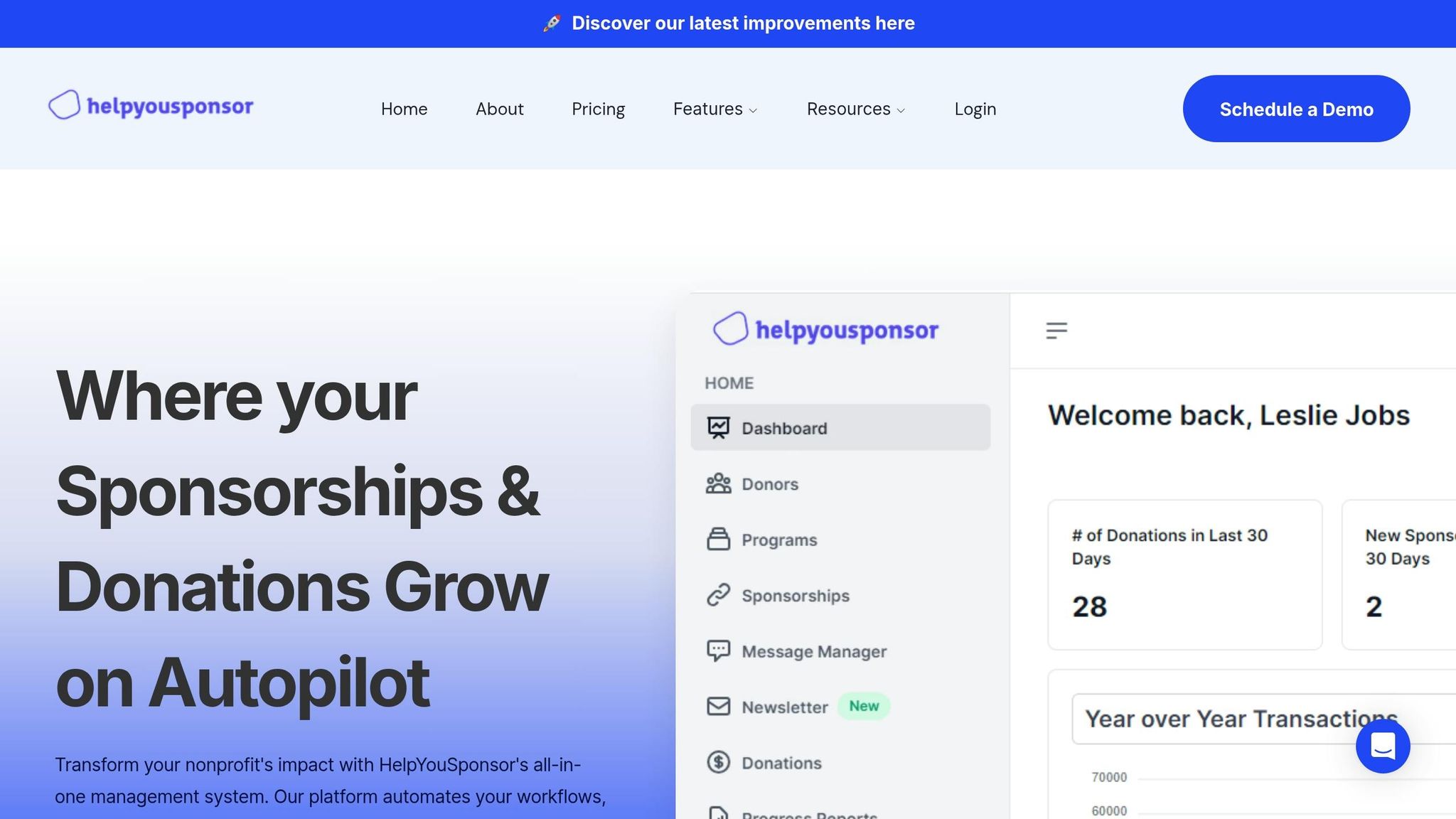
Managing donor data manually can be time-consuming and limit your ability to build strong donor relationships. That’s where HelpYouSponsor comes in. This platform simplifies donor management by organizing complex data, tracking specific gift types like bequests or IRA rollovers, and automating the monitoring of key performance indicators.
With all donor information centralized, HelpYouSponsor makes it easier to identify loyal supporters - like those who have donated in 8 out of the last 12 months. It also automates routine tasks, such as sending receipts and thank-you notes, freeing up your team to focus on meaningful, high-touch engagement with donors.
The platform’s reporting tools are particularly useful for measuring campaign success and identifying which outreach efforts are turning prospects into legacy donors. These insights are invaluable for scaling your planned giving program and ensuring its long-term success.
How To Raise: Planned Giving 101: Launching Your Program in 2025
Conclusion
Planned giving offers a reliable way to secure long-term financial support while strengthening child sponsorship fundraising efforts. The numbers speak for themselves: nonprofits received over $41 billion through planned giving in 2020, with the average planned gift being roughly 200 times larger than a donor’s highest annual gift. Even more encouraging, donors who commit to planned gifts often boost their annual giving by an average of $3,171. These figures highlight the potential of planned giving to transform fundraising strategies.
A great starting point is bequests, which are often the simplest way to introduce legacy programs. Use clear, relatable phrases like "making a gift in your will" rather than technical terms. This small shift in language can make a big difference - donor inquiries about legacy giving increase commitments by 17 times. As experts Russell James and Michael Rosen point out:
"Legacy fundraising communications that 'lead with death' need to be shelved… communications should be about delivering value to the donor".
Technology can play a key role in making planned giving programs easier to manage. Tools like HelpYouSponsor simplify the process by centralizing donor data, tracking engagement, and automating routine tasks like receipts and acknowledgments. This allows your team to focus on what matters most: building genuine relationships with donors. The platform’s reporting tools also help pinpoint when a long-term sponsor may be ready to discuss a legacy gift, ensuring your outreach is both timely and personalized. By leveraging tools like HelpYouSponsor, you can turn data into meaningful connections that drive future funding for your programs.
With 33% of Americans open to including charitable bequests when asked, and a return on investment that often surpasses major gifts, legacy giving is a powerful opportunity to secure your program’s future. By adopting these strategies, your organization can ensure that every child’s potential is supported for years to come.
FAQs
How can we ask sponsors about planned giving without being pushy?
Planned giving requires a gentle and thoughtful approach. Instead of being pushy, focus on educating sponsors about how these contributions can make a difference. Share meaningful examples or statistics, such as how planned gifts play a crucial role in sustaining long-term goals. Highlight the idea of creating a legacy by framing it positively. For instance, you could say: “Planning your gifts can leave a lasting impact - let us know if you'd like to explore including us in your estate plans.” This kind of phrasing sparks curiosity and interest without applying undue pressure.
What planned giving option should we promote first?
Bequests are an excellent starting point when promoting planned giving. They are one of the most popular and impactful forms of long-term contributions, often leading to substantial donations. By emphasizing bequests in your strategy, you can establish a solid base for a successful planned giving program.
What should we track to know if planned giving is working?
To gauge how well your planned giving program is performing, focus on tracking a few critical metrics. These include donor engagement levels, the number of qualified planned giving leads, and the total gifts secured over time. By keeping a close eye on these indicators regularly, you'll not only measure your program's effectiveness but also uncover opportunities to refine and improve your approach.