
How Modern Nonprofits Run Sponsorship Programs in 2026
How nonprofits secure predictable sponsorship revenue in 2026 with automation, AI personalization, tiered packages, real-time dashboards, and targeted outreach.


Nonprofits in 2026 are transforming sponsorship programs to secure steady funding amidst declining donor numbers and inflation-adjusted donations. Key changes include:
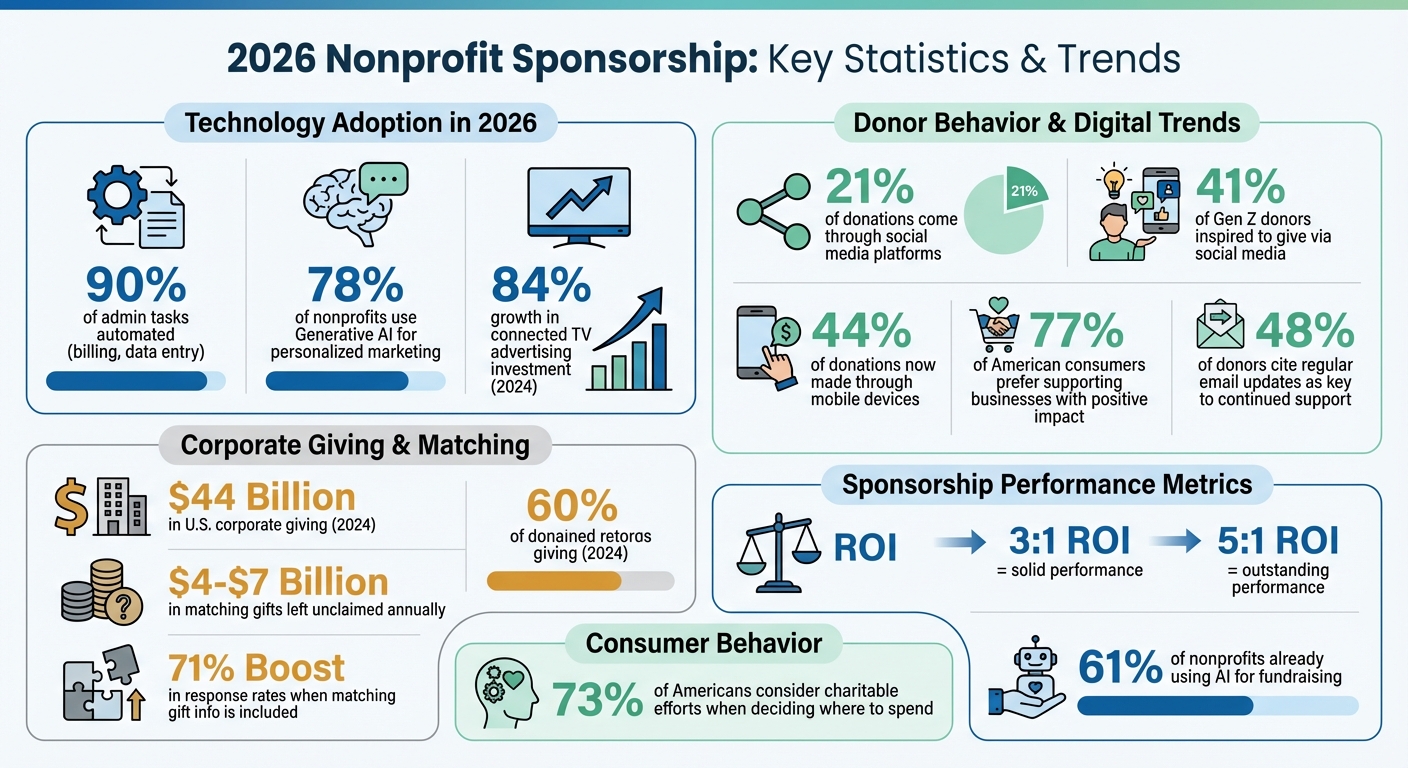
- Automation: Up to 90% of admin tasks like billing and data entry are automated, saving time for mission-focused work.
- Generative AI: 78% of nonprofits use AI for personalized marketing and donor engagement.
- Real-Time Reporting: Sponsors now expect digital dashboards showing the impact of their contributions.
- Interactive Sponsorship Models: Programs like World Vision’s “Chosen” empower beneficiaries to select sponsors.
- New Outreach Channels: Investment in connected TV advertising grew by 84% in 2024.
This article provides actionable strategies for finding sponsors, creating effective sponsorship packages, and maintaining long-term partnerships. It highlights data-driven tools, tiered sponsorship models, and personalized engagement to build stronger relationships with sponsors. With these methods, nonprofits can ensure predictable revenue streams and adapt to modern donor expectations.
2026 Nonprofit Sponsorship Statistics and Key Metrics
Finding and Attracting the Right Sponsors
How to Assess Sponsor Alignment and Priorities
The key to successful sponsorship lies in finding the right match. Start by reviewing potential sponsors' corporate social responsibility (CSR) pages to learn about their focus areas. For example, Wells Fargo highlights its commitment to "building an inclusive, sustainable future for all" through initiatives like economic advancement, affordable housing, small business empowerment, and a transition to a low-carbon economy. Dig into their philanthropic history by analyzing the size, location, and mission of organizations they’ve supported in the past. For instance, Bank of America provided a $1 million grant to "Project Learn", a tutoring program for children aged 6-18 through the Boys & Girls Clubs of America, benefiting 10 local clubs focused on education and workforce development. This pattern shows their dedication to education, making them a natural fit for nonprofits in similar areas.
Tap into your own resources to identify potential sponsors. Use donor management software to uncover connections between current donors, board members, and their employers - these companies are often the most receptive to partnerships. Additionally, look at nonprofits with similar missions or operating in your area to see who supports them.
When approaching sponsors, framing your mission in terms of their priorities is essential. For instance, a childcare nonprofit could highlight how its services enable a strong local workforce, which aligns with the goals of an economic development-focused business. This approach helps sponsors see how your work ties into their objectives. It’s worth noting that 77% of American consumers are more inclined to support businesses that aim to make a positive impact, which makes partnerships beneficial for sponsors too.
Once you’ve assessed alignment, streamline your efforts by segmenting your research and leveraging warm introductions.
Methods for Researching Potential Sponsors
Organizing your prospects into categories can make outreach more efficient. Consider grouping them as follows:
- Current sponsors
- Recently lapsed sponsors (within the last 2 years)
- Past sponsors (over 2 years ago)
- New prospects (connected via board members or donors)
- Cold prospects (those with no prior relationship)
This system helps prioritize your efforts and tailor your approach based on the relationship’s history.
Personal connections can make a big difference. Use LinkedIn to connect with board members and identify mutual contacts at target companies. A warm introduction is far more effective than a cold pitch.
For local targeting, tools like Google Maps can help you identify nearby businesses, banks, or law firms that share your community and audience. Local partnerships often feel more authentic and sustainable. For example, Target’s "Great Giftogether" initiative worked with local nonprofits to provide holiday gifts to families in need, creating meaningful connections through their stores.
Modern tools can also simplify your research. Set up Google Alerts for updates about target companies or their executives, and use platforms like Sponsorpitch.com or Double the Donation to find companies with active philanthropic programs. These tools can also help you tap into the millions of employees whose companies offer matching gift programs.
How to Reach Out to Potential Sponsors
Once you’ve identified promising sponsors, focus on crafting targeted outreach strategies. Tailor your approach based on the type of prospect:
- Use formal applications for large corporations with structured submission processes.
- Send concise, personalized emails to cold prospects.
- Engage warm leads with value-driven conversations.
Make sure to contact the right department - Human Resources for employee engagement sponsorships or Marketing for brand visibility opportunities. If you’ve been introduced personally, follow up promptly - ideally within 24 hours.
Social media direct messaging is becoming a powerful tool for outreach, especially with younger, tech-savvy audiences. It allows for quick, one-on-one conversations that simplify the process. In fact, 21% of donations now come through social media platforms, and 41% of Gen Z donors say social media has inspired them to give. Matt Schaller from GoodUnited notes:
AI isn't here to replace the human heart of your fundraising efforts. Instead, think of AI as your new, incredibly efficient assistant.
AI tools can help analyze donor behavior and draft initial outreach messages, freeing up your team to focus on building meaningful relationships.
Before reaching out, audit your digital presence. Make sure your nonprofit’s website includes a dedicated "Sponsorship" page with clear information about sponsorship tiers, benefits, and your mission. Tools like Streak can track when prospects open your emails, helping you time follow-ups effectively. And if a company can’t offer financial support, consider asking for in-kind donations of goods or services - they can still be recognized as sponsorships.
Building Sponsorship Programs That Work
How to Create Tiered Sponsorship Packages
A clear tiered structure makes it easy for potential sponsors to see their options and choose based on their budget. Many nonprofits use levels like Bronze ($1,000), Silver ($5,000), Gold ($10,000), and Platinum ($20,000+). These tiers not only outline pricing but also highlight how each level offers deeper sponsor engagement through audience insights. Modern sponsorship is all about connecting sponsors with their target audiences. As Chris Baylis, Founder & CEO of The Sponsorship Collective, explains:
"Sponsorship is not about logo placement, it's about audience! Sponsorship is a method that companies use to connect with their target market in meaningful ways."
At least half of your sponsorship proposal should focus on audience data - demographics, interests, and around 25 data points per segment - to demonstrate the value you bring to sponsors.
When creating your benefits grid, show how value increases with higher tiers. For example, higher levels could include perks like speaking opportunities, VIP behind-the-scenes access, or year-round digital exposure. Think beyond one-off events - offer year-round packages that include monthly social media features, collaborative content campaigns, or quarterly impact reports. These options not only create lasting revenue streams but can also lead to partnerships worth $50,000 or more annually. Using data to define and communicate sponsor value is key to building effective sponsorship programs.
Next, let’s look at how non-monetary contributions can expand these packages.
Adding Non-Monetary Sponsorship Options
Sponsorship isn’t always about cash; many sponsors provide in-kind contributions that are just as valuable. These could include goods, services like venue space or printing, or even professional expertise such as legal advice or marketing support. In-kind sponsorships can help lower operational costs, allowing you to allocate your budget elsewhere. Another option is activation sponsorships, which combine product fees with VIP experience rights, directly generating revenue.
Take the Mint Artists Guild as an example. They allow sponsors to host art events at corporate locations as part of a broader, year-round sponsorship package. This approach taps into a key insight: 73% of Americans consider a company’s charitable efforts when deciding where to spend their money. A thoughtfully structured sponsorship program can deliver both marketing value and social impact.
Tailoring Sponsorship Packages to Individual Sponsors
Once you’ve established structured tiers and included in-kind options, take it further by customizing packages to meet each sponsor’s specific goals. Moving away from rigid tiers enables you to build partnerships that feel more personal and aligned with their objectives. Catherine Ashton, Founder of Giant Squid Group, emphasizes this shift:
"The days of sticking a sponsors' logo on your website and saying 'done' are over... traditional tiered sponsorships that we ask for are inherently transactional."
While standard tiers can be transactional, custom packages create meaningful, long-term value. Start by understanding what matters most to each sponsor - whether it’s generating leads, reaching a particular demographic, fulfilling corporate social responsibility (CSR) goals, or engaging their employees.
Offer a mix of digital, in-person, and employee engagement opportunities to cater to different marketing and CSR objectives. Use your audience data to show how your audience aligns with their target market. Personalize sponsorship packets with a message from your board chair, highlight relevant programs, and include a deadline to create urgency. To maintain and grow these relationships, provide quarterly impact reports featuring key metrics like media impressions, event attendance, and social media engagement. Sponsors are more likely to renew when they see clear, ongoing results.
Managing Sponsor Relationships
Onboarding Sponsors and Delivering on Promises
The first few weeks after signing a sponsorship agreement are crucial - they set the tone for the entire partnership. Start by securing a clear written agreement that outlines the sponsor's contributions, timelines, and deliverables. Once the agreement is signed, act immediately on any promised actions, like adding their logo to your website or giving them a shoutout on social media. This prompt follow-through builds trust right from the start.
Make sure new sponsors are added to your newsletters and mailing lists so they stay updated on your organization's progress. Within the first month, schedule an introductory call or meeting to establish a personal connection. Catherine Ashton, Founder of Giant Squid Group, emphasizes this shift in sponsor relations:
The days of sticking a sponsors' logo on your website and saying 'done' are over (if those days ever really existed).
Use donor management tools to track important milestones, deadlines, and communication history to ensure nothing slips through the cracks. Develop relationships with multiple contacts at the sponsoring company to maintain continuity, even if personnel changes occur.
For a personal touch, send a handwritten thank-you note or make a phone call to acknowledge the start of the partnership. These small gestures stand out in a world dominated by digital communication. Keep a detailed record of every benefit delivered, such as screenshots of social media posts or photos of event banners, to include in a final impact report.
Once onboarding is complete, shift your focus to nurturing these relationships with regular, personalized updates.
Keeping Sponsors Engaged Through Updates and Reports
After the initial groundwork, consistent communication becomes the key to strengthening the partnership. Establish a regular schedule for updates - perhaps quarterly - and make note of each sponsor’s preferred communication style in your CRM. These updates should highlight program milestones, provide transparent financial details, and showcase the impact your organization is making.
Consider using a stewardship matrix to organize outreach efforts based on sponsor tiers. For example, top-tier sponsors might receive quarterly calls and personalized updates, while mid-tier sponsors could receive annual progress reports. Post-event or project surveys can also offer valuable feedback to improve future collaborations.
Go beyond simply asking for more support - share educational content or behind-the-scenes glimpses to keep sponsors engaged. Use visuals like infographics, success stories, and data to show the real-world results of their contributions. CRM tools and visual dashboards can help reinforce transparency and demonstrate the value of their partnership. Today’s sponsors are increasingly looking for immersive experiences that connect them more deeply to your mission.
Showing Appreciation to Sponsors
A simple thank-you email is nice, but a thoughtful, personal gesture makes a bigger impact. Within 48 hours of receiving support, thank sponsors personally - whether through a handwritten note, a custom video message, or a phone call.
Offer exclusive opportunities to strengthen their emotional connection to your mission. Behind-the-scenes tours, sneak peeks of upcoming projects, or meetings with leadership can provide meaningful engagement. Inviting sponsors to co-create programs or participate in focus groups not only taps into their expertise but also fosters a sense of ownership. Additionally, offering volunteer opportunities for their employees can align with corporate social responsibility goals.
Keep the relationship alive with regular touchpoints throughout the year, such as annual lunches or periodic updates - not just during fundraising campaigns. Hosting interactive sessions, like "Ask Me Anything" events, allows sponsors to learn more about your mission and share their insights. Use CRM tools to recognize both the sponsors and the individuals who introduced them to your organization.
Showing sincere appreciation and maintaining regular communication strengthens your sponsors’ confidence in your work. A continuous cycle of engagement - ask, thank, report, and repeat - helps build a foundation for long-term support and lasting partnerships.
Measuring and Improving Sponsorship Program Performance
Key Metrics for Sponsorship Success
To avoid drowning in data, focus on 2–3 metrics that align closely with your mission. As John Sawhill, a McKinsey director, points out:
The very act of aligning the mission, goals, and performance metrics of an organization can change it profoundly.
One of the most telling metrics is sponsor retention rate. You can calculate it by dividing the number of returning sponsors by the total number of sponsors from the previous year, then multiplying by 100. Another critical measure is Return on Investment (ROI), best calculated 60–90 days post-event. A 3:1 ROI is solid, while a 5:1 ratio is outstanding.
Nonprofits are increasingly moving beyond just tracking "dollars raised" to measuring Social Return on Investment (SROI). This metric assigns a dollar value to the social impact created, which appeals to sponsors who want to see tangible outcomes rather than just attendance stats. For long-term planning, Donor Lifetime Value (DLV) is invaluable. Multiply the annual donation amount by the length of the relationship to identify which sponsors warrant the most attention and resources.
| Metric | Formula / Calculation | Purpose |
|---|---|---|
| Sponsor Retention Rate | (Returning sponsors / Total sponsors last year) x 100 | Measures loyalty and relationship health |
| ROI | (Net Revenue / Total Costs) x 100 | Evaluates financial effectiveness |
| Donor Lifetime Value | Annual donation x Relationship length | Guides long-term strategic planning |
These metrics are your foundation for making informed, data-driven decisions.
Using Data to Improve Your Sponsorship Program
Start by analyzing past performance with descriptive and diagnostic analytics to uncover trends and their causes. For instance, if a sponsor dropped off after missing a quarterly update, that’s a clue for improvement.
Predictive analytics can help you anticipate giving behaviors and identify sponsors with high potential. Use your CRM to segment sponsors based on their giving history, demographics, and engagement levels. This allows for personalized communications, which can significantly boost retention. Owen Finegan, CEO of The Kids' Cancer Project, emphasizes the value of analytics:
Analytics gives us the insight to know whether we need to go wider or tighter in our donor communication. Every dollar we raise means more money channeled to fighting childhood cancers.
A/B testing is another powerful tool. Experiment with different donation buttons, email subject lines, or sponsorship package descriptions to determine what resonates most. Keep an eye on digital engagement metrics like website conversion rates and email click-through rates to identify weak points in the sponsor journey. Additionally, set up trigger-based engagement in your CRM. For example, if a sponsor misses their usual giving cycle, an automated, personalized story can re-engage them.
Centralizing data into interactive dashboards provides a clear, real-time view of your program’s health. This makes it easier to adapt quickly when something isn’t working. Regularly auditing your data ensures accuracy - outdated contact information can waste time and harm credibility.
These strategies can directly enhance sponsor engagement and retention.
Building Long-Term Sponsor Partnerships
Using these metrics and analytics helps create a strong foundation for lasting sponsor relationships. Incorporate performance data into proposals and post-campaign reports to set clear expectations and show accountability.
From the start, align your goals with your sponsor’s priorities. For example, if a sponsor values brand awareness, track metrics like social media impressions and event attendance. If their focus is on lead generation, measure conversion rates and qualified leads. Setting SMART goals (Specific, Measurable, Attainable, Relevant, Time-bound) ensures both parties have a clear framework for evaluating success.
Engage sponsors by actively seeking their feedback after campaigns to guide future improvements. Regular email updates are crucial - nearly half of donors (48%) say this is a key factor in their continued support. Share updates and success stories consistently to keep sponsors invested in your mission.
Here’s a missed opportunity for many organizations: between $6 billion and $10 billion in corporate matching gifts are left unclaimed annually. Including matching gift information in your appeals can boost response rates by 71%. Use automated tools in your CRM to track metrics like ROI and retention rates, reducing the risk of human error. As DonorSearch highlights:
By tracking your fundraising metrics, you can improve your strategies, programs, and, ultimately, fundraising results - if you effectively act on the information you gather.
Conclusion
Key Takeaways for Nonprofit Professionals
Nonprofits need to explore multiple revenue sources to thrive. For instance, U.S. corporate giving reached $44 billion in 2024, yet an estimated $4–$7 billion in matching gifts goes unclaimed annually. Adding clear, actionable prompts on donation pages and in email campaigns can help capture these overlooked funds.
AI is no longer optional - it’s becoming a cornerstone for nonprofits. CJ Orr, CEO of Orr Group, highlights its growing importance:
AI will be viewed less as an innovation project and more as core infrastructure for nonprofits seeking to do more with constrained teams.
With 61% of nonprofits already using AI for fundraising, adopting these tools can free up staff to focus on building meaningful relationships with donors.
Sustainable fundraising efforts hinge on cultivating strong, lasting relationships rather than relying on urgent appeals. Andrew Olsen, Executive Vice President of Fundraising Solutions at DickersonBakker, emphasizes:
Philanthropic revenue... is a lagging indicator of the quality of relationships your organization's leadership has with your supporters.
This means prioritizing personal communication, hosting smaller, more intimate events, and consistently sharing impact updates. Additionally, with 44% of donations now coming through mobile devices, optimizing digital touchpoints is a must.
By blending data-driven approaches with relationship-focused strategies, nonprofits can strengthen their sponsorship programs and ensure steady growth.
How HelpYouSponsor Simplifies Sponsorship Management
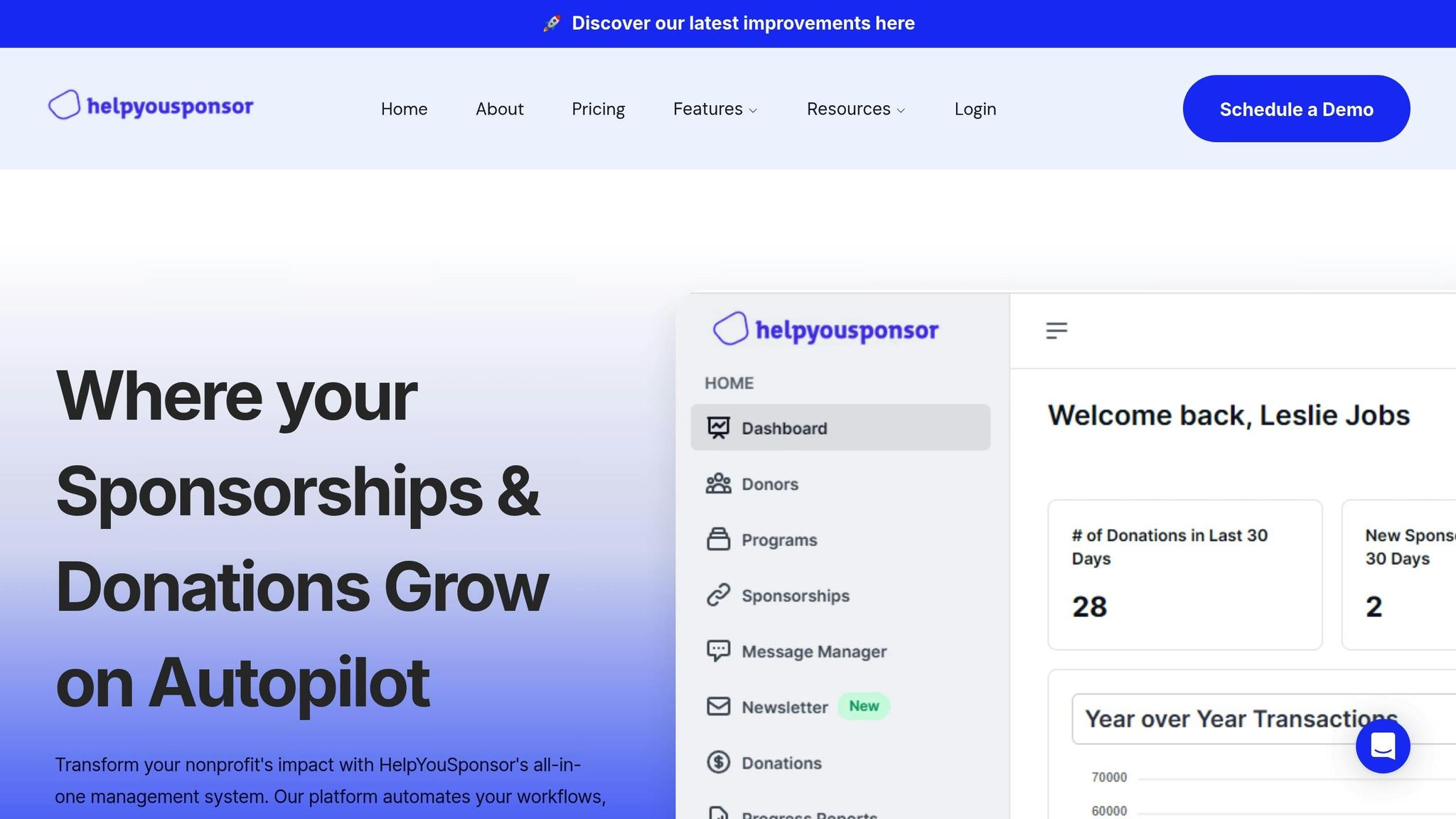
HelpYouSponsor provides a streamlined solution to make sponsorship management easier. The platform automates up to 90% of routine tasks - like tracking commitments, managing donations, creating impact reports, and sending thank-you messages - allowing your team to focus on donor relationships.
With HelpYouSponsor, everything is centralized: donor data, sponsorship tiers, payment processing, and performance metrics. You can even integrate matching gift search tools directly into your donation process to capture unclaimed corporate funds. Features like built-in A/B testing and real-time dashboards make optimizing outreach simple. Plus, the platform grows with your needs - start free for up to 10 commitments per month and scale as your organization benefits from the software.
Nonprofit Sponsorship Packages That Get Funded (Not Ghosted)
FAQs
How can nonprofits use AI to better connect with donors?
Nonprofits can leverage AI to craft more meaningful and tailored experiences for their donors. By analyzing donor data - such as giving history, preferences, and engagement habits - AI can predict when supporters are most likely to contribute, suggest optimal donation amounts, and even pinpoint the ideal time to connect with them. This not only strengthens donor relationships but also helps increase retention and contributions.
AI also brings personalization and automation into the mix. For instance, chatbots can operate around the clock to answer donor inquiries, share personalized updates, and streamline the donation process - all of which can help improve completion rates. Automated segmentation further allows nonprofits to categorize donors based on their behavior and send messages that align with their interests, fostering deeper engagement.
Additionally, AI-powered dashboards offer valuable insights into trends like shifts in donor preferences or changes in giving patterns. These tools allow nonprofits to adjust their campaigns proactively, saving time while enhancing donor satisfaction and driving consistent growth.
What are the advantages of using tiered sponsorship packages for nonprofits?
Tiered sponsorship packages give nonprofits a smart way to connect with a variety of corporate partners by matching sponsorship levels to different budgets and engagement goals. By offering clear categories - like Title Sponsor, Gold Sponsor, or Community Sponsor - organizations can appeal to a range of businesses while delivering measurable perks for each level. These benefits often include brand visibility, detailed impact reports, and personalized engagement opportunities, making it easier for sponsors to see their return on investment (ROI).
Beyond just financial support, tiered packages encourage ongoing relationships instead of one-off contributions. Sponsors can pick the level that fits their objectives and may even expand their involvement over time as trust and collaboration grow. What’s more, the flexibility of these packages lets nonprofits tailor offerings to align with a sponsor’s specific priorities and mission. This setup not only ensures steady funding but also builds stronger partnerships that benefit everyone involved.
What are the best ways for nonprofits to measure the success of their sponsorship programs?
Nonprofits can evaluate the success of their sponsorship programs by tracking specific metrics that highlight growth, financial performance, and overall impact. Metrics like Sponsor Acquisition Rate (new sponsors gained) and Sponsorship Retention Rate (percentage of sponsors who renew) are excellent indicators of growth and sponsor loyalty. Financial performance can be assessed through Return on Investment (ROI) - comparing the funds raised to the costs of campaigns - and Long-term Sponsor Value, which looks at the total contributions from a sponsor over their lifetime.
Engagement metrics are another important piece of the puzzle. Nonprofits can measure how often sponsors interact with updates, attend events, or share content. For visibility, tracking the Brand Awareness Impact - including media impressions and social media reach - helps demonstrate how sponsorships are increasing awareness. For programs with specific goals, such as child sponsorships, nonprofits might monitor metrics like literacy rates, school attendance, vaccination coverage, or graduation rates to showcase the tangible ways donations are making a difference.
Leveraging integrated platforms to automate data collection and analysis can simplify the process of tracking these metrics, creating impact reports, and ensuring transparency. When nonprofits combine these insights with modern tools, they can build stronger donor relationships, enhance program outcomes, and lay the foundation for lasting success.