
The Importance of Household Giving Visibility
Centralize household donor data to reduce duplicate appeals, improve retention, uncover high-capacity families, and boost fundraising with automated insights.

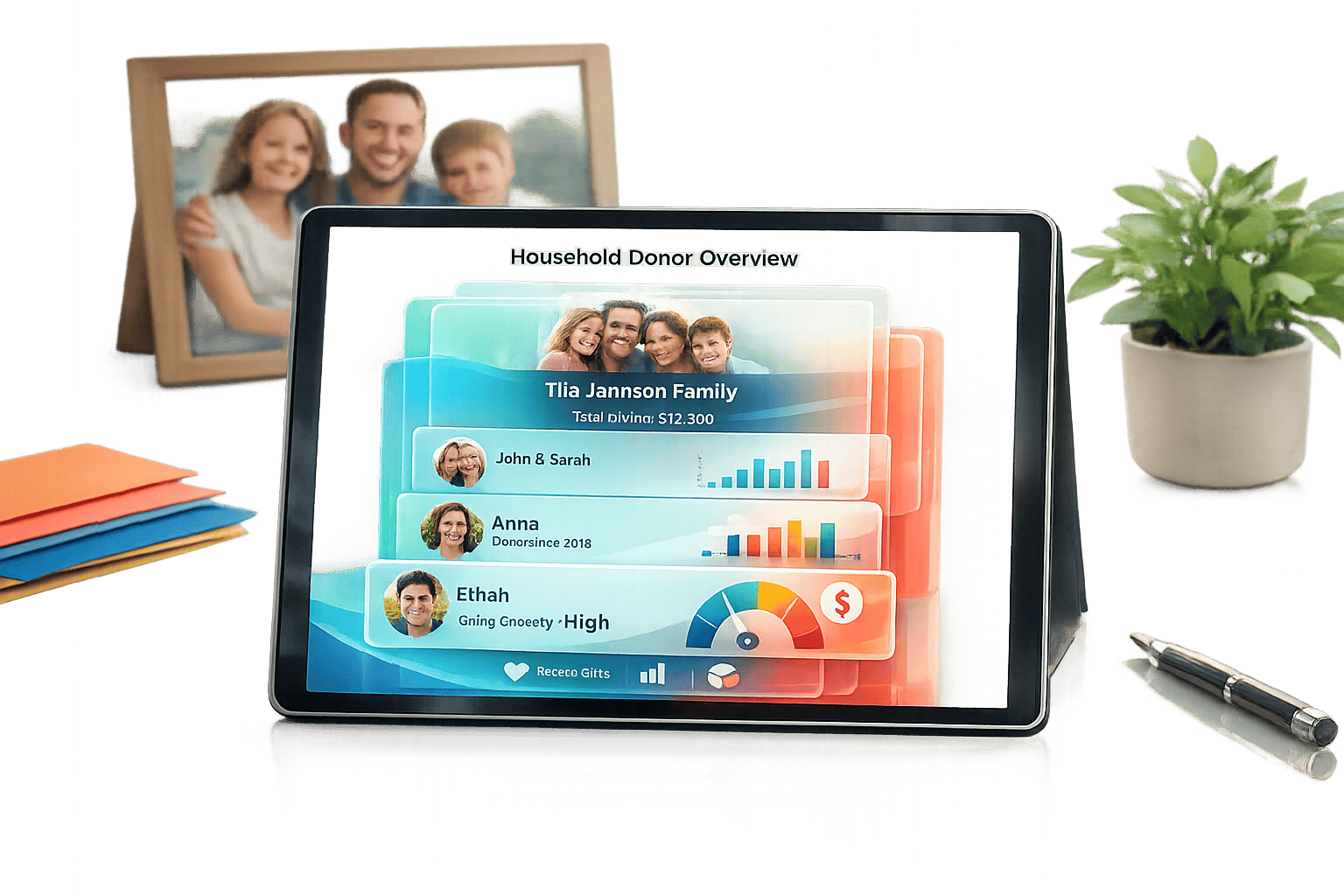
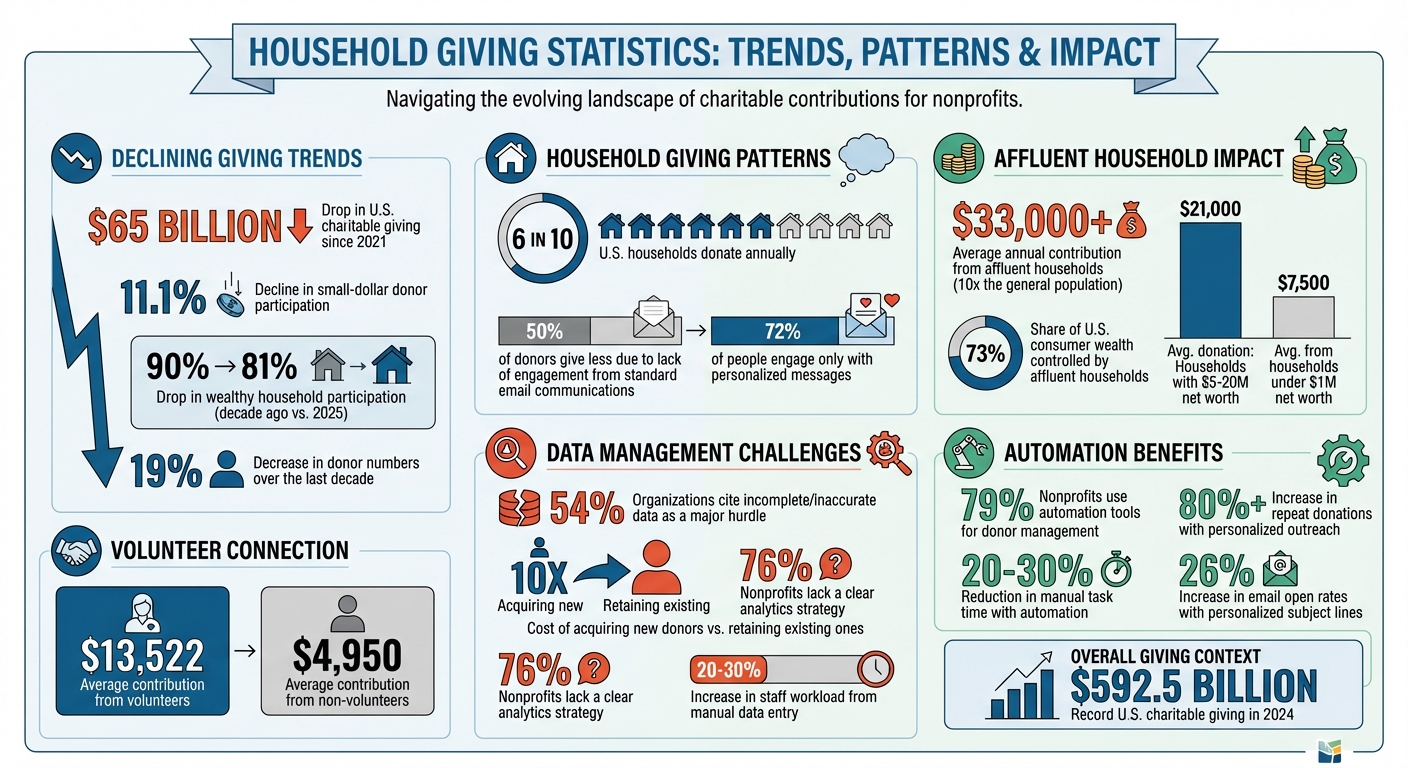
Nonprofits often miss the full picture of family contributions by tracking donations at an individual level. Household giving combines all contributions from a family into one record, offering a clearer view of their collective impact. This approach simplifies donor management, reduces costs, and strengthens donor relationships by tailoring communication to the entire household. With 6 in 10 U.S. households donating annually, understanding household dynamics is key to retaining donors and maximizing revenue.
Key benefits include:
- Unified donor records: Consolidates family contributions for better insights.
- Improved communication: Avoids duplicate appeals and acknowledges collective efforts.
- Cost savings: Reduces mailing expenses by consolidating outreach.
- Strategic fundraising: Identifies high-potential households and trends.
Challenges like scattered data and outdated systems can hinder progress, but centralizing donor information and automating processes can resolve these issues. By focusing on households, nonprofits can improve retention, increase giving, and build stronger connections with their supporters.
Household Giving Statistics and Trends for Nonprofits
Household Giving & A Growth Mindset
Why Nonprofits Need Household Giving Visibility
Tracking donations at the household level doesn’t just tidy up data - it can significantly improve donor retention and revenue. Since 2021, charitable giving in the U.S. has dropped by a staggering $65 billion, with small-dollar donor participation declining by 11.1%. Even among wealthier households, participation rates have slipped - from nearly 90% a decade ago to around 81% in 2025. Without household-level insights, nonprofits risk losing touch with their donors. This type of visibility is essential for fostering trust and ensuring donors stay engaged.
Building Donor Trust Through Transparency
Household-level tracking is key to avoiding the kind of missteps that can damage donor confidence. For instance, sending duplicate appeals can frustrate donors and weaken their connection to your organization. By treating family members as part of a unified donor base, nonprofits can create a more seamless and trustworthy experience.
This approach also enables nonprofits to consolidate impact reporting, so every member of a household can see the collective difference their contributions are making.
Donors are more discerning than ever and want to see the direct results of their contributions. Make them feel like insiders by sharing specific impact stories and communicating openly to build lasting loyalty.
Transparency is critical here. Roughly 50% of donors say they give less because they don’t feel engaged by the standard email communications they receive. Clear, household-level reporting can help bridge this gap and make donors feel more connected.
Addressing the Decline in Household Giving
Household visibility doesn’t just enhance trust - it also sheds light on critical trends that demand action. With centralized data, nonprofits can identify households that have been inactive for 12 to 24 months, allowing for personalized outreach instead of generic appeals.
It also helps pinpoint where to focus resources. While overall participation rates are falling, affluent households still contribute an average of more than $33,000 annually - over ten times the amount given by the general population. These households now control more than 73% of U.S. consumer wealth.
The number of donors may be down, but the pool of affluent households and available wealth keeps growing. Their generosity is growing, too, as evidenced by increases in average gift sizes among this cohort.
Household-level tracking can even identify potential high-capacity donors by monitoring wealth indicators, such as real estate transactions, that signal new opportunities for giving. This kind of insight ensures nonprofits can better align their efforts with donor potential and maximize their impact.
Benefits of Tracking Household Giving
Building Better Donor Relationships
Tracking household giving doesn’t just organize data - it transforms how nonprofits connect with donors. By linking family members, organizations gain a complete view of how a household supports their mission. For example, one spouse might volunteer regularly while the other sets up monthly donations, or both might contribute in entirely different ways. With this unified perspective, nonprofits can craft personalized communication that reflects the household's collective involvement. Instead of sending duplicate appeals or conflicting messages to the same address, outreach can be tailored to acknowledge their combined efforts. A single year-end report highlighting the household's total impact can leave a lasting impression, boosting donor satisfaction and fostering stronger, long-term relationships. This approach creates a foundation for smarter, more targeted fundraising strategies.
Improving Fundraising Strategies
Household data provides insights that can reshape fundraising efforts. For instance, volunteers contribute an average of $13,522, compared to $4,950 from non-volunteers. This kind of information can guide nonprofits to offer tailored volunteer opportunities while identifying potential major gift donors. What might seem like two mid-level donors when viewed individually could, when considered as a household, reveal a much greater capacity for giving. By focusing on households with higher potential, nonprofits can prioritize their engagement efforts where they’ll make the biggest impact. These refined strategies not only deepen donor involvement but also open doors to new revenue streams.
Growing Revenue Opportunities
When relationships are strengthened and strategies are more focused, household tracking can uncover multiple ways to boost giving. By monitoring wealth indicators and professional roles across family members, nonprofits can spot households with the capacity for major gifts, especially during key financial moments like real estate sales or career advancements. For example, households with a net worth of $5–20 million donate an average of $21,000 annually, compared to around $7,500 from those under $1 million.
Additionally, consolidating mailings reduces printing and postage expenses, allowing more resources to be directed toward fundraising efforts. A clear understanding of a household’s giving history and engagement patterns also helps nonprofits identify families likely to increase their contributions or commit to recurring support. This combination of insights and cost savings creates a pathway to sustained revenue growth.
Common Challenges in Managing Household Donations
Scattered Data and Duplicate Records
Nonprofits frequently face the challenge of scattered donor data, making it difficult to get a clear view of household giving patterns. For instance, inconsistent data entry - like recording "Robert Smith" instead of "Bob Smith" or using "Street" instead of "ST" - can prevent systems from recognizing that these records belong to the same household.
Things get even trickier when different members of a household engage with the organization in separate ways. Imagine one spouse serving on the board while the other volunteers at events. Nonprofits often create individual records for each role, which fragments the data further. On top of that, email platforms typically require unique addresses, adding another layer of complexity to tracking households as a single unit.
Here’s a tough stat: 54% of organizations cite incomplete or inaccurate data as a major hurdle in leveraging donor information effectively. And considering that acquiring a new donor costs 10 times more than retaining an existing one, nonprofits can’t afford to overlook these inefficiencies. Manual processes only add to the problem, making it harder to connect family members and see their combined giving history. Without this clarity, nonprofits risk missing out on identifying potential major gift donors. The lack of centralized systems further complicates matters, creating a tangled web of disconnected data.
Missing Centralized Tracking Systems
Many older systems grouped couples under a single record - like "Mr. and Mrs. Smith" - which limits the ability to track individual details such as personal cell phone numbers, event attendance, or volunteer hours. Amanda Jarman, President and Founder of Fundraising Nerd, highlights the frustration this causes:
Have you ever sent two pieces of mail to one household? It's frustrating! Not only have you wasted paper and postage, but you also missed a chance to recognize the relationship between your donors.
Without a centralized tracking system, understanding cumulative household giving becomes a tedious task. Staff often have to run complicated, multi-step queries that eat up time and still produce unreliable results. Shockingly, 76% of nonprofits lack a clear strategy for using analytics to enhance their fundraising efforts, leaving valuable insights buried in disconnected data. On top of that, manual data entry increases staff workload by 20–30%.
With donor numbers falling by 19% over the last decade, nonprofits are under immense pressure to maintain accurate records and retain their current supporters. Addressing these challenges is key to creating a complete picture of household giving, which plays a vital role in nurturing stronger donor relationships. The next section will explore solutions to these pressing issues.
How to Improve Household Giving Visibility
Centralize Donor Data in One System
Managing donor records scattered across various platforms can feel like an uphill battle. The solution? Centralize all donor information into a single system. By using a dedicated household management tool - like the HelpYouSponsor Household Table - you can track and view all family units in one place, eliminating the chaos of juggling spreadsheets.
Start by clearly defining household relationships. Assign a "Primary Contact" as the main donor and link "Additional Contacts" to include related family members, ensuring all contributions from the same household are grouped together. This method tackles the problem of fragmented donor records head-on. HelpYouSponsor simplifies this process by automatically creating a household when a donor is linked to another individual who isn’t already part of one. To go a step further, consider implementing soft credit tracking. This feature acknowledges household members who influenced a donation, even if they didn’t make the payment themselves, giving you a more complete picture of the household’s overall impact.
Clean, standardized data is vital for nonprofits to manage donors effectively. As the Nonprofit Leadership Alliance highlights, data standardization is key to making informed decisions. A style guide with dropdown menus and predefined values can help maintain consistency - for instance, always using "Robert" instead of switching between "Robert" and "Bob", or standardizing "Street" versus "St." in addresses. This level of organization is critical, especially when you consider that 72% of people engage only with personalized messages. By centralizing and standardizing your data, you’ll be ready to take the next step: automating your reporting and analysis.
Automate Reports and Analysis
With your donor data centralized, automation becomes a game-changer for reporting and analysis. Instead of wasting hours on complex, multi-step queries, automated tools can instantly generate household reports. For example, HelpYouSponsor transforms raw data into visual trends spanning three years, all displayed on a single dashboard. The built-in Activity Log tracks every action - whether it’s a failed payment, updated information, or a sponsorship change - creating a searchable history of household interactions. This eliminates the manual processes and duplicate efforts that often bog down nonprofit teams.
The benefits of automation are hard to ignore. 79% of nonprofits already use automation tools for donor management, and these tools can reduce manual task time by 20–30% while cutting operational costs by 15–20%. Set up automated tax summaries to instantly export annual contribution reports in CSV or PDF formats, saving time during year-end reporting. Integration with software like QuickBooks further streamlines operations by syncing financial data and minimizing errors. A self-service donor portal allows household members to independently download tax receipts and review donation histories, reducing administrative workload. Plus, personalized outreach powered by automated data can boost repeat donations by over 80%. The efficiency and impact of these systems are undeniable.
Implementation Steps with HelpYouSponsor
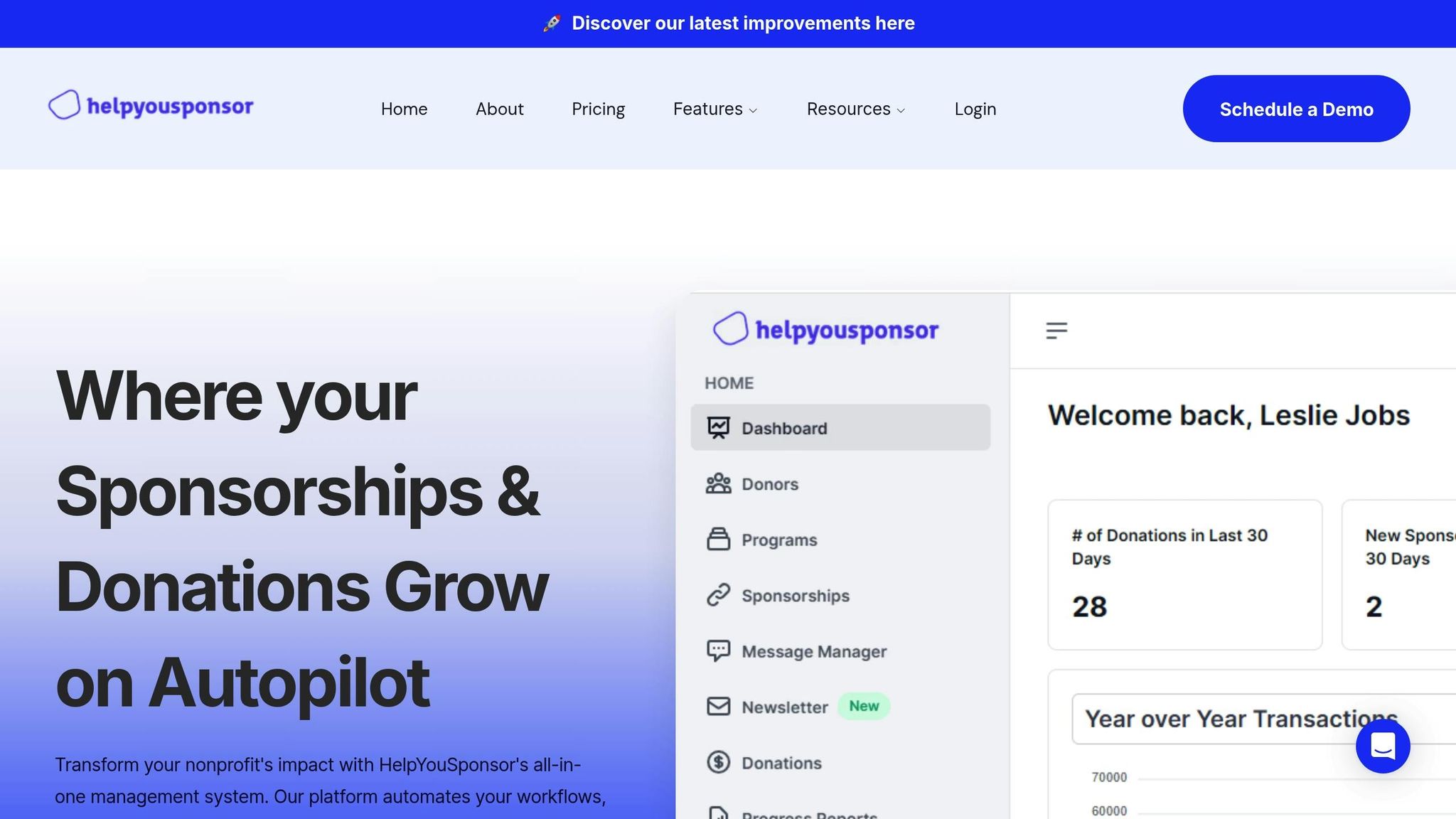
To improve household giving visibility, follow these clear steps for implementation using HelpYouSponsor.
Moving to a Unified Dashboard
Start by transferring your donor data into HelpYouSponsor in this specific order: Recipients, Donors, Sponsorship Relationships, and Payments. This sequence is crucial because sponsorships can only be linked once both donor and recipient records are in place.
Prepare your data as UTF-8 CSV files under 10MB, ensuring headers match HelpYouSponsor's required fields (like "First name", "Last name", and "Email"). Once uploaded, head to "CRM" > "Donors" > "Households" to access and review all family units.
With your data now centralized, you can efficiently track and manage household commitments.
Recording Household Commitments
To begin, click "Add Household" to set up a Primary Contact and any Additional Contacts. Linking donors will automatically create a household profile.
For recurring support, use the "Add Sponsorship" feature to log details such as the recipient, donation amount, payment frequency, and the next payment due date. HelpYouSponsor supports multiple payment methods, including credit cards, PayPal, checks, cash, and wire transfers. Use the "Add Soft Credit" option to link contributions, ensuring the household's total impact is accurately reflected. Additionally, you can create custom "Household forms" in Program Settings to collect specific data tailored to your organization's needs.
Once commitments are recorded, focus on keeping donors engaged through automated acknowledgments.
Automating Donor Acknowledgments
HelpYouSponsor simplifies donor communication by automatically sending donation receipts and customizable thank-you messages for every contribution. Set up behavioral triggers to send a welcome email as soon as a household signs up, followed by a gratitude message within seven to ten days to strengthen donor relationships.
The platform's messaging system centralizes all communications, making it easy to maintain consistent engagement with households. Use merge fields to personalize automated emails with details like donor names, donation amounts, and the impact of their contributions. Personalized emails are highly effective - emails with tailored subject lines see a 26% increase in open rates, while customized content results in 29% higher unique opens and 41% higher click rates compared to generic campaigns.
At the end of the year, HelpYouSponsor generates cumulative giving statements for tax purposes, significantly reducing administrative work. Organizations using the platform have reported a 3.8× increase in sponsorships on average.
Measuring Results and Success Metrics
Unified household data can transform how you evaluate donor engagement. By focusing on the right performance metrics, you can gain a clearer picture of success and refine your strategies. The key? Look beyond just donation totals and focus on metrics that reflect the quality of household relationships.
Metrics to Track
Start with your household retention rate - the percentage of families that continue donating year after year. This metric shows whether your efforts are fostering long-term connections. Also, track the average household gift size to see if your outreach is inspiring families to give more. Keep an eye on the participation growth rate, which reveals if you're successfully bringing in new households or re-engaging lapsed ones.
Another powerful tool is RFM analysis (Recency, Frequency, Monetary value). This scoring system helps you identify households based on how recently they donated, how often they contribute, and their total giving amount. Households with high RFM scores are ideal candidates for major gift asks or monthly giving programs. On the flip side, identify LYBUNT households (Last Year But Unfortunately Not This Year) and SYBUNT households (Some Year But Unfortunately Not This Year) to create targeted campaigns aimed at winning them back.
Don’t overlook data hygiene metrics, such as reducing duplicate records, to ensure your household data stays accurate. Also, analyze response rates by channel - whether it’s SMS, email, or phone calls - to learn which methods resonate best with different household segments. Finally, calculate lifetime value (LTV), which sums up all contributions a household has made since their first gift. This helps you prioritize households with the greatest long-term potential.
These metrics lay the groundwork for deeper annual comparisons and strategic insights.
Comparing Year-Over-Year Performance
Year-over-year (YoY) analysis is where patterns emerge, moving you from guesswork to actionable insights. By comparing consecutive years, you can gauge whether your donor stewardship efforts are strengthening relationships. A rise in metrics like retention or gift size indicates positive momentum, while declines may signal areas that need attention. The Giving Block emphasizes:
By tracking several data points each year, fundraisers can pinpoint critical areas for improvement and discover which tactics they should double-down on to maximize revenue.
For example, calculate average gift size growth by subtracting last year's average from this year's, then dividing by last year's figure. Measure churn rate by identifying households that donated two years ago but didn’t contribute in the most recent year. Dive deeper with YoY reports on specific segments, such as recurring versus one-time gifts, to see how different appeals perform over time.
With U.S. charitable giving reaching a record $592.5 billion in 2024, understanding your organization’s trends within this broader context can help you develop more reliable and scalable fundraising strategies.
Conclusion
Building visibility into household giving lays the groundwork for lasting donor relationships that drive the success of your child sponsorship program. By moving from scattered individual records to centralized household data, you gain a clear, unified understanding of how families engage with your mission. This approach helps you see collective giving behaviors, appreciate the full scope of each family's contributions, and communicate in ways that reflect their actual connection to your organization.
But it’s not just about cleaner data. A centralized household management system allows you to eliminate duplicate communications, uncover opportunities for growth within donor families, and develop tailored engagement strategies. These strategies align with each household's unique history and capacity, creating a more personalized and meaningful donor experience. By organizing donor information into household units, you simplify processes and position your organization for more effective donor engagement.
This approach is particularly important for child sponsorship programs. Families often sponsor multiple children or provide support in various ways over time. Without a unified view, it’s easy to overlook the full extent of their involvement. A dedicated household table in your donor management system ensures you can track and nurture these relationships effectively, recognizing families for their ongoing commitment.
Shifting to household-focused donor management is a game-changer. Use a centralized CRM to consolidate donor records, keep household data current, and leverage analytics to spot impactful trends. With this system in place, you can make informed decisions that strengthen trust, improve donor retention, and amplify the reach of your program.
FAQs
What counts as a “household” in donor records?
In donor records, a "household" typically refers to a group of individuals who either live at the same address or share family connections. Nonprofits often track their donations, activities, and communication preferences as a single unit. This approach helps simplify engagement efforts and makes reporting more efficient.
How do we link family members without creating duplicates?
To connect family members without duplicating records, start by creating a household record and adding individual members to it. Each family member should have their own unique constituent record. Use the "Add Household" feature to establish the household, then link members either directly through the household profile or by editing their existing records. This approach maintains accurate relationships, avoids duplicate entries, and allows for easy updates or edits in the future.
Which household metrics should we track first?
Nonprofits should begin by keeping tabs on a few key details: household name, primary contact, and address information. These basics lay the groundwork for understanding donation habits and relationships. Focusing on the primary contact - usually the main donor - allows for more tailored and meaningful communication. Beyond that, tracking donation history, including joint contributions and overall patterns, offers valuable insights into donor engagement and loyalty. Over time, adding information like communication preferences and participation in activities can help refine and improve fundraising efforts.