
Expanding Impact Through Additional Gifts and Special Donations
One-time additional gifts—matching programs, seasonal campaigns, and personalized appeals—boost child sponsorship impact, donor engagement, and transparency.

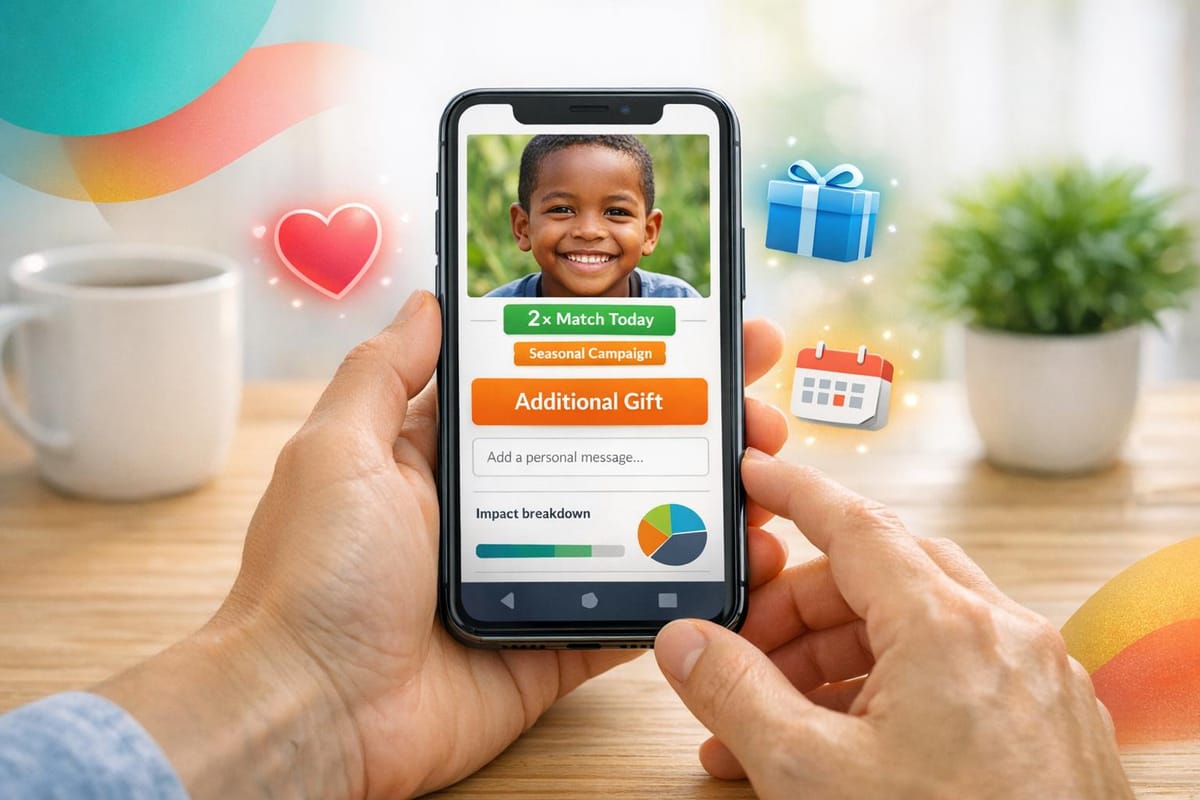
Monthly sponsors already support your mission, but there's a way to make an even bigger difference: additional gifts. These are one-time donations that go beyond regular contributions, helping fund urgent needs, specific projects, or seasonal campaigns.
Why does this matter?
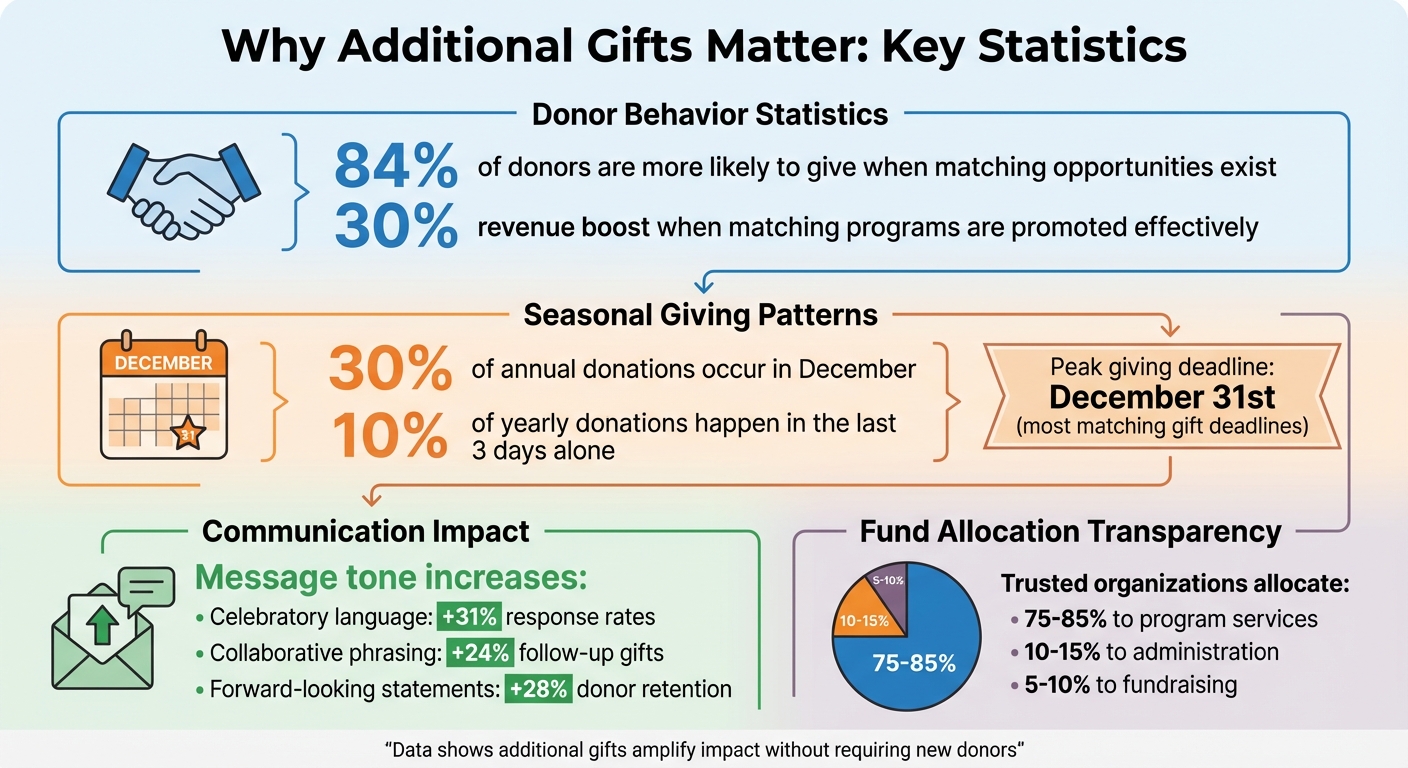
- 84% of donors are more likely to give when matching opportunities exist.
- 30% of yearly donations occur in December, with 10% in the last three days alone.
- These gifts can cover essentials like medical supplies, textbooks, or disaster relief that regular donations might not address.
Platforms like HelpYouSponsor simplify the process by automating donor communications, assigning accounting codes, and tracking every dollar. From matching gift programs to seasonal campaigns, there are many ways to encourage these contributions while strengthening donor relationships.
In short: Additional gifts offer a simple way to amplify your impact without needing to find new donors.
Additional Gifts Impact Statistics for Child Sponsorship Programs
What Are Additional Gifts and Why They Matter
Additional Gifts vs. Regular Donations
Additional gifts are extra donations that sponsors contribute in addition to their regular monthly sponsorship payments. While regular sponsorships cover the basic expenses needed to ensure a child’s enrollment and care, additional gifts address specific, often urgent needs. These one-time or occasional contributions can fund things like textbooks, medical supplies, or seasonal projects that go beyond the scope of regular sponsorships.
| Feature | Regular Recurring Donations | Additional Gifts |
|---|---|---|
| Frequency | Monthly or scheduled intervals | One-time or occasional |
| Commitment | Long-term sponsorship | Short-term or immediate need |
| Focus | General child support/program maintenance | Specific causes, urgent needs, or seasonal goals |
| Amount | Usually fixed/standardized | Variable; often tiered or matching-based |
This distinction highlights how additional gifts complement regular sponsorships by addressing needs that require immediate attention or fall outside the standard support framework.
How Additional Gifts Support Child Sponsorship Programs
These additional contributions play a vital role in enhancing the impact of child sponsorship programs by addressing needs that regular donations may not cover. They allow organizations to fund essential extras like emergency medical care, school uniforms, or disaster relief efforts, all of which can significantly improve the well-being of children.
For example, UWC-USA saw a 30% increase in revenue after combining corporate matching gifts with major donor matching opportunities. This demonstrates how encouraging supplementary donations can amplify the effectiveness of child sponsorship initiatives, enabling organizations to make an even greater difference in children’s lives.
How to Encourage Additional Gifts from Donors
Setting Up Matching Gift Programs
Matching gift programs are a fantastic way to amplify your fundraising efforts. Data shows that donors are 84% more likely to contribute when a matching gift opportunity is available, and nonprofits can experience a 30% revenue boost when these programs are promoted effectively.
Make sure to prominently highlight matching gift opportunities on your donation forms. This ensures donors are aware of the chance to double their impact. Adding a sense of urgency can also help - most matching gift deadlines fall on December 31st, so emphasizing this deadline can drive action.
Platforms like HelpYouSponsor simplify managing matching gifts. Their "Additional Gifts" feature in the Program Settings allows you to create specific designations for matched donations. They also offer a "Combine same-day charges" option, which consolidates multiple donations from the same donor into one transaction and receipt, streamlining the process for both you and your donors.
Collecting donor employment details during the donation process is another smart move. This information helps identify matching gift opportunities and tailor your outreach. For example, Save the Boundary Waters uses personalized emails and newsletters to educate donors about these opportunities and encourage participation.
Now, let’s look at how seasonal campaigns can align with donor habits to further enhance engagement.
Running Seasonal Giving Campaigns
Seasonal campaigns leverage natural patterns of generosity throughout the year. Did you know that 30% of annual donations happen in December, with 10% occurring in just the last three days of the year? Timing your appeals strategically can make a big difference.
HelpYouSponsor's "Additional Gifts" tab in Program Settings allows you to create specific designations for seasonal campaigns. You can set donation amounts, customize email sets, and automate receipts that clearly show both the donor’s original gift and any matching funds. This level of transparency reassures donors that their contributions are being used as intended.
But don’t limit yourself to year-end campaigns. There are opportunities to fundraise throughout the year. For instance, Billerica Holiday Festival Inc. raised $3,858 with a "Christmas in July" calendar raffle, turning a typically slow period into a success. Similarly, Elizabeth Seton Center paired a back-to-school campaign with their ongoing efforts, bringing in $4,182 while keeping donors engaged during the fall.
Neon One took a creative approach by sharing board member testimonials through email and Instagram Stories during their year-end drive. This strategy led to a 22% increase in donor engagement compared to the previous year. Personal stories and visual content are powerful tools for connecting donors to your mission.
These strategies can help you craft campaigns that resonate with donors and make a lasting impression.
Creating Personalized Donation Requests
Personalized donation requests are another effective way to deepen donor commitment. Generic appeals often fall flat, but using predictive analytics to tailor messages to a donor’s giving history can inspire meaningful action. For example, you could send monthly reminders about corporate matching programs to employees, quarterly updates to regular donors, or a welcome series for first-time contributors.
HelpYouSponsor’s donor management tools make it easy to create customized appeals. The "Additional Gifts" tab in Program Settings lets you tie donation amounts to specific outcomes, like $50 provides school supplies for 5 children, $100 funds one month of tutoring for 3 students, or $500 equips a classroom with textbooks and materials. These tangible goals help donors see the direct impact of their contributions.
The tone of your message plays a key role, too. Using celebratory language, collaborative phrasing, and forward-looking statements can increase response rates, follow-up gifts, and donor retention by 31%, 24%, and 28%, respectively.
Additionally, you can define specific designations for unique needs, such as medical funds or educational supplies, directly within HelpYouSponsor. By setting the Designation Name, Accounting Code, and Donation Amounts, you streamline the process and give donors confidence that their additional gifts will be used exactly as intended.
Tracking and Reporting Special Donation Results
Showing Donors Their Impact
When donors see exactly how their contributions are being used, they’re more likely to continue supporting your cause. Transparency isn’t just about numbers - it’s about showing real outcomes tied to their generosity.
HelpYouSponsor addresses common challenges in child sponsorship programs with its tracking tools. Each donation can be assigned a unique accounting code, like "School Supplies" or "Holiday Gift", allowing you to follow every dollar from the moment it’s given. This approach not only streamlines your financial reporting but also demonstrates accountability to your donors.
Take it a step further by sharing regular updates that break down how funds are allocated. For example, many trusted organizations allocate 75–85% of donations to program services, 10–15% to administration, and 5–10% to fundraising. By being upfront about these percentages, you build trust. Include real-world examples - like a child receiving a new backpack or a family enjoying a holiday meal - to make the impact tangible.
HelpYouSponsor also offers real-time tracking and automated receipts, giving donors immediate confirmation of their contributions. Follow up with quarterly or bi-annual reports that highlight progress, such as health improvements, academic milestones, or personal achievements of those being supported. These updates create a personal connection, helping donors see the difference they’re making.
Clear and detailed reporting not only builds trust but also lays the groundwork for stronger, long-term relationships with your donors.
Building Lasting Donor Relationships
Once you’ve shown donors the impact of their contributions, the next step is to nurture those relationships. Personalized communication is key. After someone makes a special donation, send a thank-you message that directly references their gift and its impact. Avoid generic acknowledgments - specificity makes all the difference.
The tone of your communication matters, too. Messages with a celebratory tone can increase response rates by 31%. Using collaborative language boosts follow-up donations by 24%, and forward-looking statements improve donor retention by 28%. Frame your updates around shared successes and future goals to keep donors engaged and excited.
HelpYouSponsor’s detailed records also make it easy for donors to see their cumulative contributions over time. When donors can visualize the total impact of their giving, they feel even more connected to your mission.
To maintain this connection, communicate regularly - but not excessively. Quarterly updates often work well for most donors, while major contributors might appreciate more frequent touchpoints. Each message should include a clear call to action, whether it’s an invitation to make another donation or to share your organization’s mission with others.
Adding Extra Gift Options to Your Sponsorship Process
Adding Donation Options at Checkout
You can ask donors for an extra gift during the checkout process itself. With HelpYouSponsor, it's easy to set up additional donation options that appear alongside regular sponsorship commitments.
To get started, head to Program Settings and click on the Additional Gifts tab. Here, you can create specific donation opportunities such as "Holiday Fund", "School Supplies", or "Medical Emergency Fund." Each option can have its own designation name and accounting code. You can also set suggested donation amounts and provide a short description in the Info field to explain the purpose of the fund.
For a smoother donor experience, enable the Combine same-day charges feature. This way, if someone adds a $50 holiday gift to their $35 monthly sponsorship, they won’t receive multiple emails or see separate charges on their credit card statement.
You can also use the Order page text field to add a short, compelling message at the top of the donation page. For instance, you might write, "This December, 15 children need winter coats. Add $40 to provide warmth for one child." Keep it concise and focused on urgent or seasonal needs to grab attention at the right moment.
This setup not only simplifies the donation process but also sets the stage for clear, timely communication with donors. Once these options are live, use automated messages to guide donors toward contributing to these additional opportunities.
Communicating Additional Giving Needs Through Messages
After setting up extra gift options, it’s important to let donors know about them. HelpYouSponsor’s messaging tools make this easy and effective.
Use Auto Email Sets to send follow-up messages tailored to donor activity. For example, you can update the "Donor Payment Receipt" email to include a quick mention of other funding needs. By using Merge Tags, like en_child_name, you can personalize these emails. A message might say, "Thank you for sponsoring Maria. Did you know she needs $30 for new school shoes this month?" Personal touches like this strengthen the donor’s connection to your mission.
Timing is everything. Since 30% of annual donations happen in December - and 10% in the final three days of the year - focus your most direct appeals during this peak giving season. For the rest of the year, keep these messages subtle. A single line in a quarterly update or a note on the donor’s account dashboard can often do the trick.
To better understand donor preferences, attach Donor Profile Forms. These forms can collect details like allocation preferences, keeping your main sponsorship form simple while gathering the information you need for targeted appeals. This approach ensures you’re meeting donor expectations while supporting your broader goals.
Matching Donations - Double Gifts Without Asking for More
Conclusion
Expanding child sponsorship programs with additional gifts and special donations allows donors to make an even greater difference in the lives of children and their communities.
This guide has outlined several effective strategies - such as matching gift programs, seasonal campaigns, personalized appeals, and smart checkout options - that work together to increase donor participation and improve fundraising success. Platforms like HelpYouSponsor simplify this process with features like the Additional Gifts tab, which enables custom donation options, automated emails, campaign analytics, and tools for tracking matching gifts.
Studies consistently highlight the effectiveness of these strategies, especially matching gift programs and seasonal campaigns, in driving higher donor engagement and increased contributions.
These methods not only improve fundraising outcomes but also strengthen the bond between donors and your mission. Start by introducing one or two targeted gift options to address immediate needs. Use communication tools to share these opportunities with donors, particularly during peak giving seasons. By monitoring results and learning what resonates most, you can fine-tune your approach and expand your offerings over time.
The ultimate aim is to provide donors with meaningful ways to contribute, ensuring that every additional gift helps create lasting change for the children and communities you support.
FAQs
How do we choose the best additional gift options to offer?
To choose the right additional gift options, center your approach on what appeals to donors while aligning with your program's goals. Offer a range of choices connected to specific causes, and include clear statements about the impact each gift will have. For instance, you might say, "$50 provides a week's worth of meals for a family." This kind of transparency helps donors see the real difference their contribution can make. Additionally, preset donation amounts with straightforward descriptions make it easier for donors to decide and support efforts that match their personal values.
What’s the easiest way to start a matching gift campaign?
Starting a matching gift campaign can be straightforward with tools like HelpYouSponsor, which simplify the process for both nonprofits and donors. Here's how to get started:
- Set Clear Goals: Define what you want to achieve, whether it's a specific fundraising target or increased donor participation.
- Create a Dedicated Landing Page: Build a page that clearly explains the campaign, highlights the impact of matching gifts, and makes it easy for donors to participate.
- Integrate Matching Options: Add matching gift options directly into your donation process to encourage more contributions.
- Promote Your Campaign: Use multiple channels - email, social media, and even events - to spread the word and engage your audience.
Additionally, training your team and implementing a solid multichannel marketing plan can go a long way in boosting participation and contributions. The more awareness you create, the better your results will be.
How often should we ask sponsors for one-time extra gifts?
It’s a good idea to request one-time additional contributions from sponsors every 3 to 6 months. This approach helps maintain donor engagement while preventing them from feeling overwhelmed by frequent asks. Adjust the timing and messaging based on each donor’s preferences and past giving patterns to build stronger connections and inspire continued support. Regular communication keeps donors involved and encourages them to contribute beyond their initial donation.