
Top Email Strategies That Improve Donor Retention and Commitment
Proven email tactics to boost donor retention and commitment—personalization, segmentation, automated welcomes, impact updates, renewals, and re-engagement.

Donor retention is critical for nonprofits, yet many struggle to keep supporters engaged. In Q4 2024, only 19.4% of new donors gave again the following year, while the overall retention rate dropped to 42.9%. Retaining donors is far more cost-effective, costing just $0.20 per dollar raised, compared to $1.50 for acquiring new ones. The key to reversing this trend? Strategic email communication.
Here’s a quick breakdown of 10 proven email strategies to boost donor retention and commitment:
- Personalize Emails: Use donor data to tailor subject lines, messages, and calls-to-action, increasing engagement by up to 71%.
- Segment Email Lists: Group donors by giving history or sponsorship type to send relevant messages.
- Automate Welcome Emails: Send timely, heartfelt thank-you emails within 48 hours of a donation.
- Share Updates on Impact: Regularly highlight how donations are making a difference through stories and visuals.
- Thank Donors Often: Acknowledge contributions with thoughtful email sequences to build loyalty.
- Send Check-In Emails: Maintain regular communication to keep donors informed and connected.
- Remind Recurring Donors: Use renewal reminders to sustain long-term commitments.
- Celebrate Donor Anniversaries: Recognize milestones to show appreciation.
- Re-Engage At-Risk Donors: Create follow-up sequences to win back donors who may be losing interest.
- Provide Transparent Program Updates: Share clear, specific outcomes to build trust and encourage continued support.
These strategies are simple yet effective. Tools like HelpYouSponsor can help automate and personalize your outreach, ensuring every email strengthens the relationship and keeps donors engaged.
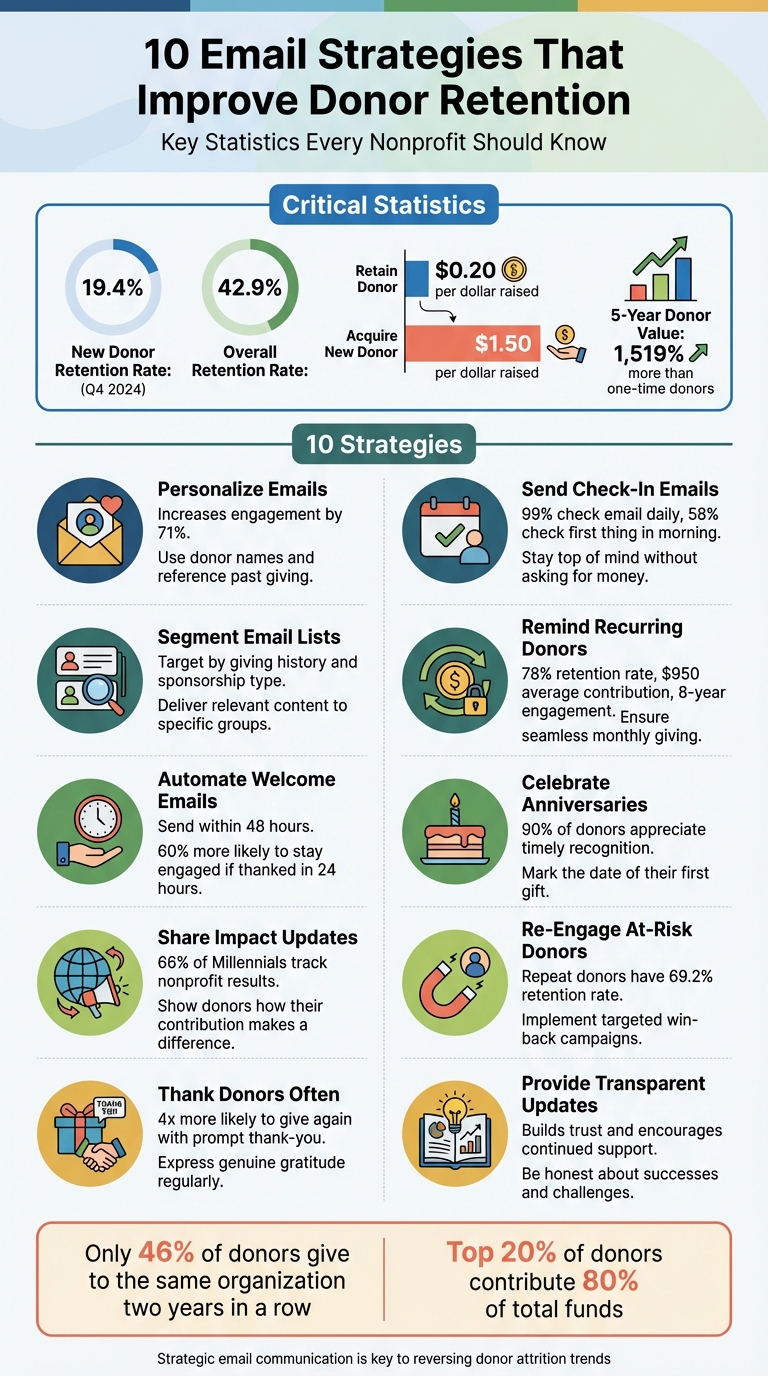
10 Email Strategies to Boost Donor Retention: Key Statistics and Impact
1. Use Donor Data from HelpYouSponsor to Personalize Emails
Why Personalization Matters for Donor Engagement
Donors want to feel recognized and valued. Studies reveal that personalized communication boosts donor engagement by 71%, and 78% of U.S. internet users say relevant content increases their likelihood to act. Emails tailored to the individual can even result in transaction rates up to six times higher than generic ones. When donors sense they’re more than just a funding source, they’re more inclined to stick around. These statistics highlight why personalization is a game-changer for donor retention.
How to Personalize Emails Using HelpYouSponsor Data
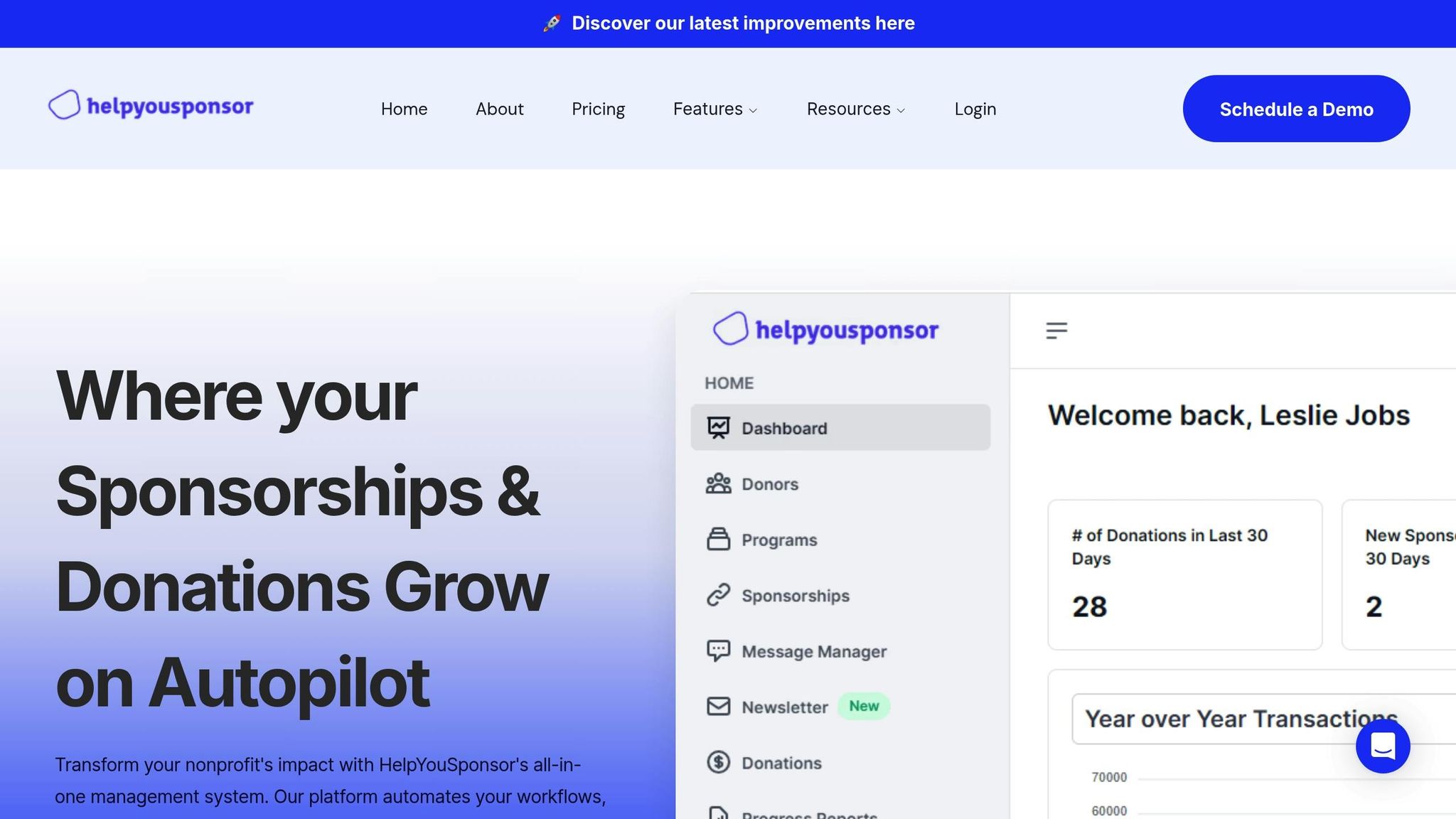
Start by tapping into donor data like donation history, sponsorship details, and communication preferences. HelpYouSponsor makes it easy to use this information to create emails that feel personal and meaningful.
For example, personalized subject lines are 26% more likely to be opened. Instead of a generic "Thank you for your donation", go for something like, "Sarah, your gift is changing Maria's life." Inside the email, reference details such as the donor’s contribution amount, the child they sponsor, or how long they’ve been supporting. Dynamic calls-to-action (CTAs) tailored to donor behavior can increase click-through rates by over 200%. For instance, encourage recurring donors to share their journey, while nudging one-time contributors toward setting up monthly donations.
Automation tools within HelpYouSponsor can streamline this process. Imagine sending a birthday email celebrating the child a donor sponsors or automatically marking milestones like a one-year anniversary of their support. In 2025, Boys & Girls Clubs of Indianapolis used CRM insights to create personalized campaigns, successfully re-engaging 60% of their lapsed major donors. These kinds of automated, thoughtful touches not only strengthen relationships but also lay the groundwork for long-term fundraising success.
How Personalization Supports Fundraising Goals
Retention is key to sustainable funding - and it’s far more cost-effective. It costs just $0.20 per dollar to retain a donor, compared to $1.50 to acquire a new one. By using HelpYouSponsor’s donor data for personalized communication, you’re investing in a strategy that saves money while building loyalty. To fine-tune your approach, track metrics like click-through rates, donations per email, and overall engagement. Notably, 97% of marketers report seeing measurable improvements in results through personalization. Your nonprofit can achieve similar success by continuously refining and optimizing email campaigns.
2. Segment Email Lists by Sponsorship and Donation History
Relevance to Donor Engagement and Retention
Segmentation is like giving each donor a personalized handshake - it ensures your messaging reflects their unique journey with your organization.
Every donor brings a different story, and segmentation allows you to connect with them in a way that feels personal and meaningful. It’s more than just sending out fundraising appeals; it’s about nurturing relationships and showing appreciation. By grouping donors based on their sponsorship levels and giving habits, you can craft messages that resonate deeply with their individual experiences.
Here’s why it matters: Only 46% of donors give to the same organization two years in a row, and 70% of nonprofits struggle with donor retention or acquisition. But when donors feel valued and recognized, they’re more likely to stick around. For instance, donors who consistently give over five years contribute 1,519% more than one-time givers, accounting for nearly half of total revenue. These numbers highlight how powerful segmentation can be in building loyalty and increasing contributions.
Actionable and Practical Implementation Strategies
Tools like HelpYouSponsor make it easy to segment your donors based on gift size, frequency, engagement history, and sponsorship details. For example, you can separate first-time sponsors from those who’ve supported multiple children or distinguish between monthly and annual donors.
Once segmented, you can create tailored email campaigns for each group. For instance:
- First-time donors: Send a welcome series that introduces your programs and highlights the impact of their gift.
- Long-term sponsors: Share updates that celebrate their ongoing commitment and the difference they’ve made.
Retention rates tell the story: new donor retention often falls below 30%, while repeat donors see rates above 60%. And don’t forget your major supporters - the top 20% of donors often contribute 80% of total funds. These key contributors deserve communication that matches the depth of their investment.
Alignment with Nonprofit Fundraising Goals
Segmentation doesn’t just improve relationships - it’s also smart for your bottom line. By targeting donors with messages that align with their level of support, you can maximize engagement while keeping costs in check. Sending the right message to the right person at the right time isn’t just efficient; it’s effective.
Track how different segments respond to content like child progress updates, program milestones, or impact stories, and adjust your strategy accordingly. This approach not only strengthens donor relationships but also helps you build a steady, reliable revenue stream - something every nonprofit can benefit from.
3. Set Up Automated Welcome Emails for New Sponsors
Why the First Email Matters
The very first email you send to a new sponsor is more than just a thank-you - it's the start of a relationship. Unfortunately, only a small percentage of new donors come back, which means nonprofits often miss out on long-term support. Retaining a donor is far more cost-effective than finding a new one - just $0.20 per dollar raised compared to $1.50 for acquisition.
Most donors leave because they feel overlooked or disconnected from the cause. A well-crafted welcome email can change that. It reassures sponsors that their contribution matters and connects them to the mission right away. This initial outreach sets the tone for future communication and engagement.
How to Create Effective Welcome Emails
Timing is everything. Send your welcome email within 48 hours of the donation - sooner is even better. Research shows that donors thanked within 24 hours are 60% more likely to stay engaged. Using tools like HelpYouSponsor's automated workflows can ensure no one slips through the cracks.
Here’s what your email should include:
- Personalized Greeting: Address the sponsor by name to make the message feel personal.
- Heartfelt Thank-You: Acknowledge their specific contribution and express genuine appreciation.
- Impact Statement: Briefly explain how their support makes a difference. For child sponsorship programs, highlight how their gift directly benefits the child or advances your mission.
- Focus on "You": Use language that centers on the donor’s role, like “your generosity” or “because of you,” to make them feel integral to the mission.
- Soft Call-to-Action: Invite them to take a small next step, such as viewing their sponsored child’s profile or reading program updates.
By automating this process, you ensure every sponsor receives a timely, thoughtful message that lays the groundwork for future engagement.
Supporting Long-Term Fundraising Goals
A welcome email isn’t just about saying “thanks” - it’s a key step in encouraging a second donation. The biggest drop-off in donor retention happens after the first gift, so your welcome series must build a bridge to continued support. Follow-up emails should reference their initial contribution and show how an additional gift can amplify their impact.
With HelpYouSponsor’s donor management system, you can personalize these messages at scale. The platform tracks which sponsors open your emails, click on links, or engage with content, giving you valuable insights to refine your approach. Automating this process not only ensures consistent communication but also frees up your team to focus on deeper connections with your most dedicated supporters. These welcome emails serve as the foundation for a broader retention strategy, helping you maintain engagement and build lasting relationships throughout the campaign.
4. Send Regular Updates on Child Progress with Stories
Relevance to Donor Engagement and Retention
Regular updates on a child’s progress are a powerful way to keep donors connected to the impact of their contributions. When sponsors give to support a child’s future but don’t hear about the difference their gift made, the connection can quickly fade. In fact, many first-time donors don’t return, often because they’re left wondering if their donation had any real effect. The fix is straightforward: share the results while their generosity is still fresh in their minds.
"If a donor doesn't know how their money helped, they're unlikely to give again. Vague updates (or no updates at all) create a disconnect between their gift and your impact." - Alex Huntsberger, Neon One
This is especially true for younger donors. Millennials, for example, are highly focused on seeing measurable outcomes - 66% of them track the results of most or all the nonprofits they support. They want to know where their money went and what it achieved. By providing regular updates, you turn a one-time gift into the start of an ongoing relationship. It’s about showing, not just telling, how their support creates meaningful change.
Actionable and Practical Implementation Strategies
Rather than overwhelming donors with program-wide statistics, focus on a single child’s story. Share their journey, the hurdles they’ve overcome, and the milestones they’ve reached. Add photos, quotes, and short updates on their education or health to make the impact tangible. These personal details help sponsors see the real difference their monthly contributions make.
Leverage tools like HelpYouSponsor’s donor tracking features to ensure updates are sent to the right people. Keep the updates brief and visually engaging - opt for snapshots every 2–3 months instead of lengthy reports. For instance, you could explain: "$45 provided school supplies for three months." These concise updates not only reinforce the donor’s commitment but also complement earlier strategies to deepen engagement.
Alignment with Nonprofit Fundraising Goals
Sharing progress stories does more than keep donors engaged - it lays the groundwork for ongoing support. When donors see their gift as part of a larger, multi-year journey rather than a one-time act, they’re far more likely to continue giving. Structure updates to celebrate what’s been achieved while also pointing to what’s next. Show how this year’s contributions are building toward lasting change. This approach helps bridge the communication gaps that often lead to donor attrition, transforming one-time sponsors into long-term partners.
5. Send Thank-You Email Sequences to Show Appreciation
Relevance to Donor Engagement and Retention
A heartfelt thank-you email can make a world of difference in building donor loyalty. Sending these emails promptly - ideally within 48 hours - can increase the likelihood of repeat donations by up to four times. Yet, many organizations miss the mark by sending generic acknowledgments weeks after receiving a gift, which can leave donors feeling underappreciated.
The data speaks volumes. A study of in-memoriam donors revealed that 90% considered a timely thank-you letter to be "the single most important and influential communication" they received from the nonprofits they supported. When donors feel genuinely valued right after giving, they’re far more likely to continue supporting the cause. This is especially critical in a sector where retention rates often hover around 40–50%.
Actionable and Practical Implementation Strategies
Start with an immediate confirmation email. Instead of a bland, generic message, craft a warm, specific acknowledgment that highlights how their donation directly supports your mission. Follow up with a personal thank-you that connects their gift to real-world outcomes.
The key? Shift the focus for new donors from constant solicitation to stewardship. Use tools like HelpYouSponsor’s tracking to automate and segment your thank-you email sequences, ensuring every donor receives timely and personalized messages. Extend your gratitude throughout the year with thoughtful gestures - birthday emails, holiday greetings, or quarterly updates on how their contributions are making an impact. These messages should focus on appreciation and updates, not requests for more donations. This ongoing communication transforms a simple thank-you into a meaningful, long-term relationship.
Alignment with Nonprofit Fundraising Goals
Thank-you email sequences do more than express gratitude - they strengthen the connection between the donor and your mission. By sharing the impact of their gift while the experience is still fresh, you can turn first-time donors into loyal supporters. This not only deepens their commitment but also helps build the consistent funding your programs need to create lasting change.
6. Schedule Regular Check-In Emails
Relevance to Donor Engagement and Retention
Donor retention is a challenge for many nonprofits, and surprisingly, it’s often not about money. The real issue? A lack of communication. When donors feel overlooked or uninformed, they’re less likely to stick around.
Regular check-in emails help bridge this gap. They serve as friendly reminders that donors are more than just financial contributors - they’re essential partners in your mission. These emails aren’t about asking for more money; they’re about keeping the connection alive by showcasing the real-world impact of their support. Considering that 58% of people check their email first thing in the morning and 99% check daily, email is still one of the most effective ways to stay in touch. That said, with inboxes flooded by over 120 emails a day, grabbing attention is no small feat. You’ve got just two seconds to make an impression, so these messages need to stand out. When paired with earlier strategies like personalization and segmentation, regular check-ins ensure your donors feel consistently engaged and appreciated.
Actionable and Practical Implementation Strategies
Plan to send quarterly updates and personalized check-ins. Use tools that allow you to track donor behavior, segment your email lists, and automate messages based on donation history or interests. For example, Cornell University sent out a simple yet heartfelt email featuring the serene beauty of its Botanic Gardens. The goal wasn’t to ask for money but to evoke memories and strengthen emotional ties. Similarly, UC Davis shared a short 50-second video email showcasing Giving Day results, giving donors a clear sense of their collective impact.
In these emails, focus on the donor’s role. Share stories about who benefited from their contributions, what changed because of their support, and what’s coming next. Personalize the tone by addressing each donor by name and using “you” more than “we.” Keep your language clear and concise, aiming for a reading level that’s accessible to most audiences (around 7th–9th grade).
Alignment with Nonprofit Fundraising Goals
Just like personalized emails and timely thank-you notes, regular check-ins are a cornerstone of effective donor retention. They reduce the cost of constantly acquiring new donors by strengthening relationships with existing ones. By expressing gratitude, sharing updates, and even asking for feedback through surveys or informal questions, you can turn one-time donors into long-term supporters. These emails help donors see how their contributions fit into a larger story, inviting them to be part of your organization’s ongoing journey.
7. Send Renewal Reminders for Recurring Commitments
Relevance to Donor Engagement and Retention
Recurring donors are the backbone of consistent fundraising efforts. On average, they contribute nearly $950, remain engaged for about eight years, and have a retention rate of 78% - a figure that far outpaces one-time donors. Between 2018 and 2022, the number of recurring donors saw an impressive 127% increase. Just like personalized welcomes and regular updates, well-timed renewal reminders play a critical role in keeping these supporters engaged. Plus, re-engaging previous donors is up to five times more cost-effective than finding new ones. Even the most loyal donors benefit from a gentle nudge to renew their commitment.
Actionable and Practical Implementation Strategies
Timing is everything.
Celebrate donor milestones with "donorversary" emails sent 12 months after their initial contribution, inviting them to renew their support. For donors who may have lapsed, consider sending reminders around the 10-month mark to re-engage them before they completely disengage. Tools like HelpYouSponsor’s advanced scheduling features can automate these reminders, saving time and ensuring they are sent promptly.
Make it personal.
Tailor each message by addressing donors by name, referencing their giving history, and connecting their generosity to real-world outcomes. For instance, in 2025, Boys & Girls Clubs of Indianapolis successfully re-engaged 60% of major lapsed donors by crafting personalized messages that showcased the tangible impact of their past contributions. Adding photos, videos, or stories from beneficiaries can deepen the emotional resonance of your outreach. Once the connection is re-established, make the renewal process as simple as possible.
Simplify the renewal process.
Fundraising expert Rachel Muir emphasizes the importance of removing obstacles:
"Every step you remove from the donation process increases the likelihood a donor will complete the gift".
To make renewals effortless, provide clear calls to action, use pre-filled forms, and frame the renewal request as part of a larger, ongoing journey of impact.
Alignment with Nonprofit Fundraising Goals
When implemented thoughtfully, renewal reminders fit seamlessly into broader donor stewardship strategies. Consistent, meaningful communication that highlights the continued impact of their support can transform one-time contributors into long-term partners. This approach fosters a deeper connection, showing donors that their role extends far beyond financial contributions - it’s about being an integral part of your mission’s success.
8. Recognize Donor Anniversaries with Special Emails
Relevance to Donor Engagement and Retention
Anniversary emails are a heartfelt way to strengthen connections with donors, reminding them of their importance and the difference they've made. Acknowledging milestones like these helps build loyalty, with over 90% of donors appreciating timely recognition. Long-term donors often contribute more significantly over time, making this approach not only meaningful but also cost-efficient for maintaining engagement and fostering lasting relationships.
Actionable and Practical Implementation Strategies
- Automate the Process. Use tools like HelpYouSponsor's scheduling features to plan anniversary emails. Set them up to go out a month before the anniversary and again on the exact date.
- Add a Personal Touch. Address donors by name and highlight their specific contributions. For instance, instead of a generic message, you could say: "Sarah, one year ago you sponsored Maria. Today, she's thriving in her education thanks to your support." Including real examples of the impact they've made adds a layer of sincerity.
- Focus on Gratitude, Not Donations. Keep these emails celebratory and free of donation requests. Write in a warm, conversational tone that’s easy to understand, aiming for a 7th–9th grade reading level. The goal is to express genuine gratitude and showcase the tangible benefits of their generosity. As Doing Good Agency puts it:
"Anniversary automation is a strategic approach to donor engagement that leverages the power of timing and personalization."
Additionally, track donor preferences in your CRM to tailor how you recognize them - whether through public acknowledgment, a private message, or a simple note. This thoughtful approach strengthens relationships and complements your overall retention strategy.
Alignment with Nonprofit Fundraising Goals
Anniversary emails fit seamlessly into a larger strategy of personalized communication and regular engagement. They remind donors that their contributions are more than just monetary - they’re vital to your mission’s success. By recognizing their impact in such a meaningful way, you make donors feel valued and appreciated. This not only encourages them to stay committed but often inspires them to increase their support, helping your organization maintain a steady financial foundation and reduce fundraising costs over time.
9. Create Follow-Up Sequences for At-Risk Donors
Why This Matters for Donor Engagement and Retention
Keeping donors engaged is essential. Repeat donors have a 69.2% retention rate, while first-time donors are far less likely to stick around. Plus, retaining a donor costs significantly less - just $0.20 per dollar raised, compared to $1.50 per dollar raised for acquiring new donors. Often, donors drift away because they don’t feel connected to the impact they’re making. A well-planned follow-up sequence can bridge that gap.
How to Implement Effective Follow-Up Sequences
To bring at-risk donors back into the fold, focus on personalized outreach and smart segmentation. Start by tracking donation patterns, especially first-time donors who haven’t made a second gift within 90 days of their initial contribution. Tools like HelpYouSponsor's CRM can help you segment donors based on gift size, frequency, and engagement levels, making it easier to identify those who may be losing interest.
Once you’ve identified at-risk donors, craft a follow-up sequence with three to five touchpoints over a 60–90 day period. Here’s a simple roadmap:
- First email: Thank the donor for their previous support and share a compelling story about how their contribution made a difference.
- Second email: Send a brief survey to gather feedback. This can go a long way in making donors feel heard - especially since only 14% of nonprofits regularly survey their supporters.
- Third email: Share a program update without asking for a donation. This keeps the focus on impact rather than solicitation.
- Final email: Extend a gentle invitation to re-engage, whether through a donation, event, or volunteer opportunity.
How This Supports Fundraising Goals
Follow-up sequences do more than just prevent donor attrition - they build stronger, long-term relationships. Donors who give consistently over five years contribute an astonishing 1,519% more than one-time donors and account for nearly half of total revenue. The biggest reason donors stop giving isn’t financial - it’s a lack of communication. These sequences tackle that issue head-on, turning potential losses into lasting partnerships that fuel your mission year after year. By improving communication, you’ll not only retain more donors but also maximize their lifetime value.
10. Share Transparent Updates on Program Progress
Relevance to Donor Engagement and Retention
Donors want to see the difference their contributions make. When they don't see clear results, they often stop giving - not because they don’t care, but because they’re unsure if their support is making an impact. In fact, one of the main reasons donors stop contributing is the lack of visible outcomes from their donations. Unlike individual success stories, program updates provide a broader perspective, showing how the entire initiative is progressing. By clearly outlining how funds are used and the results achieved, you can turn one-time donors into loyal supporters.
Actionable and Practical Implementation Strategies
Timely updates are key. Use donor records to send campaign-specific updates that resonate with each supporter. Tools like HelpYouSponsor let you segment your donor list by campaign or project, so you can send tailored updates that highlight the collective impact of their contributions. For example, an animal shelter might share updates with photos of newly renovated facilities and a breakdown of how funds were allocated (e.g., 50% for materials, 30% for labor).
Keep your updates focused and impactful by highlighting one major accomplishment. Share who benefited, what changed, and what’s next. Add a personal touch with a photo, short video, or testimonial that brings the story to life. For instance, a message like "Darren, your generous $400 donation to our after-school program helped us provide brand-new arts and crafts supplies to hundreds of kids. Check out the video below to hear from one of the students about how your support has made a difference." strengthens the emotional connection. You can also frame current donations within a larger vision, such as explaining how a December gift will help launch a new program in January. This approach reinforces the donor’s role in the program’s success and keeps them engaged in your mission.
Alignment with Nonprofit Fundraising Goals
Consistent updates build trust and encourage long-term support. Donors want transparency - they need to know how their money is being used and what kind of change it’s creating. Use cultivation emails to focus on sharing value without asking for more donations, which helps deepen the relationship and sets the stage for future appeals. Regularly sharing updates - whether through monthly newsletters, success stories, or videos - keeps donors informed and connected. This consistent communication not only strengthens credibility but also transforms one-time gifts into ongoing support. Transparent updates align perfectly with strategic email practices, ensuring donors feel valued and involved in your mission.
The AI Welcome Sequence: Automate Donor Retention & Turn First-Time Gifts into Lifelong Support
Conclusion
Fostering lasting donor relationships requires thoughtful, ongoing communication that helps supporters feel valued and deeply connected to your mission. The strategies outlined here address some of the main reasons donors stop giving: feeling unappreciated, not seeing the impact of their contributions, or losing touch with your organization. By personalizing emails, sharing meaningful stories, and staying in regular contact, you can turn one-time donors into long-term partners who are invested in your cause.
Here’s a powerful statistic: donors who give consistently over five years contribute 1,519% more than one-time donors. As Alex Huntsberger from Neon One explains:
"If you treat every donor as a partner in your mission - through gratitude, impact sharing, and thoughtful communication - you won't just improve your retention rate. You'll build lasting relationships that weather the ups and downs of life".
To start, focus on a few strategies that align with your resources and donor base. For example, you might set up automated welcome emails for new supporters or create a simple series of thank-you messages. Tools like HelpYouSponsor can help you segment your audience, tailor your messages, and track what resonates most with your donors. The goal is to communicate consistently and authentically - donors can tell when your outreach goes beyond just asking for money.
Every email you send - whether it’s an update, a milestone celebration, or a heartfelt thank-you - reinforces the principles discussed here: personalization, regular updates, and genuine appreciation. These elements work together to build partnerships with donors that create meaningful and lasting change.
FAQs
How do personalized emails help improve donor retention?
Personalized emails play a key role in boosting donor retention because they make supporters feel valued and acknowledged. When you tailor messages to reflect a donor's past contributions, interests, or interactions, it creates a meaningful connection that resonates with them.
Using their name, mentioning specific donations, and sharing updates that match their passions can go a long way. This kind of attention builds trust and fosters loyalty, ultimately strengthening relationships and encouraging donors to stay committed to your mission for the long haul.
How do automated welcome emails help retain donors?
Automated welcome emails play a key role in establishing strong connections with donors from the very beginning. They provide an opportunity to say thank you right away, share meaningful stories about how their contributions make a difference, and encourage further involvement. This early outreach helps donors feel recognized and connected to your mission.
Nonprofits that implement thoughtful welcome email series often experience higher donor retention rates and a greater chance of receiving repeat contributions. When donors feel appreciated and well-informed, it lays the groundwork for lasting support and dedication to your cause.
Why should nonprofits regularly share updates about how donations are used?
Keeping your donors in the loop about how their contributions are being used is key to earning their trust and showing them the tangible effects of their generosity. When donors can clearly see the outcomes of their support, they feel appreciated and more connected to your mission.
Sharing these updates also strengthens your relationship with them. It keeps donors engaged and reinforces the positive changes they’re helping to bring about. When people feel both informed and valued, they’re much more likely to stick with your organization for the long haul.