
What Makes Donors Respond to Nonprofit Fundraising Messages
Personalization, storytelling, timing, clear CTAs and transparent impact reporting are the five essentials that make donors give—and keep giving.

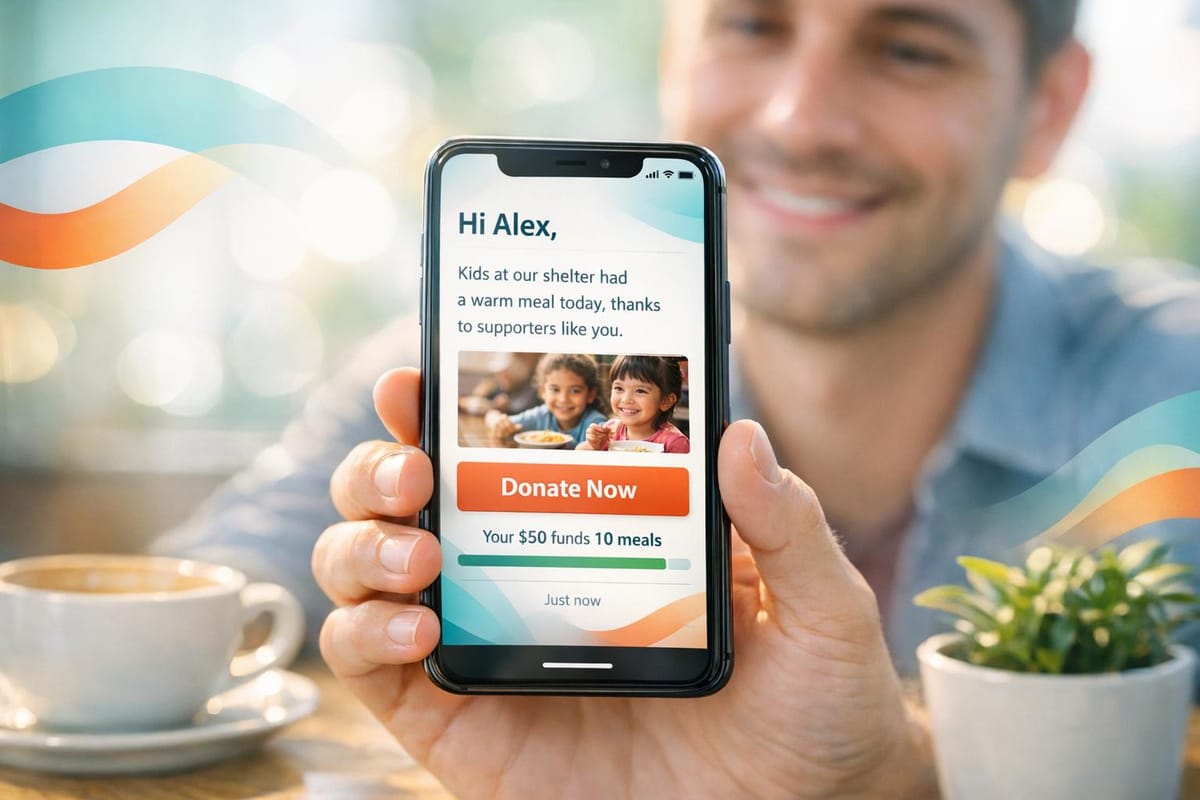
Nonprofit fundraising faces challenges: declining donor participation, low retention rates (45%), and crowded digital spaces where attention spans average just 40 seconds. To succeed, nonprofits must prioritize:
- Personalization: Tailored messages increase email open rates by 26% and response rates by 135% in direct mail.
- Storytelling: Emotional stories, combined with data, inspire action. Donors are 70% more likely to give when stories are used effectively.
- Timing: Key moments like year-end or mission-aligned dates drive donations. Timely follow-ups (within 48 hours) improve retention rates significantly.
- Clear CTAs: Specific, action-oriented requests boost response rates by 35–50%.
- Impact Reporting: Showing donors the results of their gifts builds trust and encourages ongoing support.
These strategies, supported by tools like HelpYouSponsor, help nonprofits strengthen donor relationships and improve fundraising outcomes.
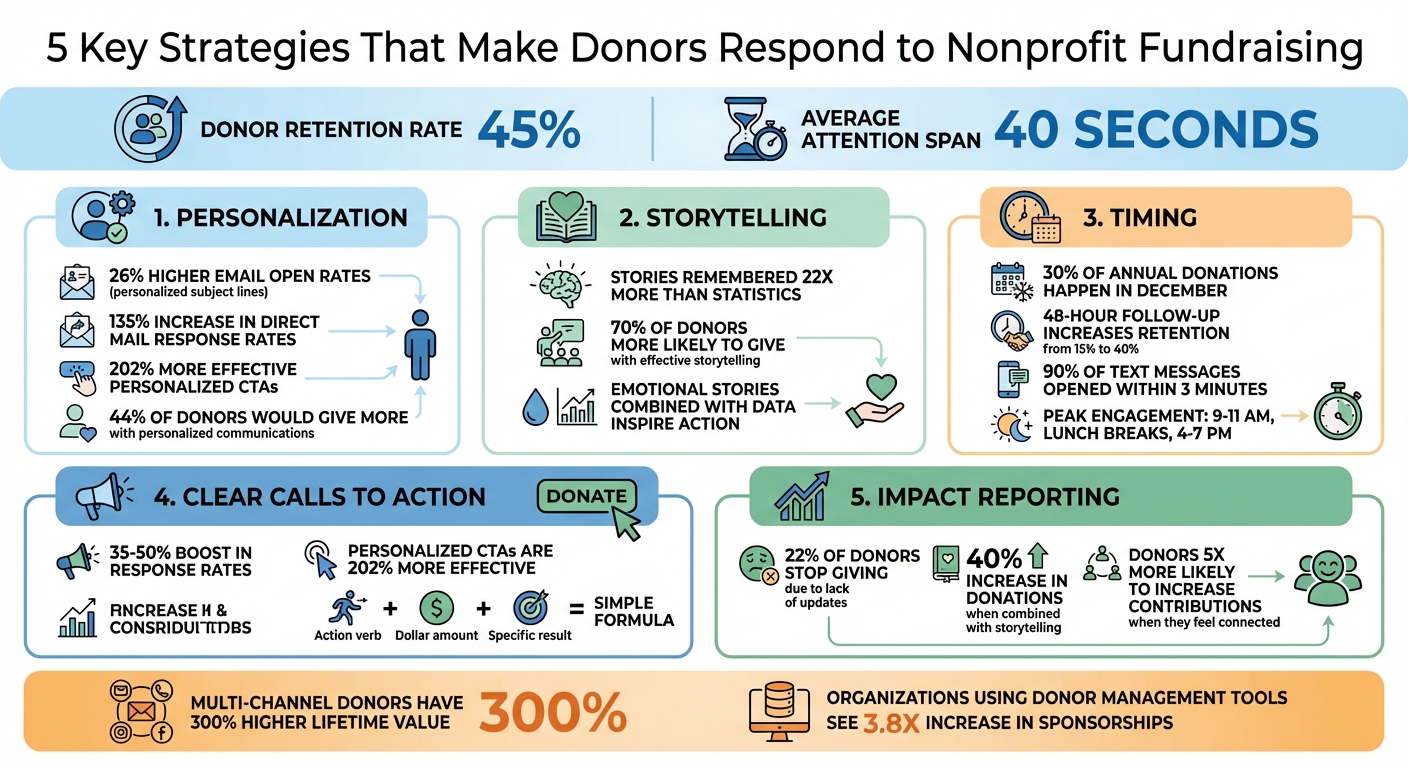
5 Key Strategies That Make Donors Respond to Nonprofit Fundraising
Top 12 Donor Development Strategies to Grow Your Nonprofit Fundraising
Personalization: Making Donors Feel Valued
Generic nonprofit appeals can feel impersonal, leaving donors disconnected. Personalization, however, can change that dynamic entirely. In fact, 44% of donors say they’d give more if communications felt personalized. So, those all-too-common greetings like "Dear Friend" or "Valued Supporter" might be costing you opportunities to connect. But personalization goes beyond simply adding a first name to an email - it's about recognizing donors' specific contributions and showing that you understand their priorities.
The numbers back this up:
- Emails with a donor's name in the subject line see 26% higher open rates.
- Personalized call-to-action buttons are 202% more effective than generic ones.
- Direct mail with a donor's name boosts response rates by 135%.
The real magic happens when you highlight specific details, like the fund they contributed to or the impact of their gift.
"You're building a donor base, not a database." – Matt Bitzegaio
This quote sums it up perfectly. Donors want to feel like individuals, not just entries in a spreadsheet. A great example? The University of Georgia used segmentation and predictive analytics for its Presidents Club mailings, leading to a 910% year-over-year increase in leadership donors acquired through direct mail. Treating donors as people, not numbers, can yield incredible results.
Using Donor Data Effectively
The key to personalization lies in the data you already have. Tools like RFMT analysis (Recency, Frequency, Monetary value, and Timing) help predict when donors are likely to give and how much they might contribute. This allows you to time your asks perfectly, avoiding generic, one-size-fits-all appeals.
Tailoring ask amounts based on past giving history can also make a big difference. For instance, suggesting 1.5× or 2× a donor's previous gift has proven effective. Nonprofits using machine learning for "Intelligent Ask Amounts" saw an 11% increase in funds raised during testing. The American Cancer Society applied similar strategies in 2022, optimizing its digital ad campaigns with machine learning. The result? A 17% boost in donation revenue, a 70% donor engagement rate, and a 1.5% click-through rate on interactive banners - 87.5% higher than before.
Accuracy is just as important as strategy. Outdated or duplicate records can derail personalization efforts, so regular data audits and a standardized entry guide are essential. Clean, reliable data is the foundation for creating tailored messages that truly resonate.
Segmenting Donor Audiences
Not all donors are the same, so your messages shouldn’t be either. Effective segmentation begins with understanding your donors’ motivations. Factors like age and location can shape communication preferences - Gen Z might prefer text messages, while older donors may respond better to direct mail. Past giving behavior and engagement levels (like event attendance or volunteering) can also provide valuable insights.
The power of segmentation is clear. For example:
- Habitat for Humanity Fort Collins identified "emerging prospects" and sent them postcards inviting them to tour a major development. One recipient responded with a $10,000 donation, 10 times their previous total giving.
- The University of Kansas Health System segmented patient profiles by giving potential and connected them with major gift officers within two weeks of discharge. This effort led to a $1.1 million planned gift from a single donor.
Start with broad, high-impact segments like first-time donors, recurring donors, and lapsed donors. Over time, refine your approach as you gather more data. Multi-channel donors, for instance, have a lifetime value that’s 300% higher than those who engage through just one channel. Meeting donors on their preferred platforms - whether email, social media, or direct mail - can maximize your impact.
| Segment Type | Engagement Strategy |
|---|---|
| First-Time Donors | Welcome emails, impact stories, and timely thank-you notes |
| Monthly Donors | Exclusive updates, behind-the-scenes content, and special perks |
| Major Donors | Personal outreach, tailored proposals, and exclusive briefings |
| Lapsed Donors | Reactivation campaigns with "we miss you" messages and past impact |
Personalization lays the groundwork for stronger connections. From here, storytelling can take those relationships to the next level, creating an emotional bond that keeps donors engaged.
Storytelling: Building Emotional Connections
Personalization gets donors' attention, but storytelling is what drives them to act. While facts and figures explain your mission, they often fall flat when it comes to inspiring action. Stories, on the other hand, are memorable - people recall them up to 22 times more than statistics alone. In fact, a 2024 report found that 70% of donors are more likely to give to organizations that use storytelling effectively.
Start with emotion, then follow up with data. Begin by sharing a real, human moment - introduce someone whose life has been positively impacted by your work. Once you’ve built that emotional connection, use numbers to reinforce the story, showing the broader scale and credibility of your efforts. This "story-first" method works because it taps into the emotional parts of the brain, which are far more influential in driving donations than logical reasoning.
Here’s a key mindset shift: your donor is the hero, not your organization. As Rob Burke, CMO of DonorDock, says:
The donor is the hero, not your organization.
When you frame donors as the ones creating change, it positions their generosity as the turning point. Your role becomes one of a guide, showing how their support transforms lives. A simple story structure works best: introduce the character, highlight their struggle, and show the change donors make possible.
Take, for example, a video from M+R's 2024–2025 persuasion experiments. It featured Mary Jo, a mother advocating for her son’s Medicaid coverage, and outperformed traditional political ads by 2.5 to 3.6 percentage points in motivating viewers to take action. The raw honesty of her story resonated deeply.
The words you choose matter, too. Avoid jargon and use language that feels real and relatable. For instance, saying "no kid should go to bed hungry" instead of "addressing food insecurity" increased support for SNAP by 6.3%. Speak like a person, and donors will respond as people.
Creating Human-Centered Stories
To create stories that resonate, focus on clear, human-centered narratives. Start with a structure that’s easy to follow: introduce a specific character, describe their challenge, and show how donor support leads to a positive outcome. The more personal and relatable the character, the stronger the connection. Avoid vague descriptions like "communities in need" and instead spotlight individuals with names and faces who represent the broader impact.
Donors need to see their role clearly in the story. Spell it out: "With your help, [Name] can [Outcome]". This direct approach turns passive sympathy into active involvement. People want to feel like their contribution is the key to making change happen - not just one of many inputs.
Tailor your storytelling to match donor personalities. Research on the "Big 5" personality traits shows that conscientious donors respond to messages about "competence and agency", while agreeable donors connect better with themes of "kindness and connection". Knowing your audience’s motivations allows you to craft stories that truly resonate.
Let the voices of beneficiaries, volunteers, or community members shine through. Stories told in their own words carry more emotional weight than polished scripts. For example, ads featuring local messengers instead of national organizations saw a 10% boost in positive perceptions of community impact. Authenticity matters - let those closest to your mission tell their stories.
Using Visual and Multimedia Elements
Visual elements bring your stories to life. Donors who watch videos are 48% more likely to donate, and visuals can double the impact of text alone. Photos, videos, and infographics allow donors to see the people and work behind your mission, building trust and transparency.
Keep videos short - 30 to 90 seconds is ideal - and follow a clear structure: challenge, action, and outcome. Use real footage featuring beneficiaries, staff, or volunteers rather than stock images. Selfie-style videos or unscripted clips often outperform polished ads because they feel more genuine.
Whenever possible, show transformation. Before-and-after photos or a series documenting someone’s journey - like a family moving from homelessness to stable housing - make the impact of donor support undeniable. These visuals ground abstract ideas in tangible results.
Maximize the reach of your strongest visual content by repurposing it across platforms. A powerful video can be shared on social media, featured in email campaigns, and highlighted on your website. Infographics are another great tool, combining data with design to communicate key points - like the number of people served - clearly and quickly. Together, these elements strengthen both the emotional and logical reasons to give.
Timing: Sending Messages at the Right Moment
When it comes to donor engagement, timing can make or break your message. A well-timed message can inspire action, while poor timing might leave your email unopened or your text ignored. The key is reaching donors when their interest and motivation are at their highest.
Here’s a striking fact: 30% of all annual charitable donations in the U.S. happen in December, with nearly 10% of those coming in the final three days of the year (December 29–31). While year-end giving is crucial, it’s not the only time to connect. Donors are also influenced by other meaningful moments - whether tied to your mission, their personal milestones, or their giving history. The challenge is identifying those key moments and acting quickly.
Using Key Dates and Milestones
The calendar is your best friend when it comes to strategic timing. Beyond the December rush, look for mission-aligned awareness days that naturally resonate with your cause. For instance:
- Animal shelters often see increased support on National Dog Day.
- Environmental organizations gain traction on Earth Day.
- Domestic services connect well on Mother’s Day.
These dates already have momentum, and your job is to align your outreach with them.
Don’t forget about milestones within your organization. Anniversaries, major achievements (like serving your 1,000th client), or the launch of a new program give donors a reason to celebrate with you. Even more impactful are donor-specific milestones. Acknowledging the anniversary of a donor’s first gift or a significant contribution shows them they’re valued and appreciated.
And timing isn’t just about the calendar - it’s also about catching donors when they’re most likely to engage. Research shows peak engagement times are:
- Late morning (9:00 a.m. to 11:00 a.m.)
- Lunch breaks
- Early evening (4:00 p.m. to 7:00 p.m.)
For Giving Tuesday, specifically, the highest engagement hour is from 8:00 p.m. to 9:00 p.m.. To stand out during busy periods like year-end, consider sending messages in the early afternoon (1:00 p.m. to 3:00 p.m.), when fewer nonprofits are competing for attention.
Responding Quickly to Donor Actions
Speed matters. Following up with donors promptly not only strengthens their emotional connection but also improves retention rates. Organizations that respond within 48 hours see first-year donor retention rates jump from 15% to as high as 40%.
"Fundraising isn't just about getting the gift – it's about starting the relationship. The 48-hour follow-up rule ensures that relationship starts strong." – Jeremy Reis, Author of Magnetic Nonprofit
Here’s how to structure your follow-up timeline:
- Within 0–2 hours: Send an automated receipt to confirm the donation and provide tax information. This reassures donors their transaction was successful and secure.
- Within 24 hours: For first-time donors or gifts over $250, send a brief, personal message - whether via email or phone call - focused solely on gratitude.
- Within 24–48 hours: Share impact updates, welcome them into your community, or encourage social media engagement.
Texting is particularly effective for urgent moments. With 90% of text messages opened within 3 minutes, it’s a great way to make last-minute appeals or share critical updates. Pairing an MMS message with a follow-up SMS within three days can boost conversion rates by 53% and increase ROI by 46%.
| Timeframe | Action Type | Purpose |
|---|---|---|
| 0–2 Hours | Automated | Confirm transaction and provide tax details |
| 2–24 Hours | Manual/Personal | Express gratitude through a personal message |
| 24–48 Hours | Automated/Manual | Share updates or invite engagement |
| 30/60/90 Days | Automated | Scheduled check-ins to maintain the relationship |
Clear Calls to Action: Guiding Donors to Act
Once you've captured a donor's interest, the next step is guiding them to take action. This is where clear calls to action (CTAs) come into play. Without them, fundraising messages can feel aimless. Research shows that clear CTAs can increase response rates by 35–50%. The difference between a vague appeal like "Help us in our mission" and a direct one such as "Donate $25 to provide a week of meals" is striking. It's not just about clarity - it's about turning uncertainty into action.
A strong CTA should immediately answer three key questions: What should I do? How much should I give? What will my gift accomplish? A simple formula to follow is: action verb + dollar amount + specific result. For example, "Donate $25 to provide a week of meals" makes the action clear, specifies the amount, and highlights the impact.
Designing Effective CTAs
To craft an effective CTA, start with strong action verbs like "Donate", "Give", "Support", or "Sponsor". These verbs, when paired with specific dollar amounts and measurable outcomes, can make a big difference.
Take these examples:
- Sheltered Paws, an animal rescue group, swapped their generic "Donate Today" button for "Feed a Sheltered Pup for a Week." This change led to a 47% increase in click-through rates.
- Books for All replaced "Give the Gift of Reading" with "Gift a Book Kit to a Classroom", resulting in a 35% rise in donations.
The design and placement of your CTA button are just as important. Use contrasting colors to make the button stand out, and ensure it's large enough for mobile users (at least 57×57 pixels). Position your primary CTA "above the fold" so it's visible without scrolling, and repeat it after compelling stories or descriptions. Personalizing CTAs - like "Start my monthly gift" instead of "Start your monthly gift" - can boost performance by over 200%.
"A well-crafted Call to Action (CTA) is the keystone of success." – Javan Van Gronigen, Co-founder and Creative Director, Fifty & Fifty
Another trick is to list donation amounts from highest to lowest. For instance, "$250, $100, $50" often leads to larger gifts compared to "$50, $100, $250". And keep your focus sharp - each communication should highlight just one primary CTA to avoid overwhelming your audience.
Pairing CTAs with Impact Examples
Donors are more likely to give when they see how their contributions make a difference. Pairing your CTA with a clear, relatable outcome helps donors visualize the impact. For instance, "Donate $25 to provide a week of meals" connects the action directly to a meaningful result.
A great example of this approach is TUMO Armenia, which aimed to raise $10 million for education hubs. By combining clear CTAs with an interactive map showing which locations donors could sponsor, the campaign exceeded expectations, raising over $19 million and funding more than 50 education hubs worldwide.
Here’s how you can tie donation amounts to specific outcomes:
| Gift Amount | Impact Example |
|---|---|
| $250 | Funds a month of after-school tutoring |
| $100 | Covers a week of tutoring sessions |
| $50 | Provides school supplies for one child |
| $25 | Supplies a week of meals for a family |
Make the donation process simple - no more than three clicks from CTA to confirmation. Every additional step increases the chance of losing potential donors. Adding urgency with phrases like "by December 31", "matched this week", or "before midnight" can further motivate donors to act now.
"An email without an effective CTA is like a ship without a rudder. Sure, it might float, but it won't necessarily go where you want it to." – Jeremy Reis, Author and Fundraiser
Demonstrating Impact: Building Confidence in Donors
Donors want to know how their contributions make a difference. In fact, 22% of donors who stop giving cite the lack of updates on how their money was used as the reason. By showcasing tangible outcomes, you build trust and encourage ongoing support.
The secret? Make the donor the hero of the story. Instead of saying, "We built three new classrooms", say, "Your gift built three new classrooms." This subtle shift turns a routine update into a personal acknowledgment of their role in the success.
Reporting on Donation Outcomes
Start with a story, then back it up with data. Stories stick with people - research shows they’re remembered up to 22 times more than facts alone. A simple, effective formula is to share one person’s experience, highlight a specific result, and tie it back to the donor with a phrase like, "Your gift made this possible".
Take New Leash on Life USA, a nonprofit in Philadelphia, as an example. They share their impact by reporting a 72% employment rate for formerly incarcerated participants and a 100% adoption rate for rescued dogs. Their "Impact" webpage includes a five-minute video and individual success stories, illustrating how donations transform both people and animals.
Share these updates across multiple platforms - your website, newsletters, social media, and even direct calls. For instance, the Lymphoma Research Foundation uses its "Stories of Hope" program to feature impact stories organized by topic, allowing supporters to easily explore outcomes and even submit their own stories.
Don’t wait for an annual report to share results. A quick "30-day first win" update can include 2–3 bullet points and a photo showing what’s been achieved in the first month after a donor’s gift. These brief updates keep donors engaged without overwhelming them, creating a steady stream of connection and transparency.
Balancing Asks and Updates
Once donors see the impact of their gifts, they value a thoughtful balance between updates and requests. A great approach is the "Relationship Loop": thank them, report on progress, connect personally, and then make an ask.
Consider sending quarterly or monthly emails that blend stories of impact with fundraising appeals. For example, one month could feature a heartfelt success story with no request - just gratitude and an update. The next month, you might highlight a new need while reminding donors of the difference their past gifts have made. This approach shows donors they’re more than just a funding source - they’re a valued partner in your mission.
"Short, consistent updates beat rare, overwhelming reports every time." – Rob Burke, CMO, DonorDock
A suggested post-donation sequence includes seven touchpoints: a personalized thank-you, a 30-day "first win" update, a frontline story, a check-in offering choices, a mini-milestone update, a non-ask invitation (like a virtual tour), and finally a vision for the future paired with a new ask.
Not every interaction should involve a request. For example, call donors within 48 hours of their gift to share a short story - just 2–3 sentences - about what their contribution is helping to achieve. No ask, just gratitude. These moments of pure connection turn a transactional relationship into a lasting partnership, laying the groundwork for long-term support.
How HelpYouSponsor Simplifies Effective Messaging
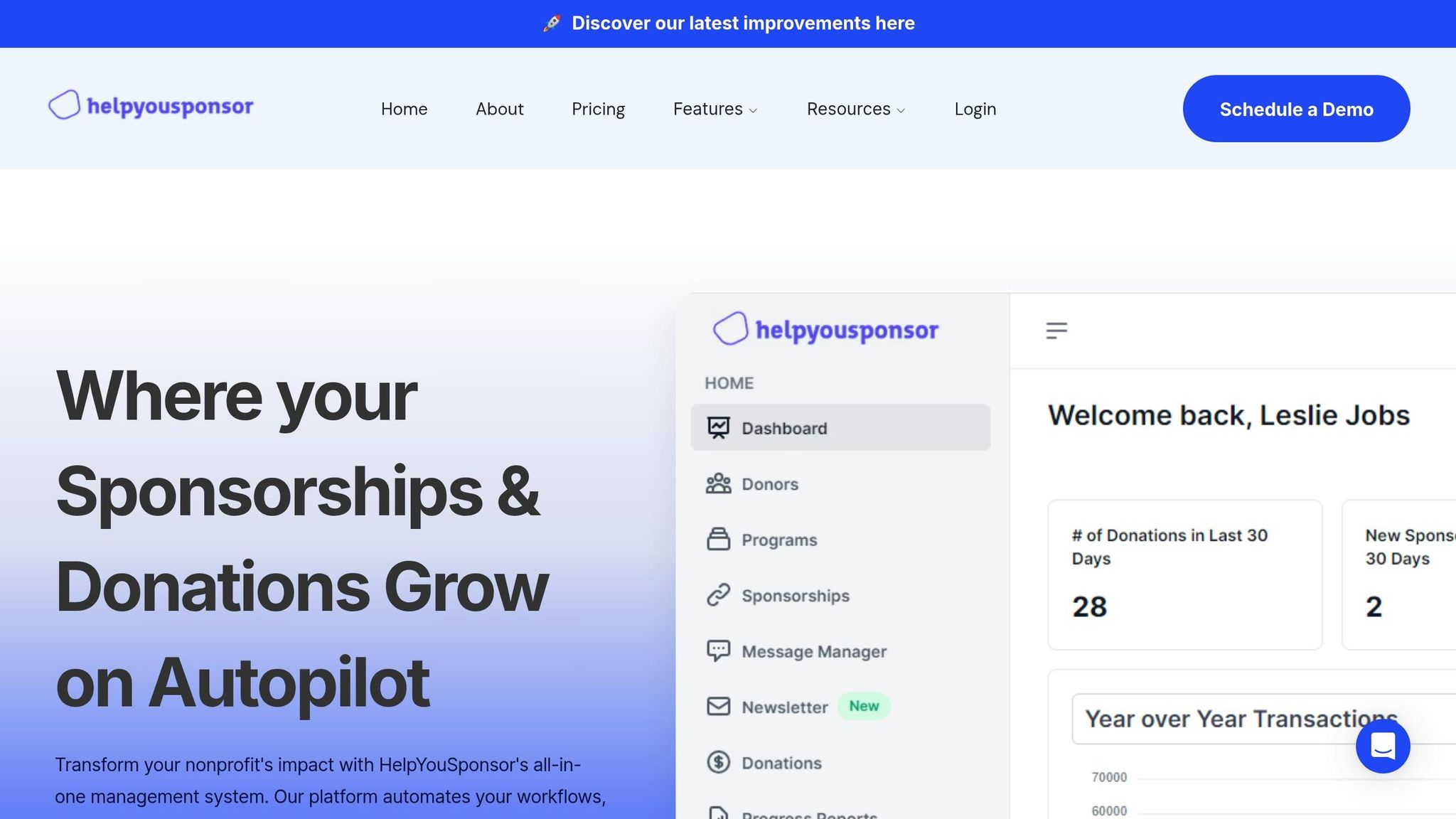
Managing donor relationships can be a juggling act, especially when you're trying to engage hundreds - or even thousands - of sponsors. Effective messaging needs a mix of automation and tracking to keep donors engaged. That’s where HelpYouSponsor steps in, automating up to 90% of routine sponsorship management tasks. This lets your team focus on what truly matters: building personal connections.
Organizations using HelpYouSponsor have seen an average 3.8x increase in sponsorships. Why? Because the platform makes it easy to deliver consistent, personalized communication without overwhelming your staff. Take Hope Project International, for example. Under Farrell Burton’s leadership, they scaled their child sponsorship program with HelpYouSponsor. Burton shared:
Without this invaluable tool, our work would not be possible. With the help of HelpYouSponsor, we're making a life-changing difference for children who need it most.
Next, let’s dive into how the platform combines automation with personalization to improve donor engagement.
Automating Personalization and Timing
HelpYouSponsor’s automation tools take care of key donor touchpoints, like sending welcome emails, reminding donors about recurring gifts, or celebrating anniversaries of first donations. Using merge tags, the platform personalizes every message, adding details like the donor’s name or updates about their sponsored child. Automated behavioral triggers ensure timely outreach, such as:
- Welcome emails sent immediately after signup
- Follow-ups on incomplete donations within 24 hours
- Re-engagement messages after 30–60 days of inactivity
You can even set up milestone triggers for birthdays, sponsorship anniversaries, or when a sponsored child achieves something special. Plus, all donor interactions - updates, letters, photos - are centralized in one messaging system, making it easy to manage and track communication.
But as Jeff Schreifels, Principal Owner of Veritus Group, reminds us:
You cannot automate your way to trust and you can't scale connection through software alone. You build it one donor at a time - through listening, thanking, inviting and showing up.
The takeaway? Use automation for routine tasks like receipts and reminders, but keep the personal touch for major donor relationships.
Tracking Donor Engagement and Impact
HelpYouSponsor also excels at tracking donor engagement. Its real-time dashboards provide instant updates on donations and sponsorships, offering detailed financial views by program, donor, region, or time period. Want to measure your email campaigns? The dashboard tracks open and click-through rates so you can refine your messaging strategy.
Smart segmentation tools group sponsors based on factors like engagement levels, giving history, and interests. This allows you to send highly targeted follow-ups. Additionally, you can create custom progress reports to show donors the tangible impact of their contributions.
The platform doesn’t stop there. It tracks donor interactions across all touchpoints, building a complete relationship profile. Integration with QuickBooks eliminates duplicate data entry, ensuring your financial reports align perfectly with your impact reporting.
Conclusion
Building strong donor relationships hinges on personalization, emotional storytelling, thoughtful timing, clear calls to action, and transparent impact reporting. Together, these strategies create the framework for meaningful engagement. Personalization, supported by robust data, is key to fostering deeper connections. As Matt Bitzegaio aptly states:
You're building a donor base, not a database.
Storytelling, on the other hand, taps into emotions in ways that raw data simply cannot. This emotional connection is what drives donors to stay involved. In fact, donors who feel a connection to an organization are five times more likely to increase their contributions over time. When combined with clear impact reporting, storytelling can boost donations by as much as 40%. Yet, only 22% of donors currently trust charities enough to give confidently, highlighting a huge opportunity for organizations to stand out by showcasing the tangible results of donor support.
Timing also plays a critical role. For instance, sending a personalized thank-you message within 48 hours of a donation - a practice known as the 48-hour rule - significantly increases the chances of a second gift. Additionally, engaging donors across multiple channels like email, SMS, and direct mail can have a massive impact. Multi-channel donors are shown to have a lifetime value that's 300% higher than single-channel supporters.
The good news? Tools like HelpYouSponsor make implementing these strategies much easier. The platform automates up to 90% of repetitive tasks while preserving the personal touch that fosters trust. Organizations using HelpYouSponsor have seen an average 3.8x increase in sponsorships, proving that combining the right tools with donor-focused communication can deliver impressive results.
Start small: automate thank-you emails, segment donor lists, or create detailed impact reports. Even a modest improvement, like a 1% increase in donor loyalty, can lead to a 20% boost in income over three years. When donors feel valued, see the difference their contributions make, and know their support matters, they’re more likely to stay engaged.
FAQs
What donor data should we use first for personalization?
Start by diving into donor details such as their donation history, personal interests, and motivations for giving. These insights allow you to craft messages that feel personalized and engaging. When your communication aligns with what matters to your donors, it builds a sense of connection and makes your outreach more impactful.
How do we tell impact stories without exploiting beneficiaries?
To share impact stories responsibly, it’s crucial to prioritize informed consent - making sure it’s clear, revocable, and continuously upheld. Emphasize stories that showcase positive outcomes and broader systemic improvements, while carefully respecting the privacy and dignity of those involved. Steer clear of narratives rooted in pity or highlighting deficits. Instead, center the voices of those directly impacted, treating storytelling as a collaborative effort. This approach not only maintains respect but also ensures the stories remain genuine and empowering.
How often should we ask for donations versus send updates?
To keep donors engaged, try asking for donations at least once every 30 days. In addition, send updates or thank-you messages more often - monthly or whenever it feels right. This approach helps maintain a connection with your audience while avoiding the risk of overwhelming them.