
Why Donors Stay: Key Drivers of Loyalty in Child Sponsorship
How emotional storytelling, clear impact reporting, personalized outreach, and reliable operations increase donor loyalty in child sponsorship programs.


Donor loyalty is the backbone of child sponsorship programs. Retaining donors ensures stable funding, reduces costs, and allows nonprofits to focus on their mission instead of constantly seeking new supporters. However, with only 13% of new donors staying engaged annually and 62% giving just once, retention is a major challenge for nonprofits.
Key Insights:
- Emotional connection matters: Donors are more likely to stay when they feel personally connected to the cause. Personal stories and updates about the children they support are powerful tools.
- Transparency builds trust: Donors want to know exactly where their money goes. Clear financial breakdowns and impact reports strengthen confidence.
- Retention starts early: Converting first-time donors into repeat givers is critical. Second-gift conversion rates jump from 20% to 60% when donors are engaged early.
- Personalized communication is key: Tailored messages based on donor interests and past contributions make supporters feel valued and involved.
- Operational efficiency ensures a smooth experience: Reliable systems for recurring donations, accurate data management, and proactive support keep donors engaged for the long term.
By focusing on emotional engagement, clear communication, and efficient processes, nonprofits can turn one-time donors into lifelong advocates who drive meaningful change.
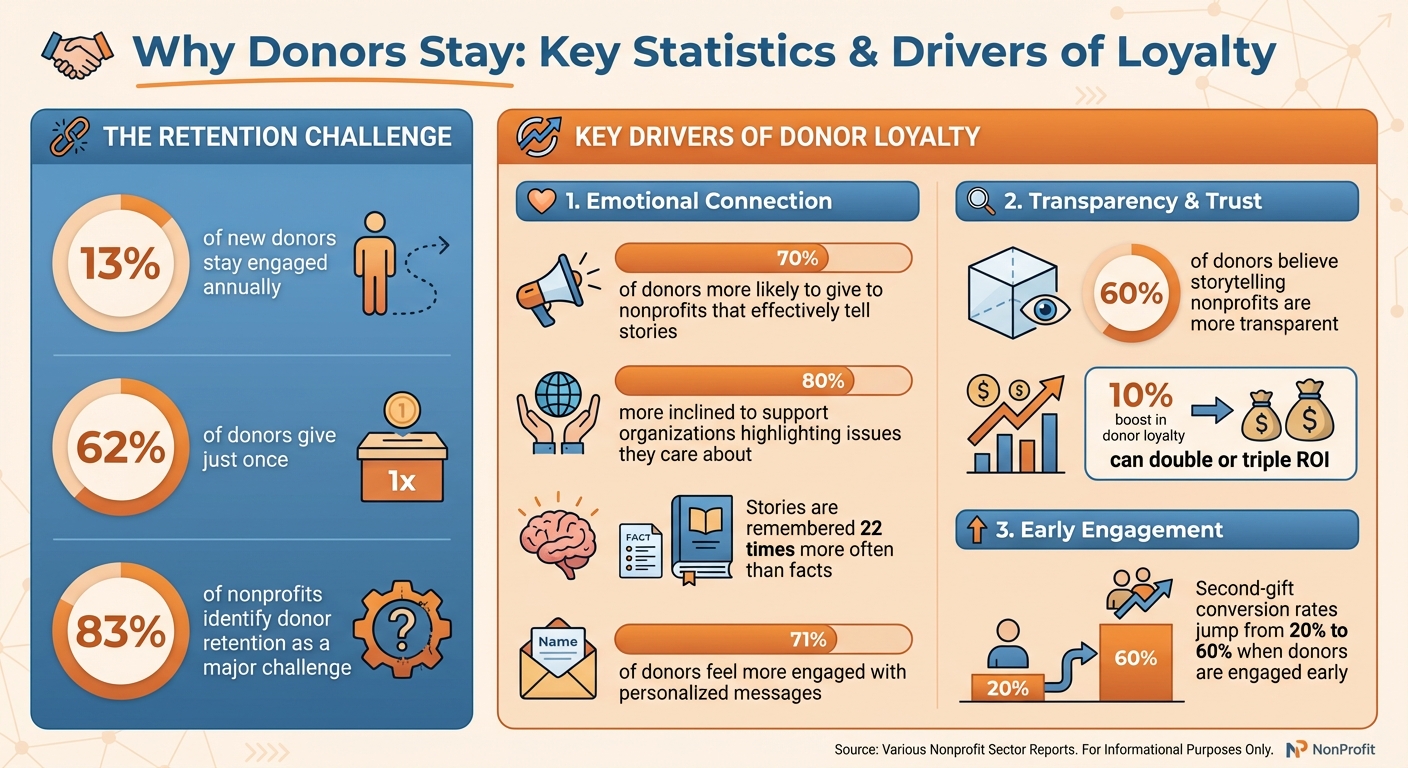
Donor Retention Statistics and Key Drivers of Loyalty in Child Sponsorship
What Is The Best Way To Convert One-time Nonprofit Donors To Recurring Giving?
Building Emotional Connections with Donors
Turning one-time donors into lifelong supporters hinges on building emotional connections. When donors feel deeply tied to the cause - especially to the individuals they’re helping - their commitment grows stronger. It’s not just about financial contributions; it’s about creating a meaningful bond. In fact, 70% of donors are more likely to give to nonprofits that effectively tell stories, and 80% are more inclined to support organizations that highlight issues they care about. These numbers make it clear: emotional engagement is a cornerstone of donor retention.
The goal is to shift the relationship from transactional to relational. When donors see themselves as partners in a child’s journey, rather than just contributors, they develop a sense of purpose and personal investment that keeps them engaged for years.
Using Personal Stories to Connect with Donors
Stories stick with people far more than plain facts - research shows they’re remembered up to 22 times more often. They also trigger emotional responses, like the release of oxytocin, which fosters trust and empathy. Sharing a specific child’s story, their struggles, and their dreams makes the cause feel personal and urgent.
This idea ties into what’s known as the "Identifiable Victim Effect", which shows that people are more likely to help one identifiable individual than a large, faceless group. For example, instead of saying, "We serve 500 children", focus on one child’s journey. Share their name, age, and challenges - paint a vivid picture. Describe how 8-year-old Maria walks two miles to school each day, carrying her younger brother on her back. Or talk about 12-year-old David, who dreams of becoming a teacher after someone inspired him to keep learning.
But storytelling needs to be ethical as well as compelling. It’s important to highlight a child’s strengths and potential, not just their struggles. Show how sponsorship transforms lives, focusing on hope and progress. For example, instead of just describing hardships, share how Maria’s sponsorship has allowed her to attend school regularly and dream of becoming a doctor. Trust is built when donors see the positive impact of their support - 60% of donors believe nonprofits that use storytelling effectively are more transparent. Adding photos or videos that capture the child’s personality and environment can make the story even more engaging.
This approach naturally leads into more tailored communications, which further strengthen the bond with donors.
How to Personalize Donor Communications
Generic emails no longer cut it. Donors expect communications that feel personal and meaningful. 71% of donors say they feel more engaged when they receive personalized messages, and this directly impacts their willingness to continue giving.
Start by tracking donor data - like giving history, communication preferences, and areas of interest. Use this information to create targeted messages. For example, if a donor regularly supports girls’ education, share updates and success stories from that specific cause.
Personalization goes beyond simply adding a donor’s name to an email. Reference their past contributions and show the tangible impact they’ve made. For instance: "Thanks to your 18 months of support, Sofia has maintained straight A’s and even joined her school’s debate team." This helps donors see themselves as active participants in the story, not just financial contributors.
Modern tools can help automate personalized thank-you notes and updates tailored to donor interests. Some platforms, even those using AI, can suggest donation amounts or recommend the best communication channels. This creates a sense of individual value while keeping the process manageable for your team.
Privacy and Communication Standards in the US
While personalized storytelling builds emotional bonds, respecting donor privacy is just as critical for maintaining trust. Donors share personal information with the expectation that it will be handled securely and responsibly. Mishandling this data can erode trust and damage an organization’s reputation.
"The bottom line is to treat information shared by the people your nonprofit engages the same way you'd want your own information to be treated." - Rick Cohen, Chief Operating Officer, National Council of Nonprofits
Recent data privacy laws in 11 U.S. states, including stricter regulations in places like Colorado and Oregon, reflect growing concerns about how donor information is handled. To build trust, nonprofits should establish clear data protection policies. These should explain how donor information is collected, stored, and used, while also providing easy opt-out options.
Never buy or sell donor lists - it’s a quick way to lose trust. Make your privacy policies easily accessible online and train your staff on secure data practices.
In the U.S., donor privacy is a constitutionally protected right. The Supreme Court has upheld this right, recognizing that excessive disclosure requirements can discourage charitable giving. By respecting donor preferences - whether due to religious beliefs, modesty, or personal safety - you strengthen the emotional connection and foster long-term support.
Transparency and Trust: Building Long-Term Support
Trust is the foundation of donor loyalty, and it’s what ensures the lasting support needed to make a real difference in child sponsorship programs. When donors believe their contributions are being used as promised, they’re much more likely to continue giving. Nonprofits that focus on transparency see stronger donor loyalty and higher lifetime value.
What Donors Expect from Transparency
Donors want clear, detailed information about how their money is spent. They expect specific fund allocation breakdowns, transparency about administrative costs, and tangible proof of the impact their donations create. A vague statement like "your donation helps children" isn’t enough - donors want to see exactly how their contributions make a difference.
For instance, explaining that a $50 donation provides school supplies for three children makes the impact concrete. This kind of detail turns a general act of giving into something personal and meaningful.
"If I give you a donation of £100 today and you tell me you will use it to vaccinate ten children, I really have no idea whether you took my money and did that or not. But if I have a higher level of trust that you did what you said you would do, I will be significantly more loyal." - Prof. Adrian Sargeant
Beyond impact, donors also want straightforward answers about overhead costs and program effectiveness. Tools like annual reports, real-time dashboards, or pie chart infographics can make financial transparency more accessible, showing exactly where every dollar goes. This openness not only builds trust but also establishes ethical communication practices.
How to Communicate Ethically with Donors
Ethical communication starts with honesty - celebrating successes while being upfront about challenges. Sharing setbacks and what was learned from them demonstrates accountability. Regular updates, whether through emails, newsletters, or donor portals, show that donors are valued partners and that their questions and concerns are taken seriously.
How Transparency Levels Affect Donor Retention
Clear and ethical communication doesn’t just foster trust; it also plays a direct role in improving donor retention. The link is straightforward: a 10% boost in donor loyalty can double or even triple ROI. But trust is delicate. Donors need to feel assured that their contributions are being used effectively and responsibly. The level of transparency an organization provides shapes how donors view its performance and their willingness to stay committed to the cause. Without this confidence, enthusiasm wanes, and retention rates drop. By prioritizing transparency, organizations can build the kind of trust that keeps donors engaged for the long haul.
Impact Reporting: Showing Sponsors the Difference They Make
Impact reporting turns donations into visible, measurable outcomes, inspiring ongoing support. Just like transparent financial breakdowns, showing clear results strengthens donor trust and commitment. When donors can see the direct impact of their contributions - whether it’s a child thriving in school or a village gaining access to clean water - they feel more connected and motivated to continue giving. The key is blending concrete data with genuine stories from the children and communities benefiting from their generosity. This combination of numbers and narratives lays the groundwork for the various types of reports used to showcase impact.
Different Types of Impact Reports
Impact reports can highlight results on three levels: individual, community, and program-wide.
- Individual updates focus on personal achievements, like a child improving their reading skills, recovering from an illness, or excelling academically.
- Community-level reports show broader changes, such as the construction of a new water well or the renovation of a school that serves many families.
- Program-wide metrics zoom out to reveal the larger picture, such as the total number of children who received healthcare or educational support across the organization.
The most effective reports balance numbers with meaning, combining the scale of the impact with personal stories and positioning donors as the driving force behind these transformations.
Report Formats That Work for US Donors
US donors value reports that are clear, visual, and to the point. Formats that include before-and-after photos can be particularly powerful - for example, showing a child’s journey from their first day of school to graduation or a community’s progress over time. Narratives should be brief but focused on outcomes. When discussing measurements or distances, using miles and pounds aligns with local preferences. Financial transparency is critical, so breaking down exactly how each dollar is spent builds trust. Instead of ending with a simple "thank you", reports should outline actionable next steps and a vision for future progress, inviting donors to remain engaged.
Technology Tools for Showing Real-Time Impact
Real-time impact reporting takes transparency to the next level, strengthening donor trust. Digital tools make it possible to share live updates, meeting donors’ growing desire for instant, verifiable results. Platforms like HelpYouSponsor provide real-time progress updates and sponsorship statuses, offering donors immediate insight into how their contributions are making a difference.
Beyond basic updates, predictive AI tools analyze donor behavior - such as past giving patterns, demographics, and engagement levels - to craft targeted communications that resonate with specific donor groups. Tools like Keela enable smart segmentation and data-driven outreach, while GivingDNA uses third-party data to uncover donor interests and priorities. Interactive digital reports allow sponsors to explore data at their own pace, with clickable features that provide deeper insights into outcomes. These tools not only enhance transparency but also deepen the connection between donors and the causes they support.
Creating a Smooth Donor Experience Through Operations
Behind every lasting donor relationship lies a foundation of well-oiled operational systems. When donations are processed without hiccups, data remains accurate, and concerns are addressed swiftly, donors feel reassured that their contributions are in capable hands. While these operational elements may not be as visible as heartfelt stories or impactful reports, they are just as essential. Let’s break down how refining operational processes can create a seamless donor experience.
Managing Recurring Donations with Care
Recurring donations are the lifeblood of many child sponsorship programs, but they demand meticulous handling. To ensure these contributions flow smoothly, set up reliable systems for processing monthly charges, complete with clear notifications. Automated alerts can flag issues like expired payment methods or failed transactions, preventing interruptions. By establishing clear expectations from the start - covering sponsorship duration, communication frequency, and what happens when a child ages out of the program - you can eliminate potential confusion. The ultimate goal is to make the giving process so effortless that donors can focus on their connection with their sponsored child, free from administrative worries.
Data Management and Matching Donors with Children
Strong donor data management is the backbone of effective fundraising. It allows for personalized communication, better audience segmentation, and improved donor retention. A centralized donor management system is key to keeping records accurate and enabling precise matches based on donor preferences, language, or geographic interests. Keeping child profiles and progress reports up-to-date builds trust right from the start. Beyond matching, well-maintained data ensures that any issues can be resolved quickly and effectively, which is critical for maintaining donor confidence.
Addressing Donor Concerns Before They Escalate
High donor churn often signals underlying problems in the donor experience. Proactive support can help prevent these issues from escalating. For example, monitoring signs like declined payments or reduced engagement allows you to intervene early. Quick and responsive customer service - whether it’s clarifying a receipt, providing child updates, or answering program questions - can turn potential frustrations into positive experiences. Automated tools can also play a big role. Reactivation workflows can reach out to lapsed donors with personalized messages, while reminders about upcoming payments or missing details keep sponsors informed. Platforms like HelpYouSponsor simplify these tasks by centralizing donor data, automating receipts and thank-you notes, and offering real-time updates on sponsorships. By resolving concerns promptly, nonprofits not only strengthen trust but also encourage long-term commitment. When donors feel their concerns are heard and addressed, they’re far more likely to stay engaged over time.
Conclusion: Building Donor Relationships That Last
Creating loyal donors hinges on fostering an emotional bond, being transparent, and showing real results. When donors feel personally connected to a child's story, trust how their contributions are used, and see the difference their support makes, they’re more likely to stay committed. Even small improvements in donor loyalty can lead to considerable financial benefits.
With 83% of nonprofits identifying donor retention as a major challenge and only 13% of new donors staying engaged annually, the need for action is evident. The good news? There’s a clear path forward. By combining compelling personal stories, clear financial reporting, regular updates on impact, and smooth operational processes, you can create a donor experience that keeps supporters coming back. Transparency isn’t just a bonus - it’s a necessity.
HelpYouSponsor simplifies this process by centralizing donor information, automating administrative tasks, and providing real-time updates. This lets you focus on what truly matters: building meaningful connections with your supporters. With features like an integrated messaging system and detailed donation tracking, the platform helps you stay engaged with donors while ensuring accuracy and responsiveness. These efficient tools create the foundation for stronger donor relationships at every step.
Sustaining long-term donor relationships requires consistent, thoughtful engagement at every touchpoint. From the first welcome email to ongoing impact reports, every interaction should remind donors why they chose to support your mission. When you treat donors as partners in your cause rather than just financial backers, you foster a sense of belonging that extends beyond a single gift. This approach turns one-time donors into lifelong advocates who not only continue to support but also inspire others to join your mission. By embracing these strategies, you not only secure enduring support but also strengthen your mission with each partnership.
FAQs
What are the best ways for nonprofits to create emotional connections with their donors?
Nonprofits have a unique opportunity to connect with donors on a deeper level by sharing real stories that highlight the tangible impact of their support. When donors see the lives they've touched through personal experiences and outcomes, it creates a meaningful bond and reinforces their decision to give.
Equally important is maintaining trust and openness. Regular updates about how donations are being used, paired with clear, measurable results, show accountability. This transparency not only builds confidence but also strengthens the connection between donors and the organization.
Finally, expressing heartfelt gratitude goes a long way. Sending personalized thank-you messages or updates helps donors feel appreciated and reminds them that they’re an essential part of the mission.
How does transparency impact donor loyalty in child sponsorship programs?
Transparency is key to earning donors' trust by clearly demonstrating how their contributions are being used and the positive changes they bring to children’s lives. When donors can see the tangible results of their support, it deepens their connection to the cause and makes them feel appreciated, which naturally strengthens their dedication to the program.
Sharing regular updates, detailed impact reports, and maintaining open lines of communication builds accountability and boosts donor confidence. This not only inspires long-term support but also nurtures meaningful relationships between donors and the organization.
How can technology improve donor engagement and impact tracking?
Technology has the power to transform how nonprofits engage with donors and measure the impact of their efforts. By using tools like automated thank-you messages and personalized updates, organizations can create more meaningful and tailored communication. This not only makes donors feel valued but also strengthens the emotional bond between them and the cause they support.
With features like real-time dashboards, digital storytelling, and data analytics, nonprofits can gain a clearer picture of donor preferences, campaign performance, and retention trends. These insights allow organizations to share transparent, data-backed progress reports that build trust. When donors can see the direct results of their contributions, it deepens their connection to the mission and encourages long-term support.