
Cost-Effective Data Compliance Tips for Nonprofits
10 low-cost strategies to secure donor data, meet GDPR/HIPAA rules, and build donor trust for small nonprofits.

Nonprofits handle sensitive donor data every day, from personal contact details to financial records. Protecting this information isn't optional - it's a legal requirement. Failing to comply with regulations like GDPR, HIPAA, or CAN-SPAM can result in fines up to €20 million or 4% of annual revenue. Many nonprofits, however, struggle with compliance due to tight budgets, outdated systems, and limited IT resources.
The good news? Staying compliant doesn’t have to be expensive. Here are 10 practical, low-cost strategies to safeguard donor data, meet legal standards, and maintain trust:
- Audit and Organize Data: Regularly clean up and centralize donor information for easier management and compliance.
- Implement Access Controls and MFA: Use free or discounted tools like Google Workspace to secure accounts.
- Train Staff: Leverage free or affordable cybersecurity training resources to educate your team.
- Collect Only Necessary Data: Limit data collection to reduce storage costs and compliance risks.
- Centralize Data: Use secure, budget-friendly platforms like HelpYouSponsor for donor management.
- Standardize Data Entry: Create consistent processes to avoid errors and simplify audits.
- Create Data Governance Policies: Define clear rules for accessing and protecting donor information.
- Provide Transparency and Opt-Out Options: Build donor trust with clear privacy policies and easy opt-outs.
- Conduct Regular Compliance Audits: Use free tools to identify and fix vulnerabilities.
- Leverage Free or Low-Cost Tools: Use platforms like Matomo and Certbot for compliance tracking and security.
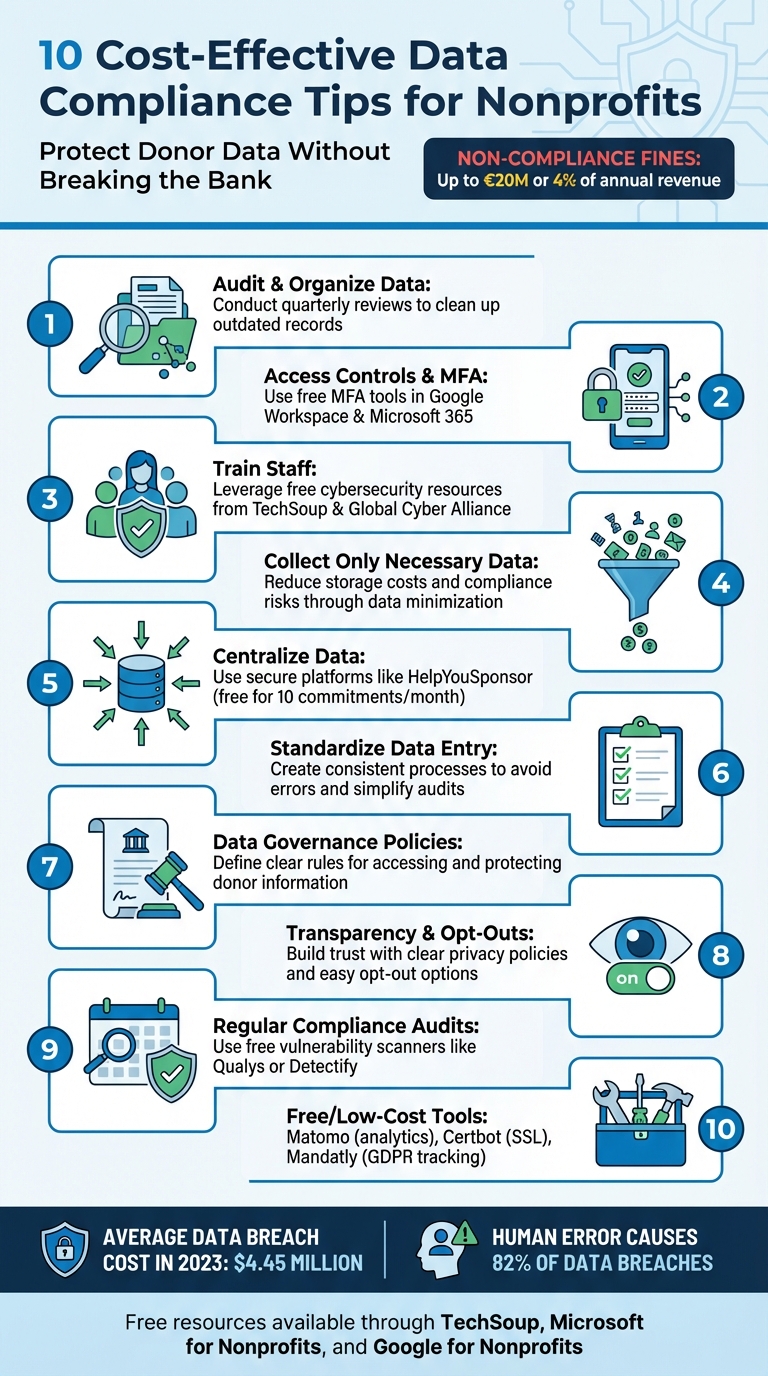
10 Cost-Effective Data Compliance Tips for Nonprofits
145: Top 10 Compliance Best Practices for Nonprofits
1. Audit and Organize Donor Data Regularly
It's essential to know where your donor data is stored and what it contains. Many nonprofits struggle with scattered data - spread across spreadsheets, email accounts, or outdated systems. By consolidating everything into a single donor management system (DMS), you eliminate these inefficiencies. This centralized approach forms the backbone of the cost-effective and streamlined practices outlined here.
Keeping Costs Low for Nonprofits
You don’t need pricey consultants or fancy software to keep your data in check. Simply schedule quarterly reviews to clean up outdated, duplicate, or irrelevant records. This habit not only reduces administrative work but also aligns with data minimization principles under regulations like GDPR. Plus, it helps avoid costly errors that could lead to compliance issues.
Making It Easy to Manage
Set up automated backups - daily or weekly, depending on your donation volume. Standardizing how data is entered ensures that donor interactions, donations, and engagement activities are logged consistently. This creates a dependable audit trail, making future reviews quicker and helping your team locate donor information instantly when needed. These steps simplify your processes and improve compliance with minimal effort.
Simplifying Compliance
Organized data makes meeting compliance requirements much easier. During audits, you can quickly confirm that proper consent was obtained before sharing donor information - a crucial requirement under GDPR and other privacy laws. Consistent records demonstrate transparency and show donors that their data is handled responsibly. With a well-maintained system, generating compliance reports is no longer a time-intensive task - it’s something you can do in minutes. This reduces risks and reinforces the trust donors place in your organization.
2. Use Access Controls and Multi-Factor Authentication
Affordability for Nonprofits
Protecting donor data doesn’t have to break the bank. Many platforms like Google Workspace, Microsoft 365, and popular donor management systems already include multi-factor authentication (MFA) at no extra cost. Before investing in new tools, check your current software settings - usually under "Security" or "Configure Company" - to see if MFA is available for free. Plus, nonprofits can often access discounts or free security tools through programs like TechSoup, Microsoft for Nonprofits, and Google for Nonprofits. This approach can help nonprofits tighten security without stretching their budget.
Ease of Implementation
Setting up MFA is straightforward. It typically involves using SMS or email codes with devices you already own. MFA works by requiring two forms of authentication: a password and a verification code sent to a mobile device.
"Even if a hacker manages to find a user's password, they will still need access to the physical device to successfully log into the platform, thus stopping them in their tracks at the last step".
For added protection, pair MFA with role-based access controls to limit employee access to only the data they need.
Effectiveness in Ensuring Compliance
Access controls and MFA aren’t just about security - they’re also crucial for meeting compliance standards like GDPR, HIPAA, and PCI-DSS. Falling short on compliance can lead to hefty fines and damage to your nonprofit’s reputation. By implementing these controls, you can create an audit trail showing who accessed what data and when - an important step in maintaining donor trust. This trust is further strengthened by aligning sponsorship programs with your mission.
Minimization of Data Risks
These measures go beyond compliance by significantly reducing the risk of data breaches. Nonprofits are often targeted by cybercriminals due to weaker security systems. Adopting the principle of least privilege, where employees only access the data necessary for their roles, can limit the potential damage of a breach.
Since human error is one of the leading causes of data breaches in nonprofits, enabling MFA across all critical accounts - email, donor management systems, and cloud storage like Dropbox or OneDrive - adds a vital layer of protection. By combining access restrictions with MFA, nonprofits can better safeguard their sensitive information while keeping operations cost-effective and efficient.
3. Train Staff on Cybersecurity and Compliance Best Practices
Affordability for Nonprofits
Cybersecurity training doesn’t have to break the bank. Free tools like the Global Cyber Alliance Cybersecurity Toolkit, Ford Foundation's Cybersecurity Assessment Tool, and TechSoup's Digital Assessment Tool are excellent starting points. If you’re looking for more structured learning, TechSoup offers a six-part cybersecurity series at a low cost. For broader team training, Tech Impact provides budget-friendly courses, and they even offer discounts to reduce per-person costs for larger groups. The key is to assess your team’s specific needs to ensure the training aligns with their roles.
Ease of Implementation
Begin by identifying gaps in your team’s knowledge with a needs assessment. From there, create role-specific training modules. This way, staff only learn the security protocols relevant to their responsibilities. For example, your fundraising team might need to focus on donor data protection, while your communications team could benefit more from lessons on email security and recognizing phishing attempts.
Live sessions, like Tech Impact’s Microsoft 365 Office Hours (April 24, 2026) or Google Ad Grant optimization (April 8, 2026), are another great resource. These sessions provide direct access to experts who can answer platform-specific questions. Simulated threat training platforms, such as KnowBe4, allow staff to practice spotting phishing and ransomware through realistic drills. Tailoring training to specific roles not only addresses knowledge gaps but also reinforces personal accountability in meeting compliance standards.
Effectiveness in Ensuring Compliance
Good training builds a culture of ongoing security awareness. When staff are properly trained, they become your first line of defense in protecting donor data and staying legally compliant. Make sure your program covers regulations like GDPR, CPRA, and PCI compliance, which are relevant to your operations. Practical measures like role-based access control (RBAC), encryption, and regular backups should also be emphasized. Every team member needs to understand their role in your incident response plan.
Data minimization - collecting only the information you truly need - can significantly lower your risk. Regular tests or audits of your training programs ensure that employees retain and apply what they’ve learned.
Minimization of Data Risks
Since email is a common entry point for breaches, prioritize training on recognizing spam and phishing attempts. Teach staff ethical data practices, including privacy, informed consent, and transparency, to build donor trust. It’s also important to train your team on developing and using a Continuity of Operations Plan (COOP). This ensures everyone knows how to handle data during recovery after a breach. By embedding these practices into your existing donor management platforms, you make security a seamless part of daily operations instead of an added task.
4. Collect Only the Data You Need
Keeping Costs Manageable for Nonprofits
Focusing on collecting only the most essential donor data can save nonprofits a lot of money. By reducing the amount of information stored, you cut down on expenses tied to data storage, backups, and the time spent managing large databases. With fewer resources tied up in maintaining unnecessary data, your team can concentrate on the work that matters most - your mission. Plus, this approach naturally aligns with better compliance practices, which will be covered in later tips.
Simplifying the Process
Take a close look at your data collection forms and remove any fields that don’t directly contribute to understanding program success. Streamlining this process not only encourages smarter data practices but also makes it easier to train new staff.
Strengthening Compliance
Limiting data collection to the essentials - like donation history, communication records, and engagement metrics - can help you stay on the right side of regulations like GDPR. Make sure to get clear consent before collecting or sharing donor information, and keep detailed records of these permissions. This makes compliance audits simpler and shows that you take donor privacy seriously.
Reducing Data Risks
The less data you store, the smaller your exposure to potential breaches. Using a centralized donor management system can help you identify and eliminate duplicate or outdated information, ensuring you only keep what’s important. Pair this with strong encryption and strict access controls to further lower your risk and protect sensitive donor data.
5. Centralize Data in Secure, Affordable Platforms Like HelpYouSponsor
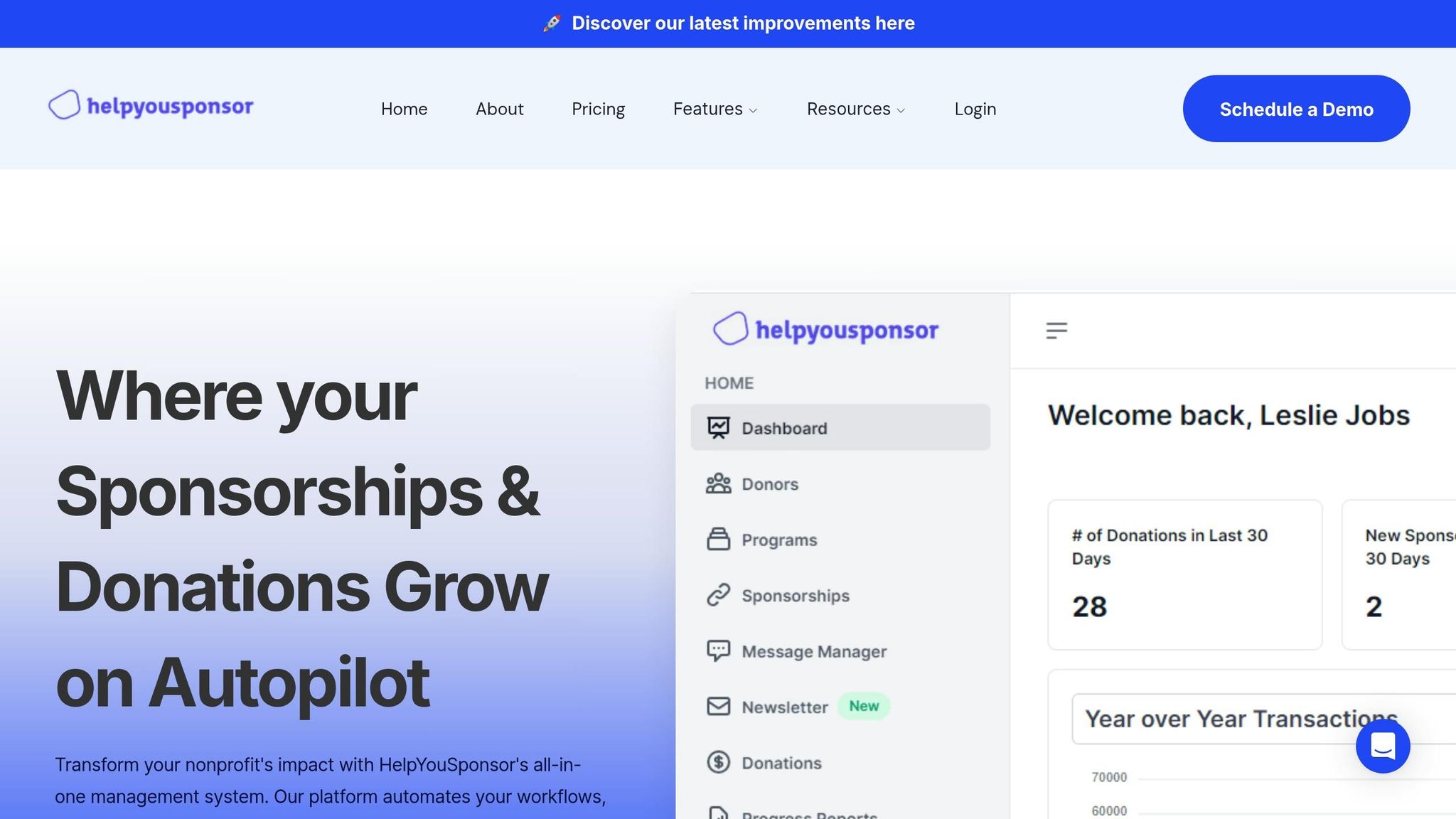
Using HelpYouSponsor to centralize your data not only cuts costs but also supports cost-effective donor stewardship and the efficient practices highlighted earlier.
Affordable Solutions for Nonprofits
Scattered data can lead to higher expenses and increased security vulnerabilities. HelpYouSponsor addresses this by combining tools for program management, donor tracking, and communication into one platform - eliminating the need for multiple subscriptions. The platform offers a free plan for up to 10 commitments per month, while its Pro Plan, priced at $50/month, caters to growing programs. You only pay when the platform is actively aiding your organization.
Simple Setup and Use
"Efficient data management is critical for the smooth operation and transparency of non-profit organizations."
- HelpYouSponsor Documentation
HelpYouSponsor makes onboarding straightforward with its Quick Start Guide and structured setup process, ensuring even those with limited technical skills can get started easily. Its user-friendly interface reduces the likelihood of errors that could compromise sensitive information. Plus, automatic backups are built-in, ensuring your data is always protected. This simplicity aligns with earlier strategies, helping to further reduce operational challenges.
Supporting Compliance Efforts
The platform includes tools to help nonprofits adhere to GDPR regulations. It provides frameworks for obtaining and tracking donor consent while maintaining detailed logs of communications, donations, and engagement activities. These features create a clear audit trail, simplifying compliance reviews.
Reducing Data Security Risks
HelpYouSponsor prioritizes security with encryption, secure passwords, and multi-factor authentication. By centralizing donor and recipient data in one secure location, your organization minimizes its exposure to potential cyber threats.
"Every dollar lost to a preventable data breach is a dollar that could have supported your mission."
- Sourcepass IT
The platform also allows you to customize security settings to match your organization’s specific needs. Automated backups ensure that your data can be quickly restored in case of any issues. These robust security measures work hand-in-hand with earlier recommendations to create a well-rounded, cost-conscious approach to data management and compliance.
6. Standardize Data Entry and Automate Workflows
Affordability for Nonprofits
Setting up clear data entry guidelines - like using consistent date formats, donor categories, and field names - takes a little effort upfront but saves you from expensive mistakes later. Errors in data entry can lead to compliance headaches, confused donors, and wasted hours of staff time. Thankfully, many donor management systems come with automation tools already included. These features let you track donor interactions, log communications, and monitor impact metrics without needing to spend extra on new software.
Ease of Implementation
Creating a documented set of rules for entering donor data ensures consistency across your team. Training staff to follow these guidelines means donor names, addresses, and engagement activities are recorded the same way every time. This consistency makes it easier to search records, generate reports, and quickly address donor questions. Automated dashboards can further simplify reporting and help you keep an eye on key metrics. Plus, having a unified system strengthens the security measures we talked about earlier, laying the groundwork for better compliance.
Effectiveness in Ensuring Compliance
Once you’ve standardized data entry, adding mandatory consent checks to your workflow ensures you’re staying compliant with GDPR and local privacy laws before sharing donor information. Keeping detailed logs as part of your system also provides a clear audit trail, making compliance reviews much smoother.
Minimization of Data Risks
Standardized data practices go hand-in-hand with stronger security. When your team consistently follows protocols - including encryption and access controls during data entry - you reduce vulnerabilities and better protect sensitive information. Regular audits and automated backups further safeguard your data, ensuring it stays accurate and recoverable. This organized approach keeps outdated or incorrect records from undermining both security and decision-making.
7. Create Clear Data Governance Policies
Once you've streamlined data entry and centralized your systems, the next step is to establish clear governance policies. These policies are the backbone of your nonprofit’s data protection strategy.
Affordability for Nonprofits
Creating a data governance policy doesn’t have to break the bank. You don’t need pricey consultants or overly complex documents to get started. A simple document outlining key elements - like who can access donor data, how consent is obtained, and what security measures are in place - can go a long way. Programs such as TechSoup, Microsoft for Nonprofits, and Google for Nonprofits offer free tools and resources to help you implement these policies without overextending your budget. While the main investment here is time, it’s an investment worth making. After all, the cost of a data breach in 2023 averaged $4.45 million. A well-thought-out policy not only protects your data but also builds on your efforts to centralize and standardize donor information.
Ease of Implementation
Implementing a governance policy doesn’t have to be overly complicated. Start by documenting essential details like who has access to donor data, what encryption methods are used, and how consent is managed. Include protocols for data access, encryption standards, regular backups, and staff training schedules. Publishing a straightforward privacy policy on your website that explains how you collect, use, and protect data can also build trust with your supporters. It’s about taking manageable steps that make a big difference.
Effectiveness in Ensuring Compliance
A written governance policy is essential for staying compliant with regulations like GDPR and CCPA. For instance, GDPR non-compliance can lead to fines as high as €20 million or 4% of annual revenue, whichever is greater. Your policy should require explicit consent for sharing donor or beneficiary information. This is especially important considering that human error accounts for around 82% of data breaches. Beyond avoiding fines, a strong policy reduces operational risks and ensures your organization maintains ethical standards.
Minimization of Data Risks
Clear policies do more than just tick compliance boxes - they actively protect your nonprofit. By ensuring every team member knows how to handle sensitive data, from using secure passwords to limiting access on a need-to-know basis, you create multiple layers of security. Regular reviews, as discussed in earlier strategies, keep your policies aligned with evolving regulations. Transparency about your data practices also reassures donors. With 81% of Americans expressing concerns over their lack of control regarding personal data, being upfront about your practices can help build trust.
8. Give Donors Transparency and Opt-Out Options
Pair your strong data management practices with clear, donor-friendly opt-out options to build trust and ensure compliance.
Affordability for Nonprofits
Being transparent with donors doesn’t have to break the bank. Popular email platforms like Mailchimp and Constant Contact come equipped with opt-out management tools and encryption features - and many of these services offer discounts to nonprofits. To secure your website, you can use free SSL certificates from Let's Encrypt, giving donors visible reassurance that their data is protected. Simplify your privacy policy by creating a concise, easy-to-read 2-page chart. Share updates about your privacy practices through blogs, newsletters, or your website - methods that cost little to nothing.
Ease of Implementation
Start by drafting a straightforward privacy policy that explains how donor data is collected, used, and protected. Post this policy prominently on your website. Most email platforms include automated tools that allow donors to manage their communication preferences, such as opting in or out of emails or texts, or choosing not to receive communications at all. Always secure explicit consent from donors before sharing any information publicly. If you use a donor management system, take advantage of its reporting tools to create simple dashboards that show donors how their contributions are making a difference. These steps not only simplify communication but also promote transparency, which is essential for maintaining legal compliance.
Effectiveness in Ensuring Compliance
Offering opt-out options isn’t just a good idea - it’s a legal requirement under regulations like GDPR and PCI-DSS. With 81% of Americans expressing concern over their lack of control over personal data, providing clear choices can foster trust while keeping your organization compliant. Aligning your opt-out options with your governance policies creates a unified approach to protecting donor data and building confidence. This transparency not only meets regulatory standards but also strengthens donor relationships.
"Talk is cheap. Emails, too! Time invested in regular security messages and on-point training can reduce data fiascos that randomly overwhelm your organization".
Grant applications increasingly demand evidence of strong privacy practices. Transparent opt-out processes can serve as a compliance measure and a competitive edge when pursuing funding opportunities.
Minimization of Data Risks
Making it easy for donors to opt out of data collection or communications helps reduce the amount of sensitive information your organization stores. This, in turn, lowers the risk of exposure in the event of a data breach. By implementing role-based access control, you can ensure only authorized personnel have access to donor preferences, adding another layer of security. Reducing stored sensitive data aligns with previous recommendations for mitigating breach risks.
"Every dollar lost to a preventable data breach is a dollar that could have supported your mission".
9. Conduct Regular Compliance Audits
Affordability for Nonprofits
Keeping up with compliance doesn't have to be expensive. There are plenty of free tools to help nonprofits stay secure and compliant. For instance, vulnerability scanners like Qualys or Detectify can check your website and systems for security weaknesses at no cost. If you're focusing on privacy compliance, Mandatly's free tier lets you handle up to 100 Data Subject Access Requests per month, scan 50 website pages, and track 25 data assets - all without spending a dime. You can also secure your website's data transmission with free SSL certificates from Let's Encrypt.
Beyond these tools, organizations like TechSoup, Microsoft for Nonprofits, and Google for Nonprofits offer discounted or free security solutions with built-in reporting features. For tax compliance, the IRS "Stay Exempt" education sessions provide self-guided resources, so you can review your tax obligations internally without hiring outside experts. By leveraging these affordable resources, nonprofits can focus on compliance without breaking the bank.
Ease of Implementation
Simplifying your audit process is all about planning. Instead of rushing through annual checks, consider scheduling monthly or quarterly audits. A straightforward audit readiness calendar can align with your fiscal year-end and assign specific tasks to your team. Centralize important documents like donor agreements, grant contracts, and correspondence in a single repository, making them easy to access when needed.
Automation can also save time and effort. Enable automatic updates for operating systems, CRMs, and browsers to address vulnerabilities without manual intervention. Test your team's awareness with free phishing simulation tools from providers like KnowBe4 or Cofense, identifying gaps in training. Additionally, draft a one-page incident response plan with clear steps and contacts to ensure you're prepared for potential issues. These small but effective steps can make audits less daunting and more efficient.
Effectiveness in Ensuring Compliance
Regular audits are key to staying on top of regulations like GDPR, HIPAA, and PCI-DSS. They pinpoint areas where safeguards, such as encryption or access controls, are needed, ensuring you're prepared for reviews by grantmakers, donors, or regulators. Keeping detailed records also helps fulfill fiduciary responsibilities and makes audits smoother.
"Maintaining careful recordkeeping also makes it easier to comply with fiduciary duties and provide the information necessary for an audit." - Foundation Group
By conducting audits consistently, nonprofits not only meet regulatory requirements but also enhance operational efficiency and build trust with donors by safeguarding data integrity.
Minimization of Data Risks
Regular audits play a crucial role in reducing risks tied to outdated or unnecessary data. They help identify and securely delete data you no longer need, shrinking your organization's potential risk surface. Tools like vulnerability scanners and annual assessments can uncover security gaps and align your plans with funding cycles. Privacy compliance software can further streamline the process by automating the discovery of data feeds and processing activities, ensuring an accurate Record of Processing Activities (RoPA) as required by regulations like GDPR.
Taking a proactive approach to audits not only minimizes the chance of data breaches but also reduces the financial and reputational costs associated with them. Each audit becomes a step toward a stronger, more secure compliance framework.
10. Use Free or Low-Cost Tools for Reporting and Tracking
Nonprofits often operate on tight budgets, making affordable tools for compliance tracking and reporting a game-changer. By integrating free or low-cost solutions, organizations can better manage compliance without breaking the bank.
Affordable Options for Nonprofits
Nonprofits don’t need expensive enterprise systems to stay compliant. Here are some tools that deliver powerful features at little to no cost:
- Matomo: An open-source analytics platform that’s free when self-hosted. It includes features like data anonymization and automatic log deletion.
- Certbot: Provides free SSL certificates, ensuring secure data transmission.
- Ford Foundation's Nonprofit Cybersecurity Assessment Tool: Helps evaluate your organization’s security maturity and resilience without any cost.
- Open Briefing's Frontline Policies: Designed specifically for nonprofits working with limited budgets.
- Privacy auditing tools: Tools like EFF's Privacy Badger and The Markup's Blacklight Tool identify trackers and cookies on your website, aiding in privacy compliance.
These tools are budget-friendly and simplify the process of compliance tracking and reporting.
Easy to Set Up and Use
Most of these tools are user-friendly and require little to no technical expertise. For instance:
- Donorbox: You can start for free, set it up in about 12 minutes without coding, and integrate it with QuickBooks for $50 per month. This eliminates manual data entry errors and creates clear audit trails.
- VComply: A compliance management platform that automates tasks, sends reminders, and allows you to upload supporting documents.
"VComply provides a way to automate your compliance program and assign tasks to individuals, along with reminders and the ability to upload supporting documentation" - Tanya P, Director of Compliance, Security and Strategic Projects
These tools are designed to save time and reduce errors, making compliance management more efficient.
Meeting Compliance Standards Effectively
Affordable tools can still handle strict compliance demands. For example:
- VComply: Manages multiple compliance frameworks, links controls and risks, and ensures audit readiness through automation.
- Mandatly: Offers a free tier that handles up to 100 Data Subject Access Requests per month, scans 50 website pages, and tracks 25 data assets - covering basic GDPR requirements at no cost.
When choosing tools, make sure they align with your specific regulatory needs, like HIPAA for healthcare nonprofits or PCI-DSS for payment processing. These tools allow nonprofits to meet compliance requirements while maintaining operational efficiency.
Reducing Data Risks
The right tools not only track compliance but also help reduce data risks. For instance:
- Matomo: Enables custom data retention periods, such as deleting visitor logs every seven days, minimizing the risk of storing sensitive information like IP addresses.
- Varonis and Netwrix: Discover and audit where sensitive personally identifiable information (PII) is stored.
- UTM Parameters: Instead of invasive email tracking, use manual UTM parameters (e.g., "?utm_source=email") for anonymous website analytics.
- Email platforms like Mailchimp or EmailOctopus: Disabling "open tracking" and "click tracking" respects donor privacy while maintaining list hygiene through re-engagement campaigns.
These strategies help nonprofits limit data collection and retention, reducing the risk of breaches - which, on average, cost $4.45 million per incident in 2023. By using these tools wisely, nonprofits can protect sensitive information while staying compliant.
Conclusion
Data compliance doesn't have to break the bank for nonprofits. By adopting a thoughtful approach - like routine data audits, staff training, collecting only necessary information, and leveraging affordable tools - you can safeguard donor information while keeping your focus on your mission.
"Every dollar lost to a preventable data breach is a dollar that could have supported your mission. Protecting donor data isn't optional - it's essential." - Alex Davis, Sourcepass IT
Failing to comply with regulations can lead to hefty penalties, but the benefits go beyond avoiding fines. Strong data practices help build trust, which strengthens long-term relationships and fuels sustainable growth.
"How seriously your organization takes data compliance reflects its commitment to transparency and respect for donors." - Foundation Group
Protecting donor information doesn’t require a massive overhaul; it’s about adopting practical, cost-effective measures. One major step is centralizing your data. Tools like HelpYouSponsor offer nonprofits a secure platform to store donor and recipient information with encryption, access controls, and regular backups. This system not only enhances compliance but also simplifies tracking interactions and monitoring impact. With plans starting free for up to 10 commitments per month and scaling to $50/month for larger programs, HelpYouSponsor makes advanced donor management accessible to organizations of any size.
Start with simple improvements. Enable multi-factor authentication (MFA) on existing accounts, sign up with TechSoup for discounted security software, and automate system updates. Acting now can save your organization from the risks of a potential data breach.
"Properly managing donor and child information ensures accountability, enhances donor trust, and supports the organization's strategic decision-making." - HelpYouSponsor Documentation
FAQs
Which compliance laws apply to my nonprofit’s donor data?
Nonprofits are required to adhere to various data protection and privacy laws, which include meeting IRS regulations for public support and reporting. For example, organizations must properly file Form 990 and Schedule A to remain in good standing. Additionally, if your nonprofit collects or processes personal data from individuals in the EU or EEA - such as donors, volunteers, or employees - you’ll need to comply with GDPR (General Data Protection Regulation).
Staying informed and following these rules is essential to ensure your organization remains compliant and trustworthy.
What’s the cheapest way to start securing donor accounts fast?
Protecting donor accounts doesn't have to cost a fortune. You can start by implementing a few straightforward cybersecurity measures that pack a punch:
- Use strong password policies: Encourage donors and staff to create complex passwords and update them regularly.
- Enable two-factor authentication (2FA): Adding this extra layer of security makes it much harder for unauthorized users to gain access.
- Perform regular data backups: Backing up data ensures you can recover important information if something goes wrong.
Beyond these basics, conducting periodic security assessments and sticking to simple, proven practices can go a long way in keeping donor information safe. These steps offer a practical way to secure accounts while staying within budget.
How often should we audit and delete donor data?
Nonprofits should make it a habit to audit and delete donor data on a regular basis. Many experts suggest conducting this process at least once a year. Doing so not only helps organizations stay compliant with data protection laws but also protects sensitive donor information from potential breaches.