
Building a Strong Donor Community with Targeted Engagement Campaigns
Boost donor retention and revenue with segmentation, personalized outreach, automation, social storytelling, and data-driven measurement.

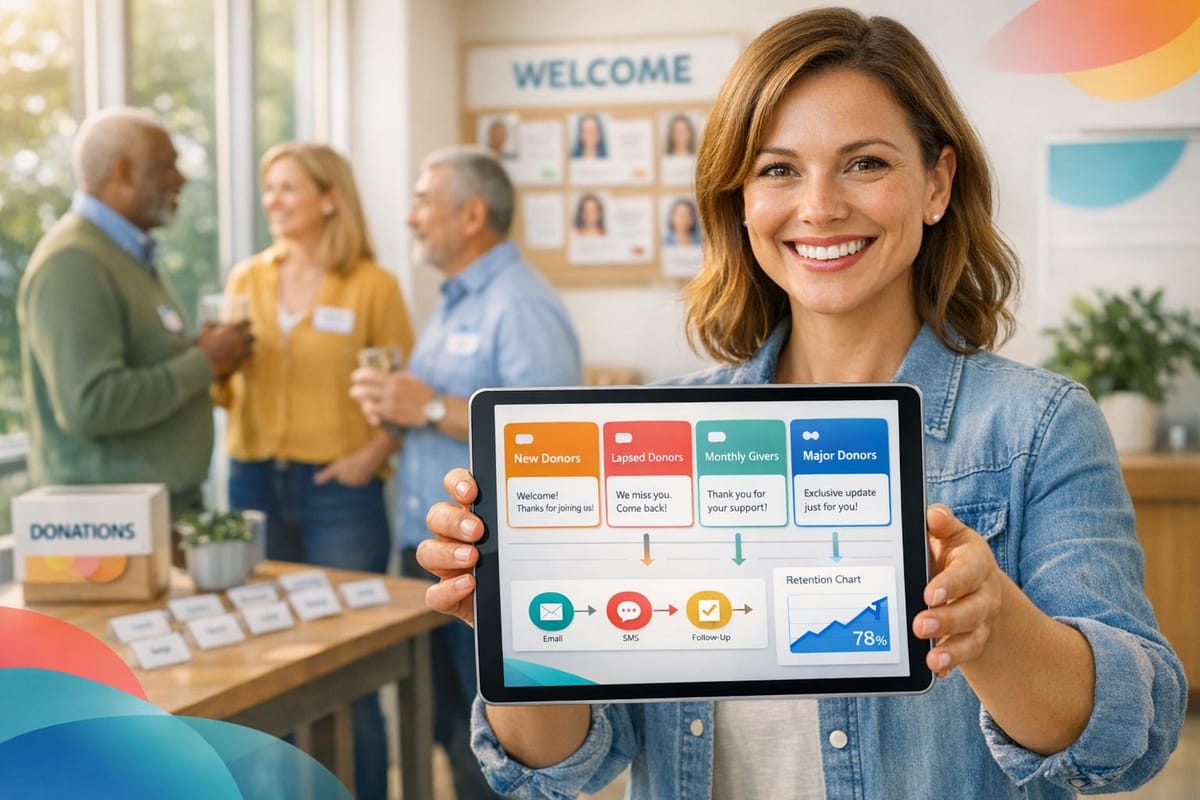
Building a strong donor community is essential for nonprofits, especially those relying on recurring donations like child sponsorship programs. The challenge? Only 7.1% of new donors give again, creating instability and increasing the cost of acquiring new supporters. However, nonprofits that use targeted engagement and personalized communication see 40% higher revenue and improved donor retention.
Key Takeaways:
- Recurring donors contribute significantly more over their lifetime ($7,604.17 vs. $3,620.67 for one-time donors).
- Personalization boosts email open rates by 82% and increases donations by 44%.
- Tools like HelpYouSponsor simplify donor management, automate tasks, and improve engagement, leading to increased sponsorships.
How to Build a Donor Community:
- Segment Donors: Group donors by giving history, demographics, and interests.
- Personalized Outreach: Tailor messages to align with donor motivations.
- Use Automation: Automate follow-ups, milestones, and behavior-based triggers.
- Leverage Social Media: Share impact stories and encourage donors to spread the word.
- Measure Performance: Track metrics like retention rates, average gift size, and multi-channel engagement.
Building trust and creating meaningful connections through targeted engagement can transform donor relationships, ensuring long-term support and financial stability for your mission.
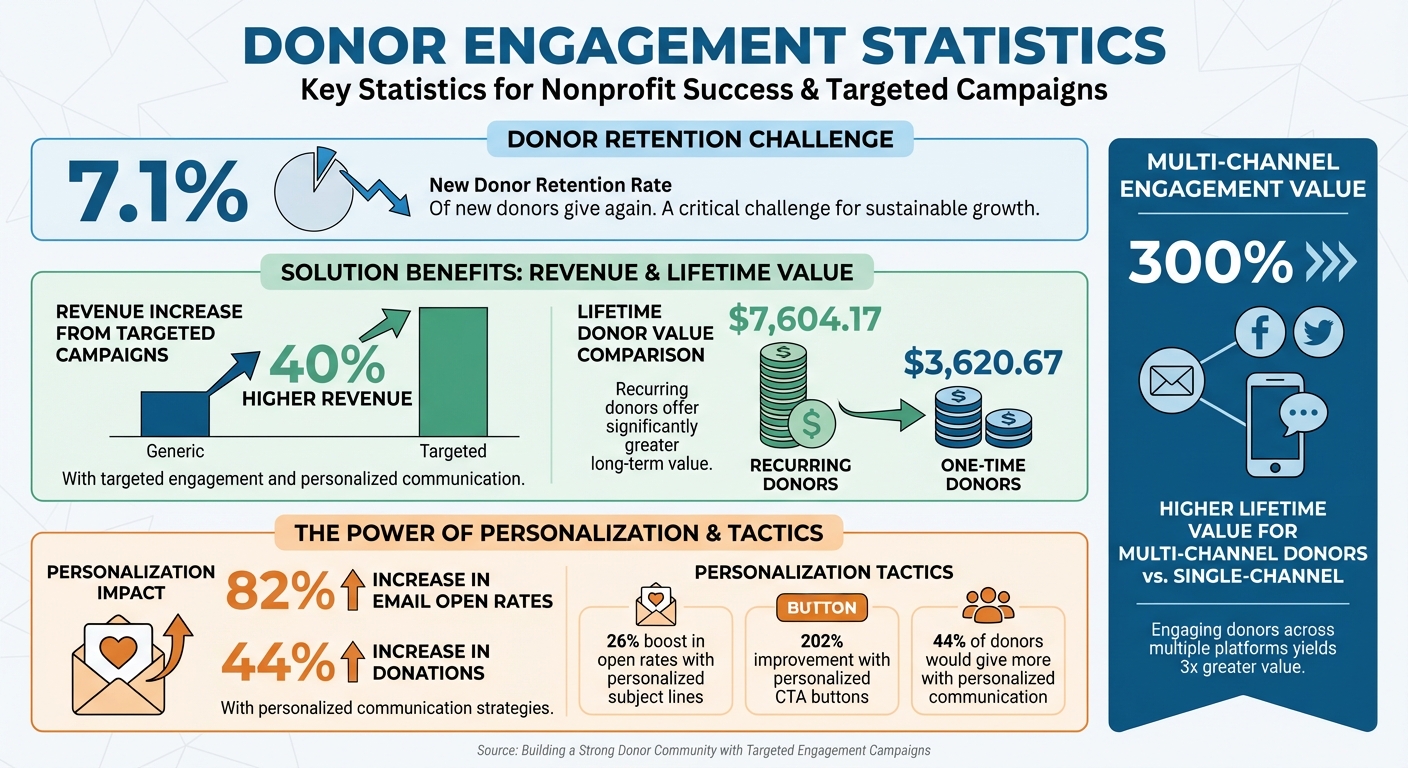
Donor Engagement Statistics: Impact of Targeted Campaigns on Nonprofit Revenue
Nonprofit Marketing Strategies that Drive Donor Engagement
How to Identify and Segment Your Donors
Understanding your donors starts with collecting and organizing data that reveals their motivations and behaviors. The goal? To truly know your supporters, not just amass a list of names. As Matt Bitzegaio from HelpYouSponsor wisely says:
"You're building a donor base not a database."
The most successful nonprofits go beyond surface-level information. They track giving history (recency, frequency, monetary value, and timing), demographic details (like age, location, income, and occupation), engagement levels (such as event attendance or volunteer hours), and psychographic insights (values and cause preferences). This deeper understanding allows for more tailored outreach.
Additionally, monitoring digital behavior - like website visits, email clicks, and social media interactions - can further refine donor segmentation. Knowing how each donor first discovered your organization is also critical. It helps pinpoint which channels bring in the most loyal supporters.
For example, the American Cancer Society saw impressive results in 2022 by using machine learning and donor data to segment their audience. Their efforts led to a 17% increase in donation revenue, a 70% donor engagement rate, and a click-through rate that was 87.5% higher than their historical average. This structured approach proves how targeted strategies can drive measurable growth.
What to Consider When Grouping Donors
Start by categorizing donors based on their relationship with your organization. First-time donors, recurring contributors, and major donors all require different engagement strategies. Lapsed donors - those who haven’t given in 12–18 months - are another critical group. Many nonprofits focus on reactivating "LYBUNT" (Last Year But Unfortunately Not This) and "SYBUNT" (Some Year But Unfortunately Not This) donors.
Creating donor personas can also help. These profiles give your team a clear picture of who they’re addressing. For instance, a "Retired Regular Volunteer" might appreciate phone calls and in-person events, while a "Young Professional Digital Donor" could respond better to text messages or Instagram stories. Multi-channel donors - those who engage through various platforms - are particularly valuable, with a lifetime value 300% higher than single-channel supporters.
Personalization is another game-changer. A significant 44% of donors say they’d give more if communications felt tailored to them. By segmenting effectively, you can build trust and encourage long-term commitment.
Using HelpYouSponsor to Organize Donor Data
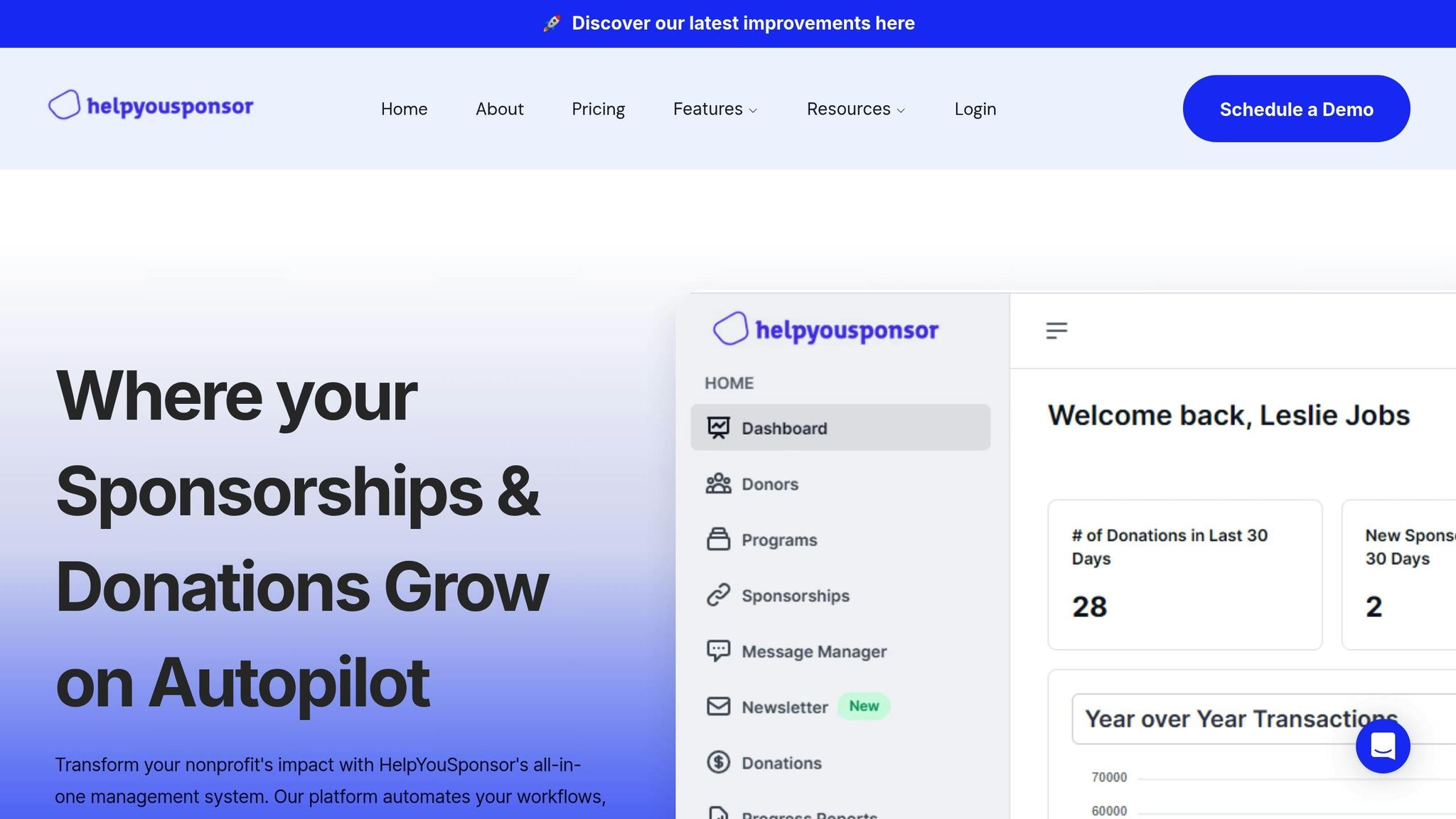
To put these insights into action, tools like HelpYouSponsor can simplify donor management. This platform centralizes all donor information, making it easier to identify patterns and create meaningful segments. It tracks interactions across multiple touchpoints - from initial contact to years of ongoing support - offering a complete view of each donor’s journey.
HelpYouSponsor also allows you to automate communications based on donor behavior. For instance, if someone visits your volunteer page, makes their first donation, or becomes less active, the platform can send a targeted message automatically. Its reporting features help identify which segments respond better to emails versus social media, and even highlight donors ready for larger giving opportunities. Customizable email templates with personalization options make outreach feel more genuine.
The platform’s self-service portal is another asset. Donors can update their own contact details, preferences, and giving history, keeping your data accurate in real time. This feature also provides insights into donor interests - if someone regularly checks impact stories about education programs, it signals their engagement with that cause.
Organizations using HelpYouSponsor have seen impressive results, including a 3.8× increase in sponsorships and automation of up to 90% of sponsorship management tasks. As Farrell Burton from Hope Project International shares:
"Without this invaluable tool, our work would not be possible. With the help of HelpYouSponsor, we're making a life-changing difference for children who need it most."
Maintaining data quality is crucial. Donor information can become outdated quickly - up to 30% annually. Regular audits to remove duplicates, update records, and encourage donors to keep their profiles current ensure your engagement strategies remain effective.
How to Create Personalized Communication Plans
Once you've segmented your donors, the next step is to create communication strategies that align with each segment's specific needs and behaviors. These tailored strategies can make a huge difference - personalized donor communication has been shown to increase giving by up to 40%.
Start by cleaning your donor data. Eliminate duplicates, standardize entries, and verify donation amounts to ensure accuracy. Then, establish clear goals for each segment. For example, you might aim to re-engage donors who haven’t contributed in a while, encourage mid-level donors to increase their giving, or convert one-time donors into monthly supporters.
Map out the donor journey using stages like Awareness, Consideration, Decision, Retention, and Advocacy. Identify 3–5 key touchpoints where your outreach can have the most impact. Use RFMT analysis (Recency, Frequency, Monetary value, and Type) to determine ideal donation requests, and test elements like subject lines, sender names, and calls-to-action to optimize donor responses.
Jeff Schreifels, Principal Owner at Veritus Group, emphasizes the importance of personal connection:
"You cannot automate your way to trust and you can't scale connection through software alone. You build it one donor at a time - through listening, thanking, inviting and showing up."
While automation can handle routine tasks, personal touches - like handwritten notes or phone calls - are essential for major donors or celebrating milestones.
Writing Messages That Match Donor Values
To craft effective messages, you need to deeply understand your audience. Start by creating donor personas - detailed profiles that represent the motivations, behaviors, and communication preferences of different supporter types. For instance:
- "Compassionate Christa": A retired teacher who values education programs and prefers email updates.
- "Business Bryan": A corporate professional interested in measurable outcomes.
Personalize your messages beyond just using a donor's name. Reference their past contributions or local impact to make your outreach feel genuine. For example, "Your $50 gift last month provided school supplies for three children in Chicago." This kind of personalization works - emails with tailored subject lines see a 26% boost in open rates, while customized emails achieve 29% higher unique opens and 41% higher click rates. Even call-to-action buttons perform better when personalized, with a 202% improvement over generic ones.
Dynamic content takes this to the next level by adjusting email sections based on donor data. For instance, monthly donors could receive updates on ongoing projects, while new supporters might see stories highlighting their immediate impact. Boys Town demonstrated this approach effectively in 2024, doubling its GivingTuesday text revenue by nurturing its list year-round with automated gratitude messages, storytelling, and e-cards.
After crafting these personalized messages, automation ensures they are delivered consistently.
Setting Up Email Automation for Consistent Outreach
Automation simplifies staying in touch without overburdening your team. Begin with a welcome series for new donors:
- Send a thank-you email immediately after their donation.
- Follow up within two days with a welcome email explaining your mission and how their contribution helps.
- Share an impact story within 7–10 days to show tangible results.
Behavioral triggers help you engage donors at the right time. For example, if someone visits your child sponsorship page but doesn’t complete the process, an automated email addressing common questions can encourage them to follow through. Similarly, first-time donors or those who inquire about volunteering can receive tailored follow-ups.
The University of Kansas Health System successfully used this approach with its "Grateful Patient" program. By segmenting potential high-value donors and assigning them to major gift officers within two weeks of discharge, they secured a $1.1 million planned gift.
Coordinating across multiple channels - email, SMS, direct mail, and social media - is equally important. When messaging is consistent across platforms, it creates a cohesive narrative without redundancy. This matters because donors who engage through multiple channels have a lifetime value 300% higher than those who use just one.
Tools like HelpYouSponsor make this process easier with customizable email templates and detailed reporting features. These tools allow you to craft genuine messages and track what works for each segment. Keep in mind, 72% of consumers only engage with marketing messages that align with their interests, and donor data can degrade by about 30% annually, so regular audits are critical.
Traditional Fundraising vs. Targeted Engagement: A Comparison
| Feature | Traditional Fundraising | Targeted Engagement |
|---|---|---|
| Communication Style | Mass communication; "megaphone" approach | 1:1 connection; "conversation" approach |
| Donor Understanding | One-size-fits-all; generic "Dear Friend" | Data-driven; uses detailed donor personas |
| Operational Efficiency | High volume, low relevance | Resource-optimized; focuses on relevant groups |
| Response Mechanism | Static; follows organization's schedule | Responsive; triggered by donor behavior |
For example, Habitat for Humanity Fort Collins identified emerging prospects and sent specialized postcards inviting them to a site tour. This personalized approach resulted in one recipient giving a $10,000 donation - ten times their previous total contributions.
Kiki Koutmeridou, Chief Behavioral Scientist at DonorVoice, highlights the importance of understanding donor identities:
"As a fundraiser, your goal is to find the supporter identity that matters most in driving giving to your organization."
Shifting from a mass communication approach to personalized engagement transforms how donors interact with your organization. This strategy not only strengthens donor relationships but also enhances retention and revenue, reinforcing the importance of tailored outreach.
Using Social Media and Stories to Connect with Donors
Social media can be a powerful tool for building meaningful relationships with donors. It’s not just about broadcasting updates - it’s about creating genuine connections. As Brynne Krispin, Social Media Strategist, puts it:
"When we talk to our audience like human beings and put ourselves in their shoes, connection and loyalty follow".
This approach makes a difference. Supporters who feel emotionally connected to a cause have a 306% higher lifetime value.
To make this connection, start by understanding what matters to your donors. Platforms like Facebook, Instagram, and LinkedIn are great for practicing social listening, which helps you identify the challenges and interests of your audience. By addressing these specific needs in your content, you can move away from generic posts and foster personal conversations. This shift lays the groundwork for a community where donors feel appreciated and valued - an approach that complements personalized email strategies.
How to Encourage Donors to Share Your Cause
When donors share your story, it amplifies your reach in ways your organization alone might not achieve. For instance, every shared fundraiser brings in an extra $100 on average. As Jon Reine from GoFundMe Pro explains:
"Storytelling becomes even more impactful when your supporters share it with others. Cross-platform promotion then helps stories spread organically, reaching new audiences in ways a nonprofit's marketing efforts may not".
Make it easy for donors to share. Add social sharing buttons to your donation and thank-you pages. Donors are often most excited right after making a gift - capitalize on that moment by encouraging them to share their contribution as a way to further support your mission. Tools from platforms like Meta allow donors to share their donations to Instagram or Facebook with just one click.
Featuring donors is another great way to inspire sharing. With their permission, highlight supporters on your social channels by sharing their bios and reasons for giving. This personal touch often motivates donors to share the posts with their own networks, expanding your visibility. You can also host giveaways where participants tag friends to enter, helping to spread awareness.
Give your supporters something to rally around. Create a campaign-specific hashtag and invite donors to share their reasons for giving on their profiles. Partnering with influencers can also boost your reach - nearly half of nonprofits now collaborate with influencers to build trust and expand their audience.
Telling Stories That Show Your Program's Impact
Stories are the bridge to emotional connection. For example, child sponsorship programs often use a five-part narrative: a character (the child), a setting (their community), a theme (hope and transformation), a conflict (their challenges), and a resolution (the impact of sponsorship). This structure helps donors see exactly how their contributions make a difference.
Real, unpolished visuals resonate the most. Share authentic moments - photos of daily life, videos of children sharing their dreams, or even drawings they’ve made. These raw glimpses build trust and connection in ways polished corporate content often can’t. Videos, in particular, perform well, with higher engagement and more frequent shares across platforms.
Tailor your storytelling to each platform. TikTok and Instagram Reels are ideal for quick, attention-grabbing videos (30 to 60 seconds) that hook viewers within the first three seconds. Be sure to include captions for silent viewing. TikTok, for instance, saw nonprofit audiences more than double in 2023. Instagram Stories work well for interactive updates using polls or Q&A stickers, while LinkedIn is a great space for sharing impact reports that resonate with corporate partners.
Keep donors engaged with regular updates. Share milestones - quarterly or bi-annually - that showcase progress in areas like education, health, or personal growth. Use before-and-after snapshots to highlight transformations and create one-page story sheets that make it easy for donors to see the impact and share it with others. End every story with a clear call to action, such as, "A $20 donation provides fresh food for a week. Give now", rather than a vague "Support us".
When dealing with sensitive stories, you can still evoke empathy while respecting privacy. Focus on crafting messages and visuals that highlight the emotional journey without revealing faces or personal details. Show the progress and positive transformations that donors help make possible - this inspires them to celebrate and share your mission with their networks. These storytelling strategies can also help you track and evaluate your campaign’s performance as it unfolds.
How to Measure Campaign Performance and Make Improvements
To build stronger donor relationships and effectively allocate resources, measuring your campaign's performance is essential. As HelpYouSponsor puts it:
"Donor engagement is the backbone of any successful child sponsorship program".
Tracking these interactions helps you identify what works and refine your strategies accordingly.
Start by evaluating email performance. Metrics like open rates and click-through rates reveal whether your messaging resonates. For example, including a donor's name in subject lines increases open rates by 26%, while tailored call-to-action buttons improve effectiveness by 202%. These small adjustments can significantly impact donor actions.
Next, focus on donor retention and giving patterns. Retention rates for one-time donors hover around 44%, but for new donors making their first gift, it drops to just 23%. This gap highlights where you might need to adjust your approach. Monitor metrics like average gift size, donation frequency, and upgrade rates to gauge commitment levels. Donors engaged across multiple channels often have a lifetime value 300% higher than those using only one channel, making it crucial to track how and where supporters interact with your organization.
Once you’ve established a baseline with metrics, use A/B testing to refine your approach. Test one variable at a time - like subject lines, sender names, or CTA phrasing - to see what drives better results. For instance, the American Cancer Society used machine learning to optimize digital ad campaigns. Ben Devore, their Director of Media Strategy, explained:
"Every bit of our campaign spend needs to be optimized for the best possible performance, so our key advertising goal was to reach the most probable donors, and then engage them in a way that would drive donations."
This strategy led to a 17% revenue increase, a 70% donor engagement rate, and a click-through rate of 1.5% on interactive banners - 87.5% higher than previous benchmarks.
Which Metrics to Track for Donor Engagement
To understand donor engagement, focus on metrics that show both digital interactions and real-world participation. Email open and click rates provide insight into content relevance, while website visits indicate interest. Track volunteer hours and event attendance to gauge non-financial involvement.
Financial metrics are equally important. Monitor average donation size, frequency, and upgrade rates to assess giving trends and growth potential. Historical data can also reveal peak giving periods, helping you fine-tune your communication calendar. Review metrics regularly - monthly for quick adjustments and quarterly for a deeper look at segment performance.
Finally, don’t underestimate the value of feedback loops. Post-donation surveys can uncover insights that numbers alone might miss, such as whether donors feel overwhelmed by communication or need more updates.
Using HelpYouSponsor Reports to Improve Your Campaigns
HelpYouSponsor simplifies campaign tracking and improvement with its robust reporting tools. Organizations using the platform have seen an average 3.8x increase in sponsorships, thanks to its ability to highlight what works and enable quick adjustments.
The platform consolidates key metrics - covering both digital engagement and financial performance - into one dashboard. This unified view makes it easier to identify trends and focus on donor segments needing more attention. You can even set up behavioral triggers to automate actions, like sending a “we miss you” email after 30-60 days of inactivity or following up within 24 hours for incomplete donations.
Leverage dynamic segmentation to adapt donor categories in real-time based on interactions. For example, Habitat for Humanity Fort Collins created a segment for "emerging prospects" and sent them personalized postcards inviting them to tour a development. One recipient boosted their total giving tenfold, contributing $10,000 after the tour.
Automate milestone messages for birthdays or sponsorship anniversaries to maintain engagement effortlessly. Personalized communication can lead to 26% higher email open rates, and 44% of donors say they’d give more if the experience felt personal. Balance automation with personal outreach - use automated systems for tasks like receipts and welcome emails, but reserve personal effort for major gifts and significant milestones.
Conclusion: Building Stronger Relationships Through Targeted Engagement
Creating a thriving donor community involves deliberate and personalized efforts at every step of the donor journey. By segmenting supporters based on their giving habits and interests and crafting messages that align with their values, you can build a framework that fosters meaningful connections.
The data speaks volumes. For example, 44% of donors contribute more when they feel a personal connection, and multi-channel engagement can increase lifetime donor value by a staggering 300%. Even a small 1% boost in donor loyalty can lead to a 20% income increase over three years. These figures underscore the importance of making donors feel recognized, appreciated, and inspired.
HelpYouSponsor takes these strategies to the next level by streamlining the process. The platform consolidates donor data, automates personalized communications, and delivers real-time analytics - all in one place. Whether you’re celebrating milestone anniversaries, setting up behavior-based triggers, or reviewing campaign results, the platform handles 90% of the administrative tasks, freeing your team to focus on what matters most: strengthening relationships.
FAQs
What donor segments should I start with first?
To improve donor engagement and retention, start by segmenting your donor base based on their giving history. For example, categorize donors into groups like monthly contributors, major givers, and one-time donors. Then, go a step further by analyzing demographics such as age and location.
This data allows you to craft personalized communication that resonates with each group. Monthly donors might appreciate updates on how their consistent support is making an impact, while major givers may respond well to exclusive insights or invitations to special events. For one-time donors, thoughtful follow-ups and stories of success could inspire them to give again.
Tailoring your outreach in this way helps build stronger connections with donors, increasing both their engagement and likelihood of continued support.
How often should I contact donors without overwhelming them?
Nonprofits need to find the right rhythm for staying connected with their donors. Communicate often enough to remain memorable, but not so much that it becomes overwhelming. The trick is to strike a balance - keep the engagement consistent without causing fatigue. Prioritize meaningful, personalized messages that foster genuine connections and ensure every touchpoint feels valuable to your supporters.
Which 3 metrics best predict donor retention?
The three main metrics for forecasting donor retention include donor retention rate, recency and frequency of donations, and engagement metrics such as participation in events and communication efforts. These metrics allow nonprofits to gauge donor loyalty and uncover ways to build stronger connections.