
Best Practices for Reporting Child Protection Concerns
Swift, factual reporting and clear organizational policies are essential to protect children and enable timely intervention.

When it comes to protecting children, reporting suspected abuse or neglect is a responsibility you can't ignore. Here's what you need to know:
- Why It Matters: Reporting concerns ensures professionals can investigate and intervene, potentially saving a child's life.
- Legal Obligations: U.S. laws require reporting based on "reasonable suspicion", not proof. In some states, everyone - not just professionals - is legally required to report.
- How to Report: Identify signs of abuse, collect accurate details, and contact authorities immediately. For emergencies, call 911. For non-urgent cases, reach out to your local child protection agency or the national hotline at 1-800-422-4453.
- Ethical Reporting: Protect confidentiality, act quickly, and stick to facts - not assumptions - when reporting.
Organizations play a critical role by training staff, establishing clear policies, and using secure systems for documentation. Together, these steps can make a real difference in ensuring children's safety.
What Is The Child Abuse Reporting Process? - Child Welfare Network
sbb-itb-a630d3d
Steps for Reporting Child Protection Concerns
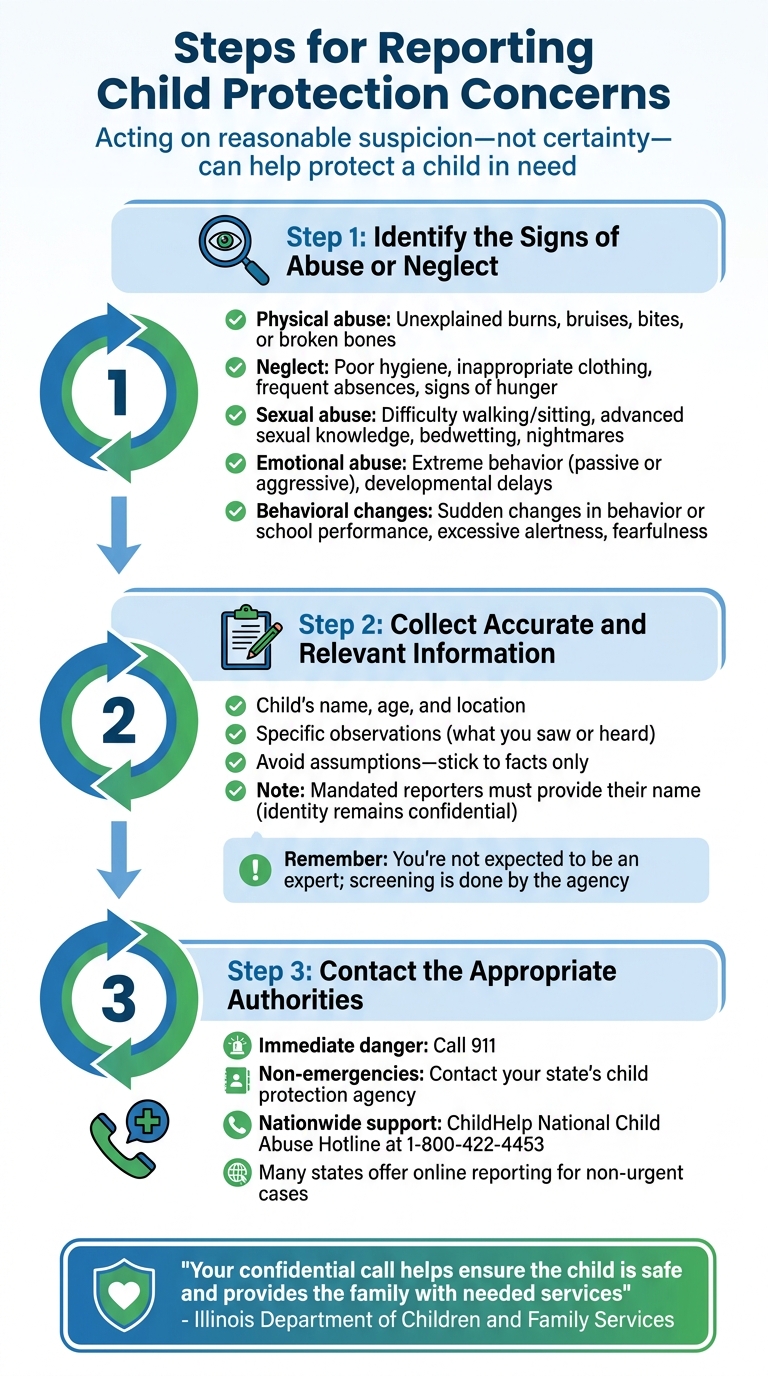
3-Step Process for Reporting Child Protection Concerns
When it comes to child safety, acting on reasonable concerns is enough - certainty is not required. Accurate reporting can lead to swift intervention and help protect a child in need. Here’s how to proceed if you suspect abuse or neglect.
1. Identify the Signs of Abuse or Neglect
Be alert to behavioral or physical signs that something might be wrong. For example, sudden changes in a child’s behavior or school performance, excessive alertness, or wearing clothing to hide injuries could be warning signs. Physical abuse might show up as unexplained burns, bruises, bites, or broken bones. These are especially concerning in very young children or if the child seems fearful of adults.
Neglect often looks different. It may include poor hygiene, inappropriate clothing for the weather, frequent absences from school, or signs of hunger like begging or stealing food. A lack of necessary medical or dental care is another indicator. Sexual abuse might manifest in difficulty walking or sitting, advanced sexual knowledge for a child’s age, bedwetting, or recurring nightmares. Emotional abuse could appear as extreme behavior - either overly passive or aggressive - or developmental delays and inappropriate maturity levels.
2. Collect Accurate and Relevant Information
Stick to what you’ve seen or heard rather than making assumptions. Key details to gather include the child’s name, age, location, and specific observations. This information helps authorities assess the situation and decide on the next steps. For organizations, managing international child sponsorship programs requires robust systems to track these reports and ensure child safety across borders.
If you’re a mandated reporter - such as a teacher, healthcare worker, or social worker - you are legally obligated to provide your name when reporting. However, your identity will remain confidential.
"The reporter is not expected to be an expert in the definitions of abuse and neglect, so the screening decision is made by the agency" - Wisconsin Child Welfare Professional Development System
Once you’ve collected this information, it’s time to notify the appropriate authorities.
3. Contact the Appropriate Authorities
If you believe a child is in immediate danger, call 911 right away. For non-emergencies, reach out to your state’s child protection agency. Each state has its own system for handling reports, though the agency names may differ.
For nationwide support, you can contact the ChildHelp National Child Abuse Hotline at 800-422-4453. Many states also offer online reporting options for non-urgent cases.
"Your confidential call will not only make sure the child is safe, but also help provide the child's family the services they need to provide a safe, loving and nurturing home" - Illinois Department of Children and Family Services
Best Practices for Ethical Reporting
When it comes to reporting child abuse, following ethical guidelines is key to maintaining the integrity of the process. This responsibility not only protects the safety of the child but also ensures a fair and thorough investigation.
Protect Confidentiality
Confidentiality is crucial. When making a report, it’s essential to safeguard the child’s identity and the family’s personal information. If you’re a mandated reporter, your identity is legally protected, meaning authorities won’t disclose who made the report. This protection encourages individuals to report concerns without fear of retaliation and shields families from unnecessary public exposure. Keep all information limited to authorized child protection personnel and avoid discussing the case with anyone not directly involved.
Report Promptly
Act immediately if you suspect abuse. The standard for reporting is based on reasonable suspicion - you don’t need absolute proof to take action. Delaying a report while waiting for more evidence could leave a child in danger. As Core Wellness highlights:
"The duty to prevent further harm to the child and to intervene before the situation escalates should guide the decision-making process".
If you’re uncertain, consult with a supervisor right away. Acting quickly allows authorities to evaluate the situation and step in before conditions worsen. Timely reporting aligns with the principle of sharing only verified observations.
Report Facts, Not Assumptions
Stick to the facts. Your report should include only what you’ve directly observed, not personal interpretations or diagnoses. Dr. Vincent DeFrancis of the American Humane Association emphasized:
"The reporter's diagnosis need not be absolute. He {or she} does not have to prove conclusively, even to himself {or herself}, that the child is a victim of inflicted injury".
Make sure to document any discrepancies between caregivers’ explanations and the evidence you’ve observed. Avoid letting personal biases, unverified assumptions, or cultural stereotypes influence your report. Focusing solely on the facts ensures that the investigation remains fair and objective.
Supporting Your Organization's Child Protection Efforts
Building a strong child protection framework requires not just individual action but also organizational systems that empower staff to respond effectively. By implementing supportive measures, organizations can reinforce these efforts and create a safer environment for children.
Provide Training Programs for Staff
Every staff member should fully understand their legal responsibilities when it comes to reporting suspected child abuse or neglect. As HeadStart.gov explains:
"Being a mandated reporter means that you are legally obligated to report any suspected or observed instances of child abuse or neglect to the appropriate child protection agency in your jurisdiction".
Training programs should cover key areas, including the definitions of various types of abuse - physical, sexual, psychological, and emotional - as well as neglect in its different forms: physical, medical, educational, and emotional. It’s equally important to help staff differentiate between neglect and poverty. As HeadStart.gov emphasizes, "poverty is not the same thing as neglect, and connecting families with economic resources and concrete supports may address these needs".
These programs should also address barriers to reporting, such as fear or uncertainty, and clarify that:
"your job is to report that a child is or may be at risk. The child protection agency is responsible for investigating and determining if a child has experienced abuse or neglect".
Incorporating reflective supervision into training can also provide a critical outlet for staff. Supervisors who are not involved in performance evaluations can offer a safe space for employees to process the emotional challenges of child protection work. Additionally, teaching stress management techniques can help prevent burnout, ensuring staff remain effective in their roles.
Create Clear Reporting Policies
Having clear, written reporting policies is essential. These policies should outline the exact steps to follow when reporting suspected maltreatment, define the roles of all involved, and detail the follow-up process. Make these guidelines part of the onboarding process and revisit them regularly during professional development sessions. When everyone - from volunteers to senior leadership - knows the procedures, the organization can respond more effectively.
Pairing these policies with child sponsorship software ensures consistency and reliability in reporting. Clear policies and reliable tools work hand-in-hand to strengthen child protection efforts.
Use Tools for Documentation and Communication
Specialized documentation tools are vital for managing child protection efforts effectively. General donor management software often lacks the necessary features for programs involving direct child interactions. As BrightPoint For Children points out:
"Nonprofit organizations with child or community sponsorship programs need more administrative support than is offered by donor management software".
Platforms like HelpYouSponsor offer tailored solutions, such as facilitated letter-writing systems that create documented records of all sponsor-child communications. This centralized system allows trained staff to monitor exchanges, helping to identify potential concerns early. Additionally, professional administrative teams can manage calls and emails through secure channels, ensuring confidentiality while capturing critical information that might otherwise go unnoticed.
Summary of Best Practices
Protecting children from abuse requires swift, accurate reporting and strong organizational support. In 2022, there were 3.1 million child maltreatment referrals in the U.S., resulting in 510,000 confirmed cases - a stark reminder of the importance of these practices. The following best practices highlight the key steps and ethical considerations discussed earlier.
Key Takeaways for Nonprofit Professionals
For nonprofit professionals, effective child protection hinges on clear and factual reporting. Here's what to focus on:
- Recognize signs of abuse or neglect early: This could include physical injuries, sudden behavioral changes, or other unexplained patterns.
- Gather accurate information: Document details like who, what, when, and where - without making assumptions or jumping to conclusions.
- Report immediately: Contact Child Protective Services through the national hotline at 1-800-4-A-CHILD or your local agency as soon as possible.
- Maintain confidentiality: Protect both the reporter and the child involved to ensure safety.
- Document thoroughly: Use your organization’s secure system to keep records, and ensure your staff is well-trained and up-to-date with state laws and federal guidelines like CAPTA.
When nonprofits follow these ethical protocols, they can reduce re-abuse cases by 20–30% through timely intervention.
The Role of Organizations in Child Safety
While individual efforts are vital, organizations have an equally important role in safeguarding children. Providing annual staff training, establishing clear reporting policies, and using secure documentation tools are all essential steps. These measures not only make reporting easier but also create a culture where raising concerns is standard practice.
Research reveals that 70% of underreporting stems from policy gaps rather than a lack of willingness to act. Organizations can address this by regularly reviewing policies, offering accessible reporting channels, and collaborating with local child protection agencies for ongoing feedback. By taking collective responsibility seriously, organizations not only respond effectively to abuse but also help prevent it from happening in the first place.
FAQs
What counts as “reasonable suspicion” to report?
"Reasonable suspicion" refers to having a clear, objective reason to believe - based on what you've observed and your professional experience - that a child might be experiencing abuse or neglect. This assessment should be grounded in what someone with your level of training and education would reasonably conclude, rather than relying solely on instinct or intuition.
What should I write down before I call CPS?
Before contacting CPS, it's important to gather and document key details to ensure your report is clear and accurate. Include the child's name, age, and address, along with specific observations like injuries, behaviors, or any statements the child has made about abuse or neglect. Stick to facts, avoiding assumptions or interpretations, and write everything down as soon as possible to maintain accuracy. This approach helps provide child protection authorities with a detailed and reliable account.
How can our nonprofit document concerns securely?
To ensure concerns are documented securely, here are some key practices to keep in mind:
- Include all relevant details: Be thorough by noting important information such as the individuals involved, what happened, when it occurred, and where it took place.
- Stick to legal and internal guidelines: Always comply with applicable state laws and your organization's policies when documenting concerns.
- Protect privacy: Limit the sharing of sensitive information to authorized individuals only, safeguarding confidentiality.
- Use secure tools and methods: Store and communicate sensitive data using secure platforms to minimize the risk of breaches.