
Before-and-After Photos for Nonprofits: 7 Tips
Ethical, consistent before-and-after photos prove nonprofit impact while protecting privacy and boosting donor trust.


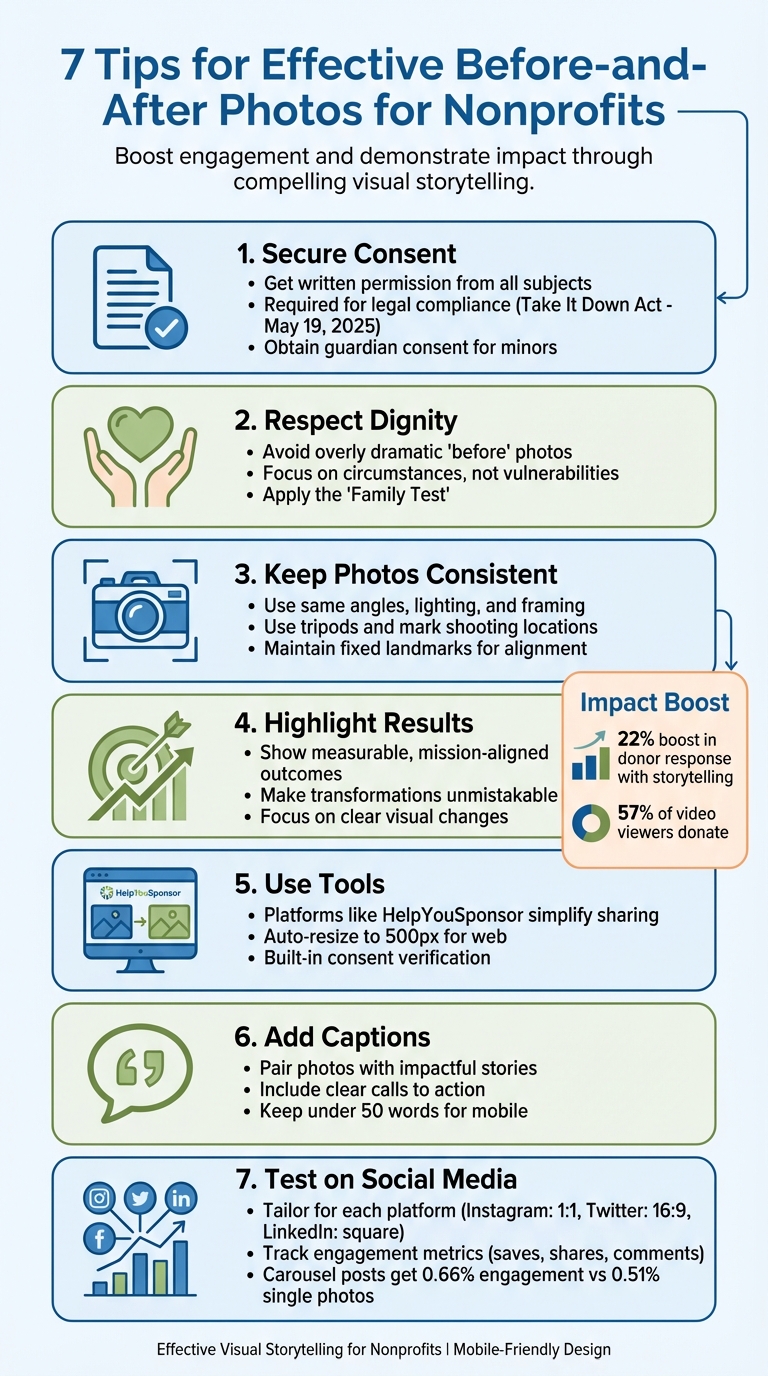
Before-and-after photos are one of the most effective ways nonprofits can showcase their impact. They visually communicate transformations, build trust with donors, and inspire action. Here's what you need to know to make the most of them:
- Secure Consent: Always get written permission from individuals featured, especially minors, to protect privacy and comply with laws like the Take It Down Act.
- Respect Dignity: Avoid overly dramatic "before" photos. Focus on circumstances, not people’s vulnerabilities.
- Keep Photos Consistent: Use the same angles, lighting, and framing to clearly show changes.
- Highlight Results: Show measurable outcomes aligned with your mission, like a renovated space or a thriving community project.
- Use Tools: Platforms like HelpYouSponsor can simplify sharing photos while ensuring privacy and compliance.
- Add Captions: Pair photos with short, impactful captions that tell a story and include a call to action.
- Test on Social Media: Tailor photos for each platform and track engagement metrics to see what resonates.
7 Essential Tips for Nonprofit Before-and-After Photos
1. Get Informed Consent from Subjects
Privacy and Consent Practices
Before snapping any photos, you must secure written permission from everyone featured in your before-and-after images. This isn't just a courtesy - it's a legal obligation designed to safeguard both the individuals involved and your organization. Starting May 19, 2025, the federal Take It Down Act enforces criminal penalties for sharing images without consent and mandates online platforms to implement a 48-hour request-and-removal system for such content.
Your consent forms should clearly outline where the photos will be used - whether that’s on social media, your website, printed materials, or donor newsletters. Linda Wesley, Attorney at Nonprofit Solutions Law, highlights the importance of transparency:
"Waivers alert attendees to the possibility of photos being taken, the possible future use of the photo, and options for opting out of the process".
When minors or vulnerable individuals are involved, you must obtain consent from their parent or legal guardian. Additionally, ensure the purpose of the photos is explained to both the guardian and the subject. Providing a clear and simple opt-out process is another way to show respect for their choices.
Make opting out easy. For example, use pre-printed name tags or lanyards at events to identify attendees who prefer not to be photographed. Include a withdrawal clause in your consent forms, allowing individuals to change their minds later and request the removal of their images from any active materials. As HIVO points out:
"By obtaining explicit consent, nonprofits can build trust with participants, nurture donor relationships, and engage other stakeholders, ensuring that they feel respected and valued".
To stay organized, store all consent documentation in a Digital Asset Management system. This allows you to track permissions efficiently and ensures compliance when publishing content. Remember, consent isn’t just about ticking a box - it’s about honoring the dignity and autonomy of the people your nonprofit serves.
Once you’ve laid the legal and ethical groundwork, you can confidently document and share the impactful stories that matter most.
sbb-itb-a630d3d
2. Focus on Authenticity When Taking Photos
Authenticity of Visuals
When capturing before-and-after photos, it’s crucial to maintain the dignity of your subjects. While some marketing strategies suggest that dramatic images of need can drive donations, Cassie Call, Managing Director of Campaign Marketing at Global Impact, questions the ethical cost:
"While there is marketing data that shows photographing a need in a dramatic way can increase funds, is it worth the dehumanization that's done in the long term? We don't think so."
To ensure your photos are respectful, try applying the "Family Test." Ask yourself, “Would I be okay if I or a family member were portrayed this way?” This simple guideline helps maintain respect in your visuals. For "before" images, focus on the surroundings or circumstances rather than compromising someone’s dignity.
This approach creates visuals that tell a story of transformation without crossing ethical boundaries.
Storytelling Effectiveness
A single authentic photo can convey an entire story. Images with genuine smiles and direct eye contact help establish a meaningful connection with donors.
Avoid over-editing, heavy filters, or staged shots that could distort the emotional impact. Cassie Call emphasizes the importance of staying true to the moment:
"We much prefer to use authentic, compelling images when possible. They are more genuine and can also help keep us out of legal licensing trouble."
As PostNitro puts it, "People don't need perfect skin in the photo. They need a fair comparison." Minimal editing ensures viewers can immediately see the transformation without questioning its authenticity.
Finally, ask colleagues with diverse perspectives to review your photo choices. This ensures the images reflect the variety in age, gender, and ethnicity within your community, keeping them relatable and genuine.
3. Use Consistent Lighting and Angles
Visual Consistency
When it comes to before-and-after photography, one golden rule stands out: keep everything consistent - angle, distance, and framing. These elements are crucial for showcasing authentic transformations. If the angles or perspectives are off, it can create skepticism about the legitimacy of the change.
To ensure precision, use a tripod and mark your shooting location so the "after" photos align perfectly. Pay close attention to your subject’s position. Fixed landmarks like doorways, trees, or even facial features such as hairlines or ears can help maintain alignment between shots.
Lighting is another game-changer. Natural daylight often provides the most reliable and flattering results. Be mindful of shadow patterns - if they differ, it may suggest a lighting change that could undermine the credibility of your comparison.
By sticking to a consistent setup, you’ll not only make the transformation crystal clear but also strengthen the story your visuals are telling.
Storytelling Effectiveness
Consistency doesn’t mean your photos have to lack creativity. Amanda Archibald, a photographer and art teacher, highlights the importance of intentional framing:
"The most essential thing is what you frame within the edges of your camera or your camera app."
Think about what you want to emphasize. Whether it’s the stunning landscapes or the dedication of volunteers, your framing choices can make a powerful statement.
Using the rule-of-thirds grid can also elevate your compositions. By placing your subject in the same part of the frame for both the "before" and "after" shots, you create a clean, side-by-side comparison that clearly illustrates the transformation your nonprofit has achieved.
4. Show Clear, Measurable Impact
Impact Demonstration
Your before-and-after photos need to do more than just look appealing - they need to prove that your efforts make a difference. Visuals grab attention in seconds, and donors will quickly form an opinion about your impact based on what they see. Focus on capturing clear, mission-aligned changes, whether it's a newly renovated school, a flourishing community garden, or a noticeable improvement in someone's quality of life.
The transformation should be unmistakable. For example, if your organization provides job training, showcase someone thriving in their new role. If you work on cleaning waterways, photograph the same shoreline before and after your efforts. These kinds of images immediately communicate the value of your work, leaving no room for doubt. This kind of clarity not only validates your mission but also lays the groundwork for powerful storytelling and fundraising strategies.
In late 2020, Ecojustice collaborated with Stephen Thomas Ltd to roll out a digital year-end campaign that featured "Victory Reports." These reports shared complex legal achievements in the form of relatable community stories. The result? A 25% boost in gross revenue and an impressive 400% return on investment for social media ads.
Storytelling Effectiveness
Once you've highlighted the change, let the beneficiaries take center stage as the heroes of the story. As Kelly Gagnon, also known as the Nonprofit Marketing Nerd, explains:
"You are not the hero. You're Yoda. Your nonprofit sponsorship programs provide the tools and guidance, but it's the people you serve who create the transformation."
Don't just show the "before" and "after" - share the journey in between. Highlight the steps that led to the transformation, whether it's training sessions, months of mentorship, or key milestones achieved. For example, in October 2016, New Directions Youth and Family Services launched a newsletter campaign that shared personal success stories, including one about "Shayenne", who overcame addiction. This campaign re-engaged lapsed donors, resulting in 113 gifts totaling $10,531 - nearly double the previous year's $5,809.
5. Use HelpYouSponsor to Share Photos with Donors
Integration with Tools or Platforms
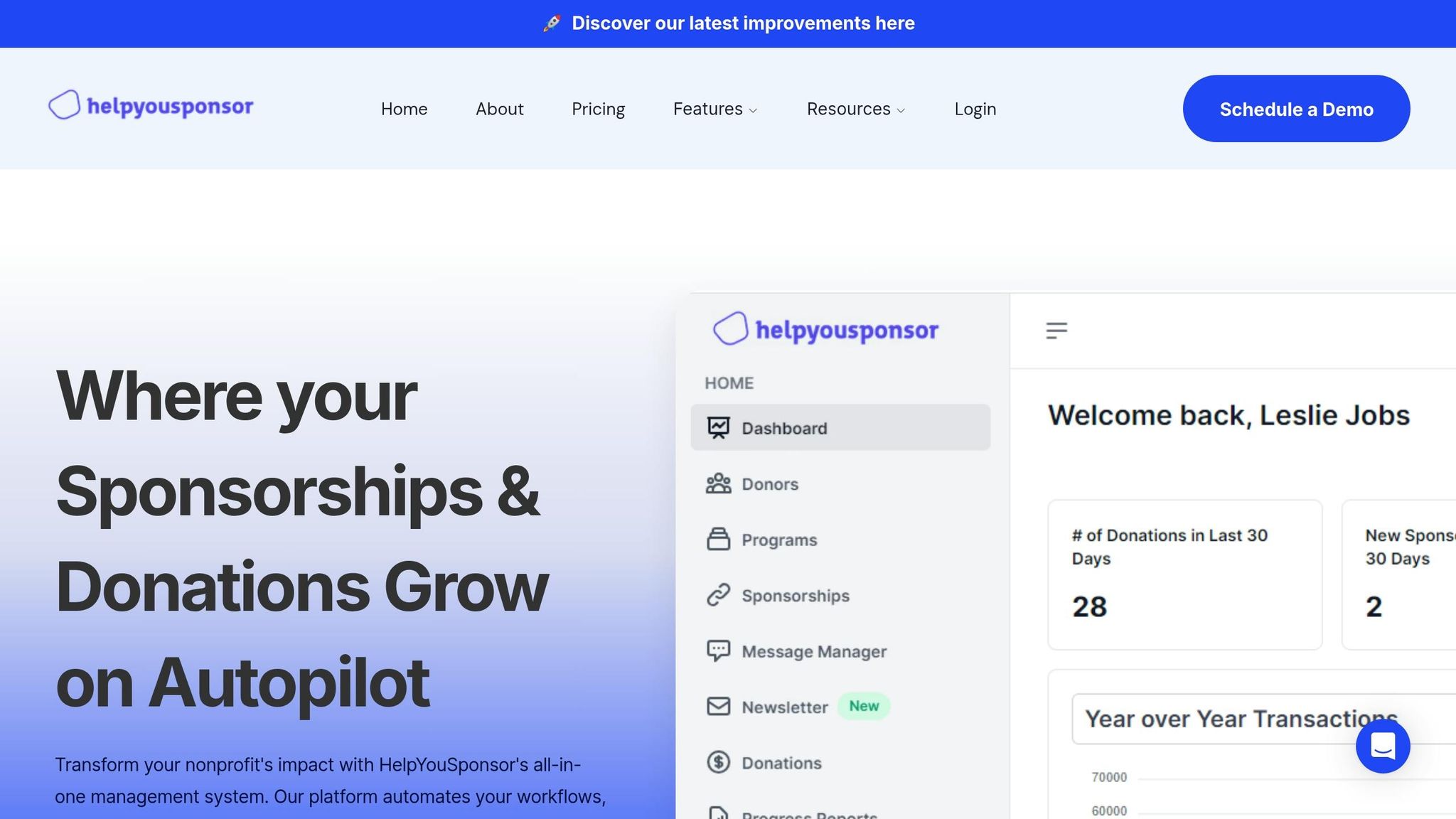
Sharing impactful before-and-after photos with donors just got easier. HelpYouSponsor simplifies this process by automatically resizing images to 500px, ensuring they load quickly and maintain excellent quality for online viewing. Why does this matter? Because 73% of donors say a seamless and straightforward giving experience affects whether they complete a donation.
For organizations needing high-resolution images for print materials or detailed reports, HelpYouSponsor integrates with Box.com. This integration securely stores full-size files while keeping web-optimized versions accessible in the same system. Regular photo updates not only showcase progress but also strengthen donor confidence by demonstrating the ongoing impact of your work.
This efficient system highlights a commitment to clear and ethical storytelling, ensuring donors feel connected and informed.
Privacy and Consent Practices
HelpYouSponsor also prioritizes privacy and consent. Its built-in consent verification tools ensure that all shared content complies with ethical standards. The platform emphasizes the importance of informed consent and transparency, stating:
"Ethical data use - privacy, informed consent, transparency and bias reduction - is essential in sponsorship programs to protect donors and sustain trust." - HelpYouSponsor
To further safeguard sensitive content, the platform offers Role-Based Access Control (RBAC). This feature allows you to control who on your team can upload or share photos. The "Permissions and Access Control" settings ensure that only authorized staff handle visual materials, and donor names or details are shared only with explicit consent. These measures help you share compelling stories while adhering to ethical standards.
6. Add Strong Captions to Your Photos
Once you've got those eye-catching visuals, the next step is to pair them with captions that pack a punch. A strong caption doesn't just describe the image - it completes the story.
Storytelling Effectiveness
A great before-and-after photo is only as good as the words that frame it. Your caption should highlight the beneficiary as the hero of the story, with your nonprofit playing the role of the guide who provided the tools for their success. Instead of relying on dry statistics, focus on personal stories that resonate emotionally.
Take, for example, the approach by New Directions Youth and Family Services in October 2016. Under the leadership of Jeff Mendola, the Director of Mission Advancement, they revamped their newsletter by swapping out generic updates for personal success stories. One standout example was "Shayenne", a young person who overcame addiction through adventure recreation programs. Mendola explained:
"They want to hear success stories about real people – not statistics and excessive industry jargon".
These thoughtful captions didn’t just tell stories - they built a foundation of trust and showcased real, measurable transformations.
Impact Demonstration
Your captions should clearly explain the transformation shown in your photos. Avoid vague descriptions that might seem too good to be true. Instead, add details that make the change feel authentic - mention timelines, challenges, or the methods used to achieve the results.
Including measurable outcomes, like increased revenue or specific fundraising milestones, can further reinforce credibility. When organizations frame their achievements in relatable, community-focused stories - complete with bold headlines - they often see a surge in donor engagement and fundraising success.
Engagement on Social Media
Every caption should close with a clear call to action, guiding readers on how they can contribute to creating more success stories. On digital platforms, keep captions short and impactful, focusing on a single moment or individual. These concise captions should amplify the photo’s narrative, encouraging donors to act and stay engaged.
Nonprofits that weave storytelling into their fundraising efforts see an average 22% boost in donor response. Even more compelling, 57% of people who watch nonprofit videos go on to make a donation.
7. Test Your Photos on Social Media Platforms
To make your before-and-after photos stand out, it's crucial to test them across different social media platforms. Each platform has its own style, formatting, and audience preferences. By combining eye-catching visuals with thoughtful captions, you can ensure your stories connect with the right audience.
Visual Consistency
The first step is to tailor your photos to fit each platform's specific requirements. For example:
- Twitter/X: Works best with 16:9 landscape images (1200x675px) that pop against dark themes in fast-moving feeds.
- LinkedIn: Square images (1080x1080px) paired with professional design elements and data-driven captions resonate with its audience.
- Instagram: Prioritizes visually appealing 1:1 or 4:5 portrait formats, focusing on storytelling with minimal text.
It's worth noting that over 70% of social media browsing happens on mobile devices. This makes it essential to ensure your photos are clear and impactful on smaller screens. Keep accompanying text short - under 50 words - to make it easy to skim on mobile.
Lisa, Content Lead at Tonemark, emphasizes the power of these visuals:
"There's a reason these posts stop your scroll: before/after images get 2-3x more engagement than standard content".
Engagement on Social Media
When testing your photos, pay attention to the metrics that truly matter. Likes are nice, but saves, shares, and comments often indicate deeper engagement and trust in your content. On Instagram, carousel posts tend to perform better than other formats, with an average engagement rate of 0.66%, compared to 0.51% for single photos and 0.41% for reels. Creating a carousel that walks viewers through the "before", "intervention", and "after" stages can tell a compelling story that encourages users to swipe through.
To measure the success of your photos, use tools like Meta Business Suite, Meta Pixels, and UTM parameters to track which images drive the most action, such as donations. For accessibility, always include alt text for screen readers and use high-contrast colors to ensure everyone can engage with your content.
Conclusion
When used thoughtfully, before-and-after photos can be a game-changer for nonprofit donor engagement. The seven tips shared here - from securing informed consent to testing images on social media - offer a guide for crafting honest, impactful stories. These photos not only demonstrate measurable outcomes but also honor the dignity of the people and communities you serve.
Storytelling has a proven track record of boosting donor response. For instance, in October 2016, New Directions Youth and Family Services successfully re-engaged lapsed donors, increasing their donations from 40 gifts totaling $5,809 to 113 gifts totaling $10,531. Remarkably, nearly half of these contributions came from individuals who hadn’t donated in 10 to 20 years. This example perfectly illustrates how the strategies discussed can lead to meaningful results and growth. Remember, your before-and-after photos should pass the "goosebumps test" - if they don’t evoke emotion, they’re unlikely to inspire action.
To achieve such outcomes, having the right tools is essential. Platforms like HelpYouSponsor simplify the process by allowing nonprofits to share personalized updates - complete with before-and-after photos - directly with donors. By supporting regular updates, whether quarterly or bi-annual, this platform helps organizations showcase long-term impact while maintaining the transparency that fosters trust.
FAQs
What should a photo consent form include?
A photo consent form needs to clearly state that an individual is giving permission for their image to be used for specific purposes, like promotional campaigns or fundraising efforts. It should spell out exactly what the consent entails, be simple to read, and include a designated area for the person’s signature and the date. This helps ensure everything is handled both legally and ethically.
How can we show impact without exploiting people’s hardship?
Focusing on honest storytelling is a great way to show impact without exploiting hardship. Highlight the progress and resilience of those benefiting from your efforts. For example, thoughtfully use before-and-after photos to illustrate improvements - such as enhanced living conditions or newly acquired skills - while ensuring dignity is preserved. Avoid sensationalizing situations or relying on pity, and instead emphasize empowerment and positive transformation. This approach not only respects the individuals involved but also helps build trust with donors.
Which social metrics best predict donations from photo posts?
When it comes to predicting donations, two key factors stand out: visual impact and engagement levels. High-quality, striking images that clearly illustrate transformations can play a huge role in building trust and motivating people to give.
Here’s an eye-opening fact: 90% of the information our brains receive is visual, and our brains process images 60,000 times faster than text. This means that compelling visuals aren’t just a nice touch - they’re essential for grabbing attention and inspiring action. Prioritize creating visually impactful content to connect with potential donors and encourage their support.