
How Audit Reporting Builds Donor Trust
How transparent audits and clear financial reporting increase donor confidence and sustain long-term support.

Donors want assurance that their contributions are making a difference. Clear audit reporting helps organizations demonstrate accountability, build trust, and maintain long-term donor relationships. Here’s why it matters:
- Transparency is key: Donors expect at least 70% of contributions to go directly to programs. Leading organizations like World Vision and Children International exceed this benchmark.
- Accountability reduces skepticism: Detailed financial reports and independent audits reassure donors that funds are used responsibly.
- Scandals harm trust: Mismanagement or lack of transparency in one organization can damage the reputation of the entire sector.
- Regular updates strengthen relationships: Sharing financial data alongside real-world outcomes keeps donors engaged and confident.
Audit reporting isn’t just about compliance - it’s about showing donors the impact of their support. By tracking funds, providing clear financial statements, and sharing results in accessible formats, nonprofits can ensure donor confidence and loyalty.
Beyond Your Rating: How Trust and Transparency Win Donor Attention (with Kyle Gardner)
Why Donors Lose Confidence in Child Sponsorship Programs
When financial accountability is unclear, donor trust takes a hit. Scandals and mismanagement don’t just harm individual organizations - they taint the reputation of the entire child sponsorship sector. This forces even well-run programs to work harder to regain trust. Poor financial practices and high-profile controversies amplify the demand for transparency.
How Poor Financial Management Damages Donor Trust
When donors can’t clearly see how funds are used, skepticism grows. High overhead costs - where too much of a donation goes toward administrative expenses instead of programs - raise red flags. If less than 70% of funds are allocated to actual programs, it signals potential mismanagement.
Vague financial reporting makes things worse. Without independent audits or third-party oversight, donors are left to rely solely on claims made by the organization. Studies reveal a strong link between perceived financial transparency and donor trust, with a correlation strength of 0.518.
Additionally, the lack of field verification leaves donors questioning whether their contributions truly reach the intended recipients. Ineffective tracking systems only deepen this uncertainty, creating a situation known as "information asymmetry", where donors are left in the dark about how their money is spent.
How Nonprofit Scandals Affect All Organizations
Major scandals don’t just damage the organizations at the center - they ripple across the entire child sponsorship sector. For instance, when Compassion International, the 12th-largest charity in the U.S. with $1.3 billion in private donations in 2024, reclassified itself as an "association of churches" in 2019 to avoid filing public Form 990s, watchdog groups reacted strongly. MinistryWatch dropped its Donor Confidence Score from 97 to 73, and Charity Navigator removed its rating altogether due to a lack of accountability data.
Another example is the March 2017 shutdown of Compassion International’s operations in India. This closure, which disrupted support for 145,000 children and halted $45 million in annual transfers, stemmed from governmental conflicts. The fallout left donors questioning the security of their contributions across the sector. Incidents like these create what researchers call a "moral disillusionment effect", where trust in nonprofits erodes more sharply than in for-profit entities because donors expect higher ethical standards from charities.
With the child sponsorship sector raising over $3 billion annually, transparency failures by major organizations send shockwaves through the industry. Even programs with strong practices may appear untrustworthy by association. These challenges underscore the critical need for rigorous audit reporting to rebuild donor confidence.
How Clear Audit Reporting Builds Stronger Donor Relationships
Transparent audit practices go a long way in bridging information gaps and building trust with donors. Research highlights that clear governance can increase donor trust by 12%, and a striking 93% of donors consider transparency essential for continued support. This approach helps transform one-time donations into ongoing partnerships.
Creating Accountability with Detailed Financial Reports
Detailed financial reports are the backbone of donor confidence. For example, organizations that make their Form 990 and audited financial statements easily accessible online demonstrate that funds are being managed responsibly and in compliance with IRS regulations. This transparency gives donors the ability to confirm that their contributions are being used appropriately, including honoring restrictions on designated funds.
Children International provides a great example of this in action. In fiscal year 2024, the organization reported that 80% of its operating expenses were dedicated to programs. This level of specificity reassures donors that their contributions are directly supporting programs rather than being consumed by administrative costs. Because of this commitment to transparency, Children International earned a perfect accountability and transparency score from Charity Navigator and received the Platinum Seal of Transparency from Candid.
"The sponsor's oversight means all spending aligns with IRS rules, restricted funds are honored, and financial reporting meets audit standards. This accountability often exceeds what early-stage projects could manage alone." – Mission Edge
Interestingly, administrative costs, such as those for audits and compliance, are often misunderstood. These expenses, typically ranging from 5% to 15% of total spending, are better framed as strategic investments. They ensure donor contributions are protected and that funds reach their intended purposes. By explaining these costs clearly, organizations can turn what might seem like a negative into a demonstration of their commitment to responsible stewardship.
While financial reports establish integrity, performance audits bring the results to life.
Showing Results with Performance Audits
Financial audits are only part of the equation. Performance audits take it a step further by showing the tangible results of donor contributions. These audits verify that donations are being used as promised and that the intended beneficiaries are receiving the support they need. This process often includes facility inspections and interviews with beneficiaries to confirm outcomes.
Children International's approach to accountability illustrates this well. The organization conducts frequent field visits where representatives review facilities, operations, and even interview sponsored children to ensure services are being delivered as promised. Additionally, independent audits verify that funds are spent according to approved budgets. By combining financial tracking with on-the-ground verification, this dual approach minimizes information gaps and strengthens trust. When donors see that their contributions are making a real difference, abstract financial figures become meaningful and relatable.
Together, clear financial reporting and demonstrated impact create a solid foundation for maintaining donor trust.
Maintaining Loyalty Through Consistent Updates
Transparency isn’t a one-time effort. Building donor loyalty and improving donor retention requires consistent communication, especially through regular audit updates. This ongoing transparency ensures that future donation requests are rooted in trust rather than persuasion. As Esther Saehyun Lee, Principal and Founder of Elevate Philanthropy Consulting, aptly puts it:
"Fundraising does not begin or end with the ask. It begins and ends with trust."
Regular updates that combine clear financial reporting with human-impact stories help maintain this trust. Sharing photos, testimonials, and real-life stories alongside financial data makes the information more relatable and impactful.
Organizations that openly discuss their challenges as well as their successes build even deeper connections with donors. As Rachel Botsman says, "Trust is a confident relationship with the unknown." Even if donors can’t see every operational detail, consistent and transparent reporting reassures them that their contributions are making a difference and are in capable hands.
How to Implement Clear Audit Reporting
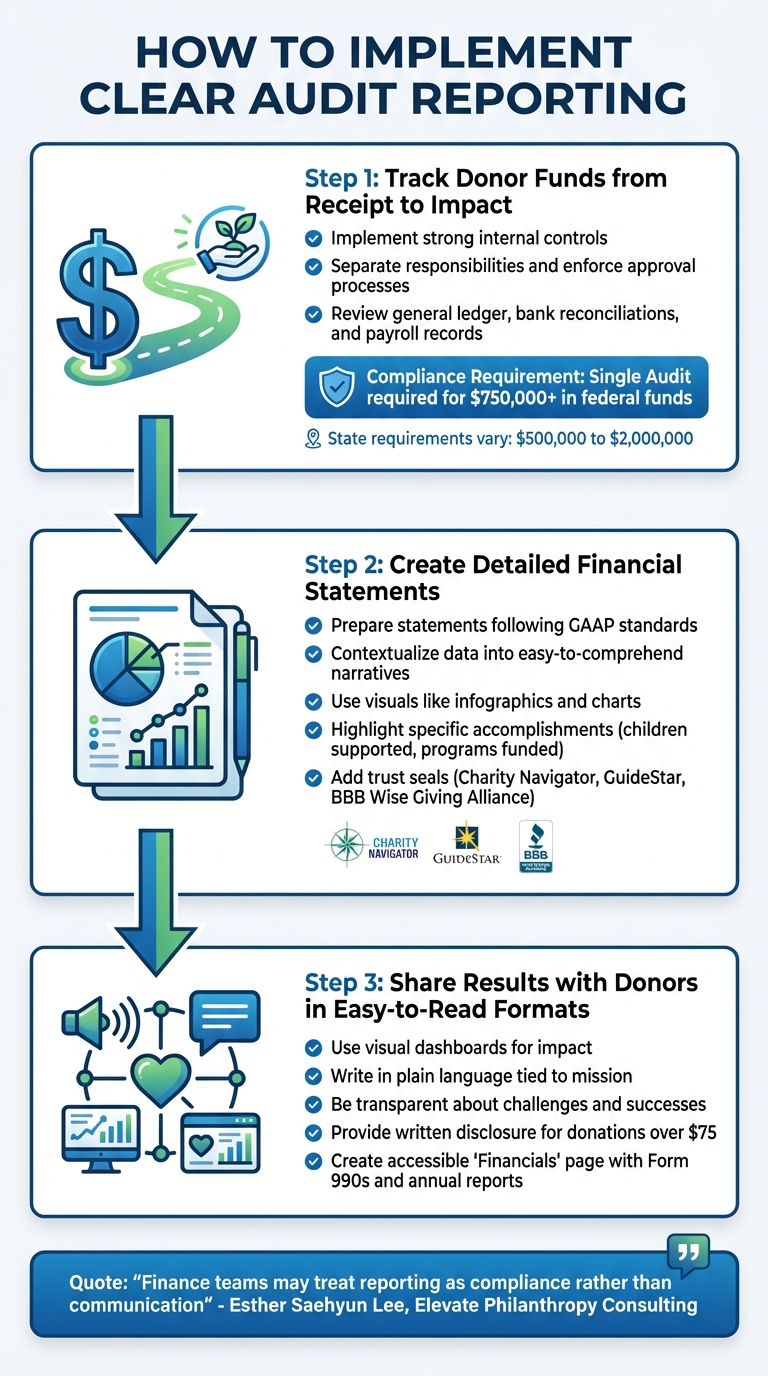
3-Step Process for Implementing Clear Audit Reporting in Nonprofits
Taking these steps ensures transparency and strengthens donor trust - an essential aspect of improving child sponsorship programs. The key lies in breaking the process into manageable actions that create a clear path from donation to impact.
Step 1: Track Donor Funds from Receipt to Impact
The cornerstone of reliable reporting is knowing exactly how every dollar is used. Start by putting strong internal controls in place. This can include separating responsibilities and enforcing strict approval processes to minimize errors. Regularly review documents like the general ledger, bank reconciliations, and payroll records to identify and resolve discrepancies early.
For nonprofits spending $750,000 or more in federal funds within a fiscal year, a Single Audit under Uniform Guidance is legally required. Even if you don’t meet this threshold, adopting similar practices shows a commitment to accountability. Be aware that state requirements vary - some states require audits at $500,000 in contributions, while others set the bar at $2,000,000 in annual revenue.
The goal isn’t just compliance - it’s about connecting the dots between the funds received and the outcomes achieved. Once funds are properly tracked, the next step is to present this data in detailed financial statements.
Step 2: Create Detailed Financial Statements
Financial statements prepared in line with Generally Accepted Accounting Principles (GAAP) meet the professional standards donors expect. However, numbers alone can’t tell the full story. As Whole Whale emphasizes:
It's your responsibility to contextualize financial statements into an easy-to-comprehend narrative.
Organizations like Donate Life America and World Animal Protection excel in this by creating financial pages that combine clear narratives with access to IRS Form 990s and audited financial statements.
Simplify complex data using visuals like infographics or charts. For example, show the ratio of fundraising expenses to program costs at a glance. Instead of just listing totals, highlight specific accomplishments - such as how many children were supported or educational programs funded. Adding trust seals from groups like Charity Navigator, GuideStar (Candid), or the BBB Wise Giving Alliance on your donation pages can further boost credibility.
Once your financial statements are ready, the next step is to make them accessible and engaging for donors.
Step 3: Share Results with Donors in Easy-to-Read Formats
The final step is presenting audit findings in a way that’s both clear and engaging. Esther Saehyun Lee, Principal and Founder of Elevate Philanthropy Consulting, explains:
Finance teams may treat reporting as compliance rather than communication.
Shift this perspective by treating audit reports as opportunities to strengthen donor relationships.
Use visual dashboards to showcase impact in a straightforward, digestible way, removing the need for donors to sift through dense financial statements. When sharing results, use plain language that ties financial data to your organization’s mission and achievements.
Be transparent about challenges. As Rachel Botsman puts it:
Trust is a 'confident relationship with the unknown'.
Building trust means being open about risks and setbacks - not just successes. For fundraising events, provide written disclosure statements when a donor’s payment exceeds $75 and they receive goods or services in return. This helps donors with tax compliance and shows your dedication to transparency.
Finally, create a "Financials" page on your website where donors can easily access audited financial statements, IRS Form 990s, and annual reports.
Case Study: How HelpYouSponsor Improves Donor Trust
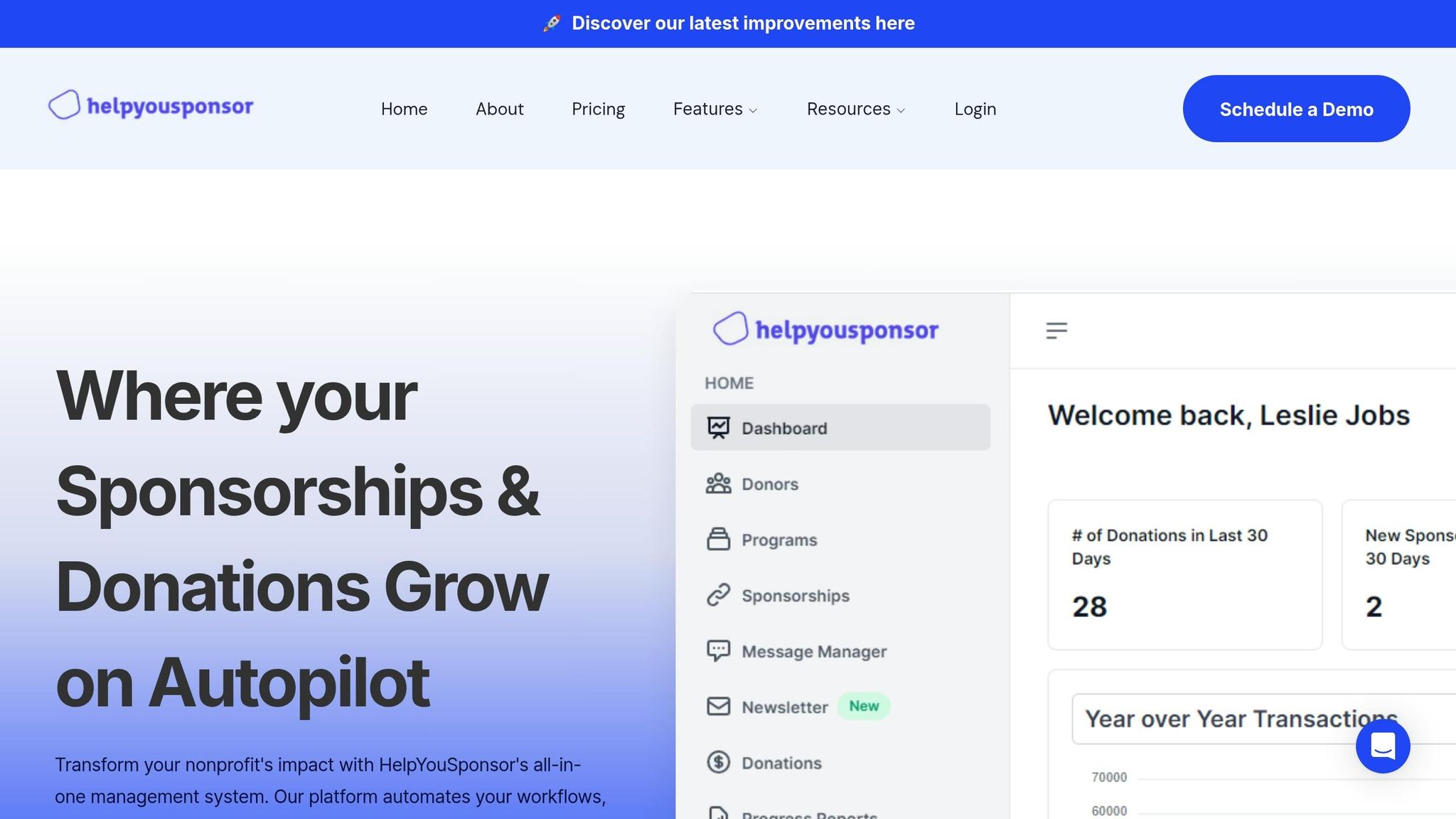
Using the right tools can make implementing audit reporting steps much smoother. HelpYouSponsor, designed by seasoned professionals, tackles the transparency challenges nonprofits face. Here's how its features simplify financial tracking and enhance donor communication.
Simplified Donor Fund Tracking
HelpYouSponsor offers a centralized Activity Log that keeps a time-stamped record of every financial and administrative action. This includes successful and failed payments, sponsorships, and updates to donor information. By eliminating the guesswork, it ensures donor-restricted funds are easy to track. Logs can be filtered into categories like "Commitments", allowing you to see exactly which sponsorships were added and when, making it straightforward to connect donations with their intended recipients.
The platform’s Donations page uses visual tools to show how funds are distributed across individual programs over specific time periods. This makes it easy to demonstrate to donors how their contributions are being used. For a broader view, the dashboard provides a three-year graphical overview of transactions and commitments, helping nonprofits identify financial trends and show the sustained impact of donor support.
Automated Reporting Features
HelpYouSponsor simplifies accountability by automating donation records. Instead of manually preparing donor statements, the platform generates Household Year-End Statements that consolidate all donations from a household into a single, tax-compliant email. Donors can also use the Tax Summary Tab to export their annual donation totals in PDF or CSV format instantly.
The platform’s visual analytics turn complex financial data into easy-to-read charts, illustrating three-year financial trends. These tools help demonstrate program stability and growth without requiring donors to sift through dense reports. Additionally, Year-End Insights Recaps summarize annual performance and highlight top donors, providing ready-made content for transparency reports.
While these automated tools simplify data analysis, the platform also prioritizes direct and consistent communication with donors.
Better Donor Communication
Transparency goes beyond numbers - it’s about keeping donors informed and engaged. HelpYouSponsor automates 90% of sponsorship management tasks, such as sending personalized welcome emails, thank-you notes, and recipient updates. Using automated codes, the platform ensures every message includes specific sponsorship details, making communication feel personal rather than generic.
The 24/7 Direct Messaging Channel fosters ongoing connections between sponsors and recipients, enabling them to exchange letters - whether digital or scanned handwritten notes - directly through the platform. An AI Copilot feature leverages natural language processing to provide real-time updates on child progress and community initiatives, giving donors immediate insights into their impact without waiting for annual reports.
Donors also benefit from a self-service portal, accessible 24/7, where they can update payment methods, manage their information, and download tax documents. By combining precise fund tracking, automated reporting, and interactive communication tools, HelpYouSponsor strengthens donor trust and underscores a commitment to clear and transparent audit practices.
Conclusion: Building Trust Through Clear Reporting
Transparent audit reporting is a cornerstone for building strong, lasting donor relationships. With 93% of donors prioritizing strong governance in their giving decisions, clear financial reporting transforms into a powerful tool for both retention and growth. By meticulously tracking funds from donation to impact, preparing detailed financial statements, and sharing results in an accessible way, you meet the high expectations donors have for accountability in managing their contributions.
Take Children International as an example: their perfect accountability score and 80% program spending show how thorough audits can increase donor trust by 12% and cultivate enduring partnerships. These results highlight the importance of using modern tools to simplify and enhance audit reporting.
"The sponsor's oversight means all spending aligns with IRS rules, restricted funds are honored, and financial reporting meets audit standards. This accountability often exceeds what early-stage projects could manage alone." - Mission Edge
Technology is a game-changer in this process. Platforms like HelpYouSponsor empower organizations of all sizes to adopt robust transparency measures. Features such as centralized activity logs, automated year-end statements, and donor self-service portals ensure financial accountability without overburdening staff. Its visual analytics and integrated messaging tools transform audit data into compelling narratives that strengthen donor connections. This blend of clear reporting and technological support ensures every audit and update reinforces the relationship between donors and your mission.
Clear and transparent reporting not only safeguards your reputation but also secures donor tax benefits and highlights the tangible impact of every dollar. With strong oversight and the right tools, donor confidence grows, paving the way for sustainable program success.
FAQs
What should I look for in a nonprofit’s audit report?
When looking over a nonprofit’s audit report, pay close attention to clear financial statements, adherence to legal requirements, and the details in the Independent Auditor's Report. These factors reflect responsibility and play a key role in earning donor confidence.
Do administrative costs always mean a nonprofit is inefficient?
Administrative costs aren't necessarily a sign of inefficiency. In fact, they often represent crucial expenses such as ensuring compliance, maintaining transparency, and managing programs effectively. These are critical elements for building donor trust and ensuring the organization achieves its objectives.
How can child sponsorship programs prove donations reach children?
Child sponsorship programs show donors that their contributions make a difference by using independent audits, maintaining strict financial oversight, and providing transparent reporting. These measures help confirm that funds are being managed responsibly and directed toward initiatives that truly benefit children. Additionally, offering clear details about how donations are used helps build trust and confidence among donors.