
From Insights to Action: AI Analytics for Smarter Fundraising
How nonprofits use AI to predict donor behavior, personalize outreach, automate tasks, and optimize campaigns for higher retention and revenue.


AI is transforming fundraising by helping nonprofits predict donor behavior, personalize outreach, and automate tasks. With donations in the U.S. dropping 30% in 2023, nonprofits are leveraging AI tools to improve engagement and revenue. Key benefits include:
- Predictive Analytics: Anticipates donor actions like renewals or lapses.
- Personalized Outreach: Tailors communication based on donor profiles.
- Automation: Handles repetitive tasks like thank-you messages.
- Improved Campaigns: Optimizes timing, messaging, and channels.
For example, the American Cancer Society exceeded revenue benchmarks by 117% using AI, while Animal Haven boosted recurring donors by 264%. By integrating tools like HelpYouSponsor, nonprofits can efficiently manage donor data and refine their strategies.
To succeed, focus on clean data, ethical practices, and regular updates to AI models. Start small, measure results, and expand gradually to maximize impact.
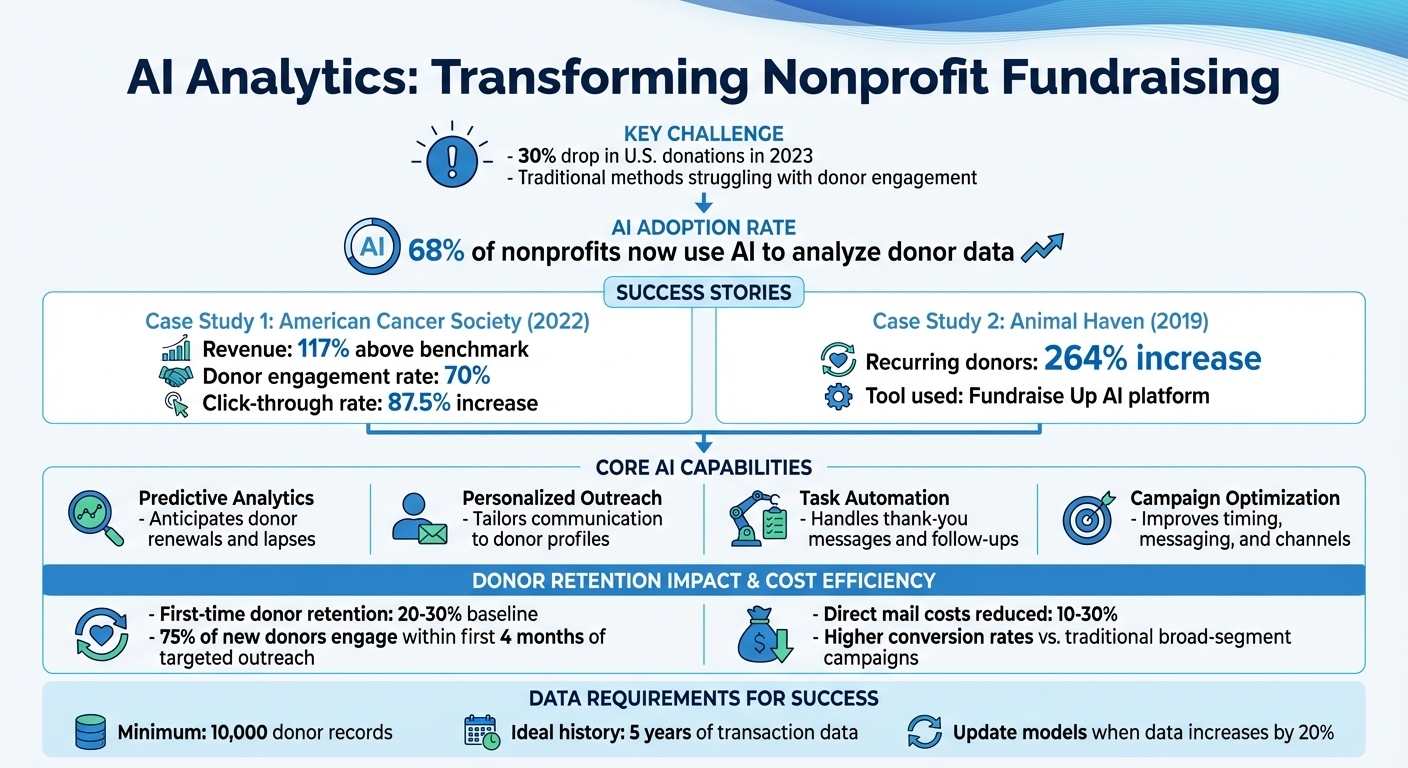
AI Fundraising Impact: Key Statistics and Success Metrics for Nonprofits
How Top Nonprofits Use Al And Donor Lifetime Value For Fundraising Success
How AI Helps You Understand Donor Behavior
AI has the ability to transform donor data into meaningful patterns, shedding light on who donates, when they give, and why they might stop. Instead of relying on instinct, nonprofits can tap into descriptive analytics to review past trends and predictive modeling to foresee future actions. For child sponsorship programs, this means identifying potential drop-offs before they happen.
By tracking engagement across email, social media, website visits, and surveys, AI builds a complete picture of each supporter. It evaluates donors based on factors like giving capacity, donation frequency, and campaign interests. From there, it identifies similar profiles by analyzing shared traits among your most reliable sponsors.
"AI fundraising tools have revolutionized the data collection and analysis process for nonprofits. Instead of just assessing data from past campaigns, nonprofits can use machine learning tools to anticipate future donor behaviors." - CBO.io
Today, about 68% of nonprofits use AI to analyze donor data. However, clean data is essential - AI models should be updated whenever donor data increases by 20%. With proper data maintenance, AI can predict which donors are likely to reactivate after a period of inactivity, upgrade their monthly contributions, or transition from one-time donations to recurring sponsorships. These insights are invaluable for creating well-rounded donor profiles.
Building Detailed Donor Profiles
Using these behavioral insights, AI creates comprehensive donor profiles. It integrates data from various sources - donation history, communication preferences, volunteer involvement, and sponsorship choices - to provide a fuller understanding of each supporter. These profiles go beyond basic demographics by incorporating RFM metrics (Recency, Frequency, Monetary), which measure how recently someone gave, how often they donate, and the typical amount they contribute.
AI also evaluates wealth indicators like stock ownership and real estate holdings, alongside philanthropic habits, to assess a donor’s likelihood to give. Supporters are grouped into personas, such as "Major Donor" or "Monthly Sponsor", based on common traits and priorities. This segmentation enables nonprofits to design engagement strategies tailored to the unique needs of each group.
| AI Application | How It Works for Sponsorship Programs |
|---|---|
| Predictive Scoring | Ranks donors by their likelihood to renew sponsorships or increase gifts |
| Persona Development | Segments donors based on shared traits and giving patterns |
| Lapse Prediction | Flags early signs of donor disengagement for proactive outreach |
| Channel Optimization | Identifies the preferred communication methods for each donor |
Personalizing Your Outreach
With detailed profiles in hand, AI takes personalization to the next level. It identifies the messaging styles that resonate most with each donor segment - whether they respond better to individual success stories or broader impact narratives. AI also determines the ideal frequency of communication, helping nonprofits avoid overwhelming donors with excessive contact.
In 2019, Animal Haven, a nonprofit based in New York, partnered with the AI platform Fundraise Up to personalize donation experiences for website visitors. By tailoring donation suggestions and engagement strategies in real time, the organization achieved a 264% increase in recurring donors. This highlights how personalization can significantly improve retention rates, which often range between 20% and 30% for first-time donors.
"Used judiciously, AI can enrich relationships by providing an even greater degree of personalization and of the targeted insights that supporters... seek to stretch every dollar to its most impactful use." - Angela Aristidou, Andrew Dunckelman & Sam Fankuchen, Stanford Social Innovation Review
AI also helps determine the right ask amounts based on each donor’s giving history and financial capacity, avoiding the risk of under-asking or over-asking. For child sponsorship programs, this could involve encouraging highly engaged donors to shift from one-time contributions to recurring sponsorships while focusing on retention strategies for those showing signs of disengagement. These insights allow for automated yet personalized follow-ups, like sending impact reports or thank-you notes, to keep supporters connected and engaged.
Using Predictive Analytics to Improve Fundraising
Predictive analytics helps nonprofits transition from analyzing past campaign results to anticipating donor behavior - whether it’s renewals, increased contributions, or potential lapses. This ability to look ahead is especially important for child sponsorship programs, where maintaining consistent revenue streams is key.
But to make these predictions work, solid data is a must. Nonprofits typically need at least 10,000 donor records and two years of transaction history - though five years is ideal for better accuracy. Advanced models even factor in external elements like inflation or unemployment rates to assess how broader economic trends might influence campaign outcomes. By combining donor behavior data with these external conditions, organizations can gain a clearer picture of what lies ahead.
"Predictive modeling analyzes the distinct characteristics of donors who give major gifts, give for the first time, or give in special ways to find statistical 'look-alikes' in an organization's database." - BWF
A great example of this in action comes from the American Cancer Society. In 2022, their team, led by Ben Devore, Director of Media Strategy, used machine learning to fine-tune digital advertising efforts. By focusing on "most probable donors", they achieved donation revenue that was 117% higher than their benchmark, with a donor engagement rate nearing 70% and a click-through rate 87.5% above prior results. This case shows how predictive analytics, when applied thoughtfully, can drive impressive results.
Predicting When Donors Will Give
AI can analyze patterns in giving behavior - frequency, recency, and monetary value (often referred to as RFM metrics) - to predict not just if someone will donate, but when and how much they’re likely to contribute. For child sponsorship programs, this insight is invaluable, as it reveals the months with the highest renewal rates or the ideal times to reengage lapsed sponsors.
AI also optimizes outreach timing by studying past donor responsiveness, helping reduce communication fatigue. Research shows that 75% of new donors engage within the first four months of targeted outreach. This highlights the importance of connecting with potential donors during their most receptive period.
Beyond timing, advanced models can evaluate how economic conditions might influence donor capacity. By comparing internal fundraising data with factors like unemployment or inflation rates, AI can help nonprofits adjust their expectations before campaigns launch. For example, organizations might tweak their messaging or adjust donation requests to align with predicted economic pressures. These insights are particularly valuable for tailoring strategies in child sponsorship programs.
Finding Your Best Donor Prospects
AI scoring systems rank donors based on a mix of factors: financial capacity, giving history, engagement levels, and personal interests. These systems use wealth metrics (like real estate ownership or stock holdings) alongside warmth metrics (such as volunteer hours or event attendance) to identify potential high-value supporters. The result? A prioritized list of donors most likely to deepen their involvement.
"Look-alike" modeling adds another layer by analyzing the traits of current major donors to find statistical matches within your database. For instance, if your most reliable sponsors tend to engage with emails, attend virtual events, and gradually increase their gifts, AI can flag other donors with similar habits who haven’t yet been cultivated. This targeted approach ensures efforts are focused on those with the highest likelihood of conversion.
| Model Type | Purpose for Sponsorship Programs | Key Data Inputs |
|---|---|---|
| Likelihood of Renewal | Predicts which sponsors will maintain their commitments | Past payment patterns, length of involvement |
| Next Gift Amount | Recommends the ideal amount for upgrades or appeals | Historical gift sizes, wealth indicators |
| Engagement Scoring | Ranks donors by their connection to the cause | Event attendance, volunteer hours, social media activity |
| Reactivation Model | Identifies lapsed sponsors likely to return | Time since last gift, prior sponsorship duration |
For predictive analytics to deliver reliable insights, data hygiene is crucial. Nonprofits should regularly audit their databases to remove duplicates and standardize data entry before implementing AI models. Without clean, accurate data, even the most advanced tools can produce flawed predictions.
Improving Campaign Performance with AI
Once you’ve got a handle on donor behavior and can anticipate their future actions, the next step is leveraging AI to fine-tune your campaigns in real time. AI goes beyond simply reporting past performance - it highlights where campaigns are underperforming and suggests adjustments that can make the most impact. This eliminates the guesswork of figuring out what resonates with donors and allows you to make decisions grounded in solid data. By building on donor insights and predictive analytics, AI empowers you to optimize campaigns as they happen, ensuring your messaging and timing hit the mark.
Adjusting Your Message and Timing
AI analyzes donor responses across emails, social media, and direct mail to uncover what works best. It looks at metrics like open rates, click-through rates, and conversion patterns to determine which subject lines grab attention, which visuals encourage interaction, and which calls-to-action drive donations or sponsorships. Real-time A/B testing lets you experiment with multiple options - like email subject lines or donation page layouts - and automatically shifts resources to the top-performing ones without waiting for the campaign to wrap up. This is especially useful during high-stakes periods like year-end giving, where timing and messaging can make or break results.
AI also helps avoid "communication fatigue" by monitoring how donors respond to your outreach. For example, if a donor stops engaging after receiving several emails in a short span, AI detects this and adjusts the frequency of messages automatically.
Making Campaigns More Effective
After refining your messaging, AI identifies and addresses weak spots in your campaigns. Descriptive analytics can reveal where donors drop off - whether it’s a confusing donation form, an unclear call-to-action, or a website that isn’t mobile-friendly. On the other hand, predictive models anticipate which donor segments are at risk of disengaging, allowing you to intervene early with targeted follow-ups like personalized thank-you videos or impact reports.
AI also optimizes your channel mix - the combination of email, social media, direct mail, and phone calls you use to reach donors. By analyzing which channels work best for different donor groups, AI helps you avoid wasting resources. For instance, it can reduce spending on expensive direct mail for donors who primarily engage online, improving response rates while cutting unnecessary costs. For organizations operating on tight budgets, this efficiency not only saves money but also ensures resources can be redirected to mission-critical initiatives, all while maintaining strong fundraising outcomes.
| AI Tool Type | Function in Campaign Improvement | Key Benefit |
|---|---|---|
| Descriptive Analytics | Analyzes historical data to explain past results | Pinpoints specific past successes or issues |
| Predictive AI | Forecasts future behavior using data trends | Helps prevent donor lapse and optimizes ask strategies |
| Generative AI | Creates content (text, images, scripts) based on prompts | Speeds up messaging iterations for A/B testing |
| Sentiment Analysis | Tracks social media and survey interactions | Gauges how supporters feel about the organization |
Connecting AI Tools with HelpYouSponsor
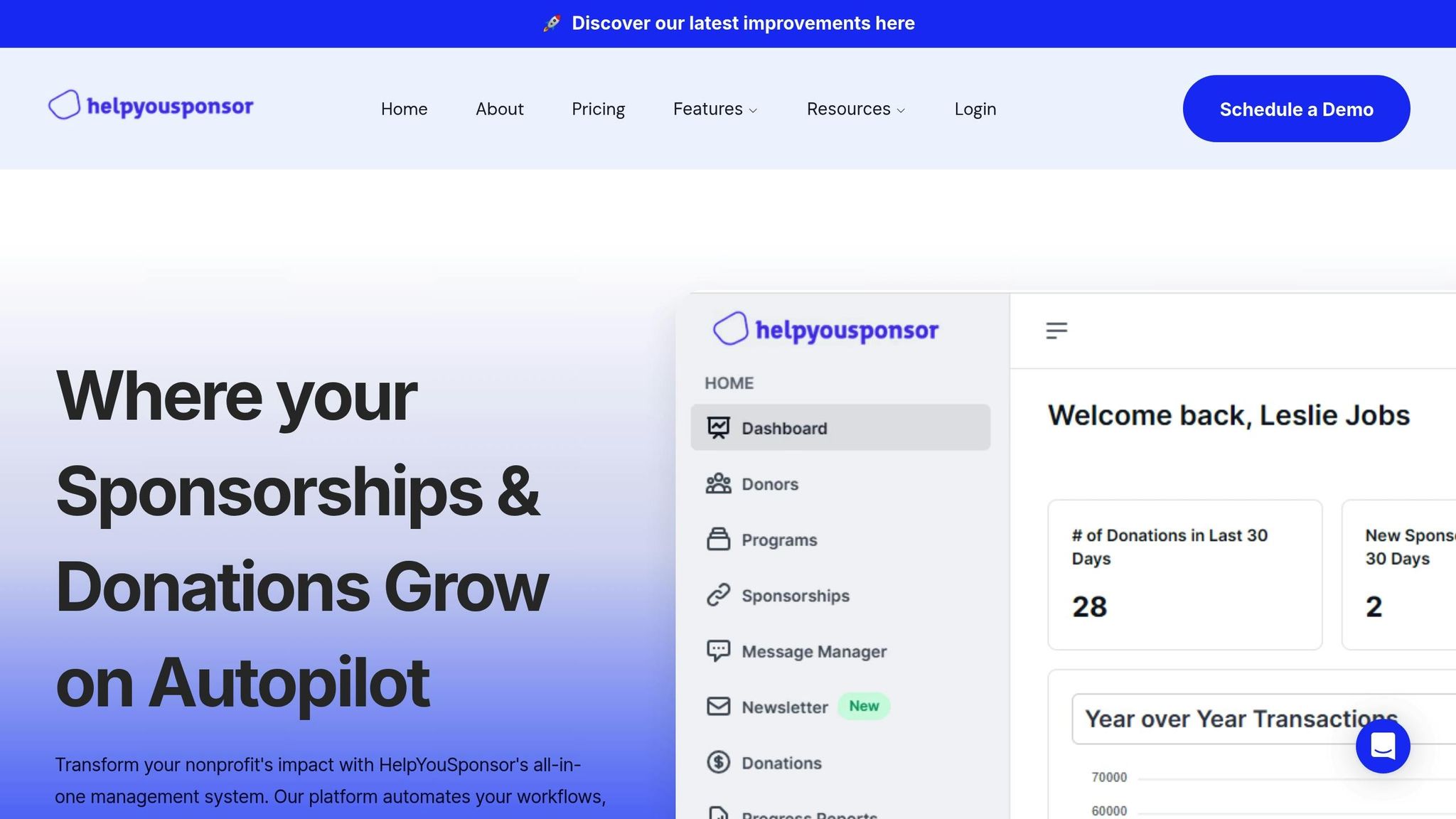
Integrating AI with HelpYouSponsor can transform how you handle donor management by making processes smarter and more efficient. The process starts with collecting data from your sponsorship forms and donor feedback within HelpYouSponsor. This data can then be fed into an AI platform like IBM Watson or Google Cloud AI to unlock predictive capabilities. Testing the model with new data ensures accurate predictions, setting the foundation for better donor management.
Managing Donors More Efficiently
AI can take over tasks like segmenting donors based on their frequency, preferences, and giving capacity, saving you from the time-consuming job of manual categorization. To make this work seamlessly, audit your HelpYouSponsor database - remove duplicate entries and standardize the data. Clean data leads to more reliable AI outputs.
Automating Predictions and Decisions
Start with tasks that have the biggest impact, such as identifying potential major gift donors. While AI can automate processes like re-engagement campaigns, personalized thank-you messages, and solicitation strategies, it’s important to have human oversight to ensure the tone and accuracy of these communications.
One inspiring example comes from Polaris, a nonprofit aiding survivors of human trafficking. Between 2008 and 2021, they used a machine-learning voice bot to manage non-urgent calls. In just six months, the bot successfully handled over 1,700 general information requests, freeing up staff to focus on critical, high-stakes cases.
"AI can help elevate philanthropic outcomes and, ultimately, better mission fulfillment." - Ashutosh Nandeshwar, SVP of Data Science and Analytics, CCS Fundraising
Before diving into AI-driven initiatives, establish a clear policy on data privacy and ethical data sourcing to ensure responsible use.
Measuring Your AI Fundraising Results
To understand how AI impacts your fundraising efforts, focus on tracking specific, measurable metrics. These numbers help confirm the improvements AI brings to your campaigns.
Monitoring Your Key Metrics
One critical metric to keep an eye on is Net Donor Lifetime Value (NLTV), which calculates donor revenue after factoring in acquisition and annual fundraising costs. This figure gives you a clear picture of how AI influences donor retention strategies financially. Another essential metric is donor retention - any increase here suggests that your AI-powered personalization efforts are hitting the mark.
AI also helps fine-tune donor outreach, ensuring the right contact at the right time. This approach can reduce direct mail costs by 10%–30% while delivering higher conversion rates compared to traditional broad-segment campaigns. To measure this, track your conversion rates for AI-personalized campaigns and note any improvements.
"Once fundraisers can accurately visualize the value of their existing donor list in dollars, they can see the importance of donor retention." - Michael Gorriarán, President, Arjuna Solutions
These metrics lay the groundwork for a detailed ROI analysis.
Calculating Your Return on Investment
With these metrics in hand, calculating ROI becomes straightforward. Compare the gains from AI-driven campaigns to their associated costs. For example, in 2022, the American Cancer Society used machine learning to generate donation revenue 117% above their benchmark, achieve 70% donor engagement, and boost click-through rates by 87.5%.
You can also measure staff time savings using tools like HelpYouSponsor’s analytics dashboard. This feature tracks efficiencies from automating tasks like donor segmentation and re-engagement campaigns. Additionally, calculate cost differences between traditional and digital outreach, especially for donors identified by AI as preferring digital communication. To maintain accuracy and protect your ROI, update predictive models every three to six months, or whenever donor data variables increase by at least 20%.
Leverage HelpYouSponsor’s analytics to consolidate these insights and continually fine-tune your strategies.
Conclusion
AI analytics is reshaping how nonprofits approach fundraising, turning it into a data-driven strategy that drives better results. Just look at the numbers: Animal Haven saw a 264% increase in recurring donors, while the American Cancer Society experienced a 117% jump in revenue - clear evidence of how impactful this approach can be.
In a landscape where donations fell by 30% in 2023 and donor fatigue continues to grow, nonprofits need smarter solutions. AI offers exactly that by personalizing outreach on a large scale, predicting donor behavior before they disengage, and automating repetitive tasks. This frees up your team to focus on what truly matters - building meaningful relationships with your supporters. It’s a direct response to the challenges of donor disengagement discussed earlier.
HelpYouSponsor steps in with tools like Smart Donor Segmentation and Predictive Analytics, helping you identify your most loyal supporters and craft tailored strategies. These tools integrate seamlessly with your existing systems, automating updates without overwhelming your staff.
If you’re just starting out with AI, consider testing segmentation with a small portion of your donor list. Measure the results, refine your approach, and expand gradually. Throughout this process, prioritize strict data privacy, ethical practices, and maintaining an accurate donor database.
Taking action now can make all the difference. Nonprofits achieving the greatest impact are those that don’t wait for perfect conditions - they act. Your mission deserves the edge that AI analytics can provide, and HelpYouSponsor is ready to support you with tools designed specifically for your needs, along with scalable pricing to fit your budget.
FAQs
How does AI help nonprofits understand and predict donor behavior?
AI empowers nonprofits to better understand donor behavior by analyzing both past and current data to detect patterns and trends. Through predictive modeling, it can estimate crucial donor actions, such as the likelihood of making a donation, the potential size of contributions, and levels of engagement. This helps organizations pinpoint donors with the most potential and direct their efforts where they’ll have the greatest impact.
On top of that, AI tools can evaluate donor interactions across different platforms - like email, social media, and events - to uncover preferences and behaviors. With these insights, nonprofits can tailor their engagement strategies, fostering stronger connections, increasing donor loyalty, and making smarter, data-informed decisions for their fundraising initiatives.
How can nonprofits ensure their data is ready for AI-driven fundraising?
To get the most out of AI in fundraising, nonprofits need to start with well-prepared data. Begin by establishing solid data collection practices to keep track of donor interactions and campaign results. Use tools that ensure the information gathered is consistent and relevant across all platforms.
Another crucial step is to regularly review and clean your data. This means removing duplicates, correcting errors, and standardizing formats. Clean, accurate data reduces the chances of skewed AI insights. Additionally, assigning clear values to important metrics - like donation amounts or engagement rates - can sharpen the accuracy of AI-driven predictions.
With organized and dependable data, nonprofits can unlock the full potential of AI, leading to smarter strategies and better fundraising results.
How can AI help nonprofits create more personalized donor outreach?
AI allows nonprofits to create more personalized donor outreach by diving deep into supporter data, including giving history, interests, and engagement habits. With this information, organizations can craft messages that feel tailored to each individual, suggest donation amounts that match a donor's capacity, and time their communications for maximum impact.
By tapping into donor preferences and behaviors, AI not only helps build stronger connections but also boosts donor retention and encourages future contributions. This focused strategy makes fundraising efforts more impactful for both the donors and the organizations they support.